Calcium Carbonate
JFDA label: RENNIE TAB
Mechanism of Action
As dietary supplement, used to prevent or treat negative calcium balance; in osteoporosis, it helps to prevent or decrease the rate of bone loss. Calcium is an integral component of the skeleton and also moderates nerve and muscle performance and allows normal cardiac function. Also used to treat hyperphosphatemia in patients with chronic kidney disease by combining with dietary phosphate to form insoluble calcium phosphate, which is excreted in feces. Calcium salts as antacids neutralize gastric acidity resulting in increased gastric and duodenal bulb pH; they additionally inhibit proteolytic activity of pepsin if the pH is increased >4 and increase lower esophageal sphincter tone (IOM, 2011).
Indications
Approved
- Antacid
- Calcium supplementation
Off-label
- Hyperphosphatemia in chronic kidney disease
Contraindications
Source: Lexicomp
- Hypersensitivity to any component of the formulation Absolute
Adverse Reactions
Nervous system disorders (2)
Common Headache · laxative effect
Metabolism and nutrition disorders (3)
Common Hypercalcemia · hypophosphatemia · milk-alkali syndrome (with very high, chronic dosing and/or renal failure [headache, nausea, irritability, and weakness or alkalosis, hypercalcemia, renal impairment])
Gastrointestinal disorders (8)
Common Abdominal pain · anorexia · constipation · flatulence · hyperacidity (acid rebound) · nausea · vomiting · xerostomia
Dosing
Source: Lexicomp
Warnings & Precautions
Source: Lexicomp
Gastrointestinal effects
Constipation, bloating, and gas are common with calcium supplements (especially carbonate salt) (IOM, 2011).
Hypercalcemia
Chronic hypercalcemia may result in vascular calcification and other soft-tissue calcification (IOM, 2011). Disease-related concerns:
Achlorhydria
Calcium absorption is impaired in achlorhydria; administration is followed by increased gastric acid secretion within 2 hours of administration especially with high doses. Common in the elderly, use an alternate salt (eg, citrate) and administer with food (IOM, 2011; Recker, 1985).
Hypoparathyroid disease
Hypercalcemia and hypercalciuria are most likely to occur in hypoparathyroid patients receiving high doses of vitamin D.
Kidney stones (calcium-containing)
Use caution when administering calcium supplements to patients with a history of kidney stones (IOM, 2011).
Renal insufficiency
Use with caution as these patients are more sensitive or susceptible to the effects of excess calcium (IOM, 2011). Concurrent drug therapy issues:
Drug-drug interactions
Potentially significant interactions may exist, requiring dose or frequency adjustment, additional monitoring, and/or selection of alternative therapy. Consult drug interactions database for more detailed information.
Vitamin D
It is recommended to concomitantly administer vitamin D for optimal calcium absorption when used for the treatment or prevention of conditions related to bone health (eg, osteoporosis). Other warnings/precautions:
Appropriate product selection
Multiple salt forms of calcium exist; close attention must be paid to the salt form when ordering and administering calcium; incorrect selection or substitution of one salt for another without proper dosage adjustment may result in serious over or under dosing.
Pregnancy & Lactation
Pregnancy
Safe
WHO recommends 1.5–2 g/day calcium supplementation for pre-eclampsia prevention in populations with low dietary calcium intake
Lactation
Calcium is excreted in breast milk. The amount of calcium in breast milk is homeostatically regulated and not altered by maternal calcium intake. Calcium requirements are the same in lactating and nonlactating females (IOM 2011). Calcium-based antacids are probably compatible with breast-feeding (Mahadevan, 2006).
Monitoring
| Clinical pearl | Monitor plasma calcium levels if using calcium as an electrolyte supplement for deficiency or as treatment of hyperphosphatemia. |
|---|
Chemistry & Properties
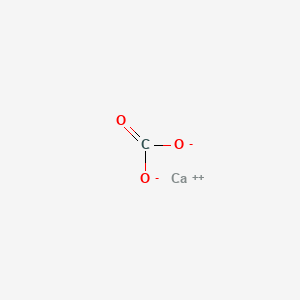
| Formula | CCaO3 |
|---|---|
| Molecular weight | 100.09 g/mol |
| IUPAC name | calcium carbonate |
| CAS | 471-34-1 |
| PubChem CID | 10112 |
| InChIKey | VTYYLEPIZMXCLO-UHFFFAOYSA-L |
SMILES
O=C([O-])[O-].[Ca+2]Biology & Pharmacokinetics
Pharmacokinetics predicted
| Bioavailability | 10.0% |
|---|---|
| Half-life | 6.433 h |
| Volume of distribution | 0.874 L/kg |
| Protein binding | 15.9% |
| BBB penetrant | No |
Transporters
BCRP (Inhibitor)BSEP (Inhibitor)MRP1 (Inhibitor)OATP1B1 (Inhibitor)OATP1B3 (Inhibitor)P-gp (Inhibitor)P-gp (Substrate)
Drug–drug interactions (100+, DDInter)
| Interacting drug | Severity | Management |
|---|---|---|
| Bictegravir | major | |
| Dolutegravir | major | |
| Erdafitinib | major | |
| Patiromer | major | |
| Raltegravir | major | |
| Selpercatinib | major | |
| Tolevamer | major | |
| Acalabrutinib | moderate | |
| Acebutolol | moderate | |
| Acetohexamide | moderate | |
| Acetylsalicylic acid | moderate | |
| Alendronic acid | moderate | |
| Amlodipine | moderate | |
| Amphetamine | moderate | |
| Amprenavir | moderate | |
| Atazanavir | moderate | |
| Atenolol | moderate | |
| Atropine | moderate | |
| Bacampicillin | moderate | |
| Baloxavir marboxil | moderate | |
| Bendroflumethiazide | moderate | |
| Benzphetamine | moderate | |
| Benzthiazide | moderate | |
| Bepridil | moderate | |
| Betaxolol | moderate | |
| Bisacodyl | moderate | |
| Bisoprolol | moderate | |
| Bosutinib | moderate | |
| Cabotegravir | moderate | |
| Calcipotriol (topical) | moderate | |
| Calcitriol (topical) | moderate | |
| Carteolol | moderate | |
| Carvedilol | moderate | |
| Cefditoren | moderate | |
| Cefpodoxime | moderate | |
| Cefuroxime | moderate | |
| Ceritinib | moderate | |
| Chloroquine | moderate | |
| Chlorothiazide | moderate | |
| Chlorpropamide | moderate |
Showing 40 of 100+.
Registered Products (14)
| Brand | Form / strength | Pack | Agent | Citizen (JOD) |
|---|---|---|---|---|
| Cirkulin Antacid | Lozenge 500 mg | 40 Lozenges | AL THARAA FOR PHARMACEUTICALS AND MEDICINE TRADING CO(BEIT LEHEM DRUG STORE)) | 1.590 |
| Vixon | Solution 267 mg/10 ml, 160 mg/10 ml, 500 mg/10 ml | 190 ml | Dar Al Dawa Development and Investment Co Ltd/Jordan | 1.620 |
| Algicid Suspension | Suspension 2.67 %, 1.6 %, 5 % | 200 ml | PHILADELPHIA PHAEMACEUTICALS.COMP/JORDAN | 1.700 |
| Gaviscon Extra Strength 500 peppermint | Tablet 160 mg, 500 mg, 267 mg | 12 tab pack varies | Nairoukh Drug Store | 1.740 |
| RENNIE TAB | Tablet 680 mg, 80 mg | 96 tab | The Jordan Drugstore Co | 2.160 |
| Lima | Tablet 500 mg | 60 tab | Dar Al Dawa Development and Investment Co Ltd/Jordan | 2.200 |
| Gaviscon Peppermint Liquid Relief | Suspension 133.5 mg/5 ml, 80 mg/5 ml, 250 mg/5 ml | 200 ml | Nairoukh Drug Store | 2.340 |
| Atlast Liquid | Solution 2.67 g/100 ml, 1.60 g/100 ml, 5.00 g/100 ml | 200 ml | JERASH PHARMACEUTICALS LTD.CO/JORDAN | 2.380 |
| Gaviscon Aniseed | Solution 267 mg/10 ml, 160 mg/10 ml, 500 mg/10 ml | 200 ml | Nairoukh Drug Store | 2.800 |
| Lima | Tablet 750 mg | 60 tab | Dar Al Dawa Development and Investment Co Ltd/Jordan | 2.800 |
| Gaviscon Extra Strength 500 peppermint | Tablet 160 mg, 500 mg, 267 mg | 24 tab pack varies | Nairoukh Drug Store | 3.300 |
| Tums Extra Strength 750 Assorted Fruits | Tablet 750 mg | 48 tab | Sukhtian Group | 3.470 |
| Gaviscon Double Action Liquid Sachets, Oral Suspension | Suspension Sodium Bicarbonate 213 mg/10 ml, Calcium Carbonate 325 mg/10 ml, Sodium Alginate 500 mg/10 ml | (12 SAC) | Awtar Pharmaceutical Co | 5.300 |
| Gaviscon Double Action Mint Liquid suspension | Suspension Sodium Bicarbonate 213 mg/10 ml, Sodium Alginate 500 mg/10 ml, Calcium Carbonate 325 mg/10 ml | 300 ml | Nairoukh Drug Store | 5.340 |