Ketamine
JFDA label: Tekam 50 Vials
Mechanism of Action
Produces a cataleptic-like state in which the patient is dissociated from the surrounding environment by direct action on the cortex and limbic system. Ketamine is a noncompetitive NMDA receptor antagonist that blocks glutamate. Low (subanesthetic) doses produce analgesia, and modulate central sensitization, hyperalgesia and opioid tolerance. Reduces polysynaptic spinal reflexes.
Indications
Approved
- Anesthesia
Off-label
- Analgesia (subanesthetic dosing)
- Complex regional pain syndrome
- Depressive episode associated with major depressive disorder and bipolar disorder, treatment Refractory
- Procedural sedation/analgesia
- Status epilepticus (refractory)
Contraindications
Source: Lexicomp
- Additional contraindications (not in US labeling): History of cerebrovascular accident Absolute
- Hypersensitivity to ketamine or any component of the formulation Absolute
- conditions in which an increase in blood pressure would be hazardous Note: In the emergency department, the following additional absolute contraindications according to the American College of Emergency Physicians have been asserted (ACEP [Green 2011]): Infants Absolute
- severe cardiac decompensation Absolute
- surgery of the pharynx, larynx, or bronchial tree unless adequate muscle relaxants are used Absolute
Adverse Reactions
Cardiac disorders (5)
Not Known Bradycardia · cardiac arrhythmia · hypotension · increased blood pressure · increased pulse
Nervous system disorders (3)
Not Known Drug dependence · hypertonia (tonic-clonic movements sometimes resembling seizures) · increased cerebrospinal fluid pressure
Renal and urinary disorders (1)
Not Known Hydronephrosis
Immune system disorders (1)
Not Known Anaphylaxis
Metabolism and nutrition disorders (1)
Not Known Central diabetes insipidus (Hatab 2014)
Gastrointestinal disorders (4)
Not Known Anorexia · nausea · sialorrhea (Hatab 2014) · vomiting
Skin and subcutaneous tissue disorders (3)
Not Known Erythema (transient) · morbilliform rash (transient) · rash at injection site
Musculoskeletal and connective tissue disorders (1)
Not Known Laryngospasm
Eye disorders (3)
Not Known Diplopia · increased intraocular pressure · nystagmus
General disorders and administration site conditions (1)
Not Known Pain at injection site
Other (1)
Very Common Central nervous system: Prolonged emergence from anesthesia
Respiratory, thoracic and mediastinal disorders (3)
Not Known Airway obstruction · apnea · respiratory depression
Dosing
Source: Lexicomp
Warnings & Precautions
Source: Lexicomp
Airway complications
When used for procedural sedation for major procedures involving the posterior pharynx (eg, endoscopy) or when used for patients with an active pulmonary infection or disease (including upper respiratory disease or asthma), the use of ketamine increases the risk of laryngospasm. Patients with a history of airway instability, tracheal surgery, or tracheal stenosis may be at a higher risk of airway complications. The American College of Emergency Physicians considers these situations relative contraindications for the use of ketamine (ACEP [Green 2011]). The manufacturer recommends against the use of ketamine alone in surgery or diagnostic procedures of the pharynx, larynx, or bronchial tree; mechanical stimulation of the pharynx should be avoided, whenever possible, if ketamine is used alone.
CNS depression
May cause CNS depression, which may impair physical or mental abilities; patients must be cautioned about performing tasks that require mental alertness (eg, operating machinery, driving). When used for outpatient surgery, the patient should be accompanied by a responsible adult. Driving, operating hazardous machinery, or engaging in hazardous activities should not be undertaken for ≥24 hours after anesthesia, according to the manufacturer.
Dependence
May cause dependence (withdrawal symptoms on discontinuation) and tolerance with prolonged use. A withdrawal syndrome with psychotic features has been described following discontinuation of long-term use.
Emergence reactions
Postanesthetic emergence reactions, which can manifest as vivid dreams, hallucinations, and/or frank delirium, occur; these reactions are less common in patients 65 years and when given IM (White 1982). Emergence reactions, confusion, or irrational behavior may occur up to 24 hours postoperatively and may be reduced by pretreatment with a benzodiazepine, use of ketamine at the lower end of the dosing range, and minimizing verbal and tactile stimulation of the patient during the recovery period. Avoid use in patients with schizophrenia; may exacerbate psychotic symptoms (Lahti 1995; Malhotra 1997). The American College of Emergency Physicians considers the use of ketamine in patients with known or suspected schizophrenia (even if currently stable or controlled with medications) an absolute contraindication (ACEP [Green 2011]).
Increased intracranial pressure
Some consider the use of ketamine in patients with CNS masses, CNS abnormalities, or hydrocephalus a relative contraindication due to multiple reports that ketamine may increase intracranial pressure in these patients (ACEP [Green 2011]). However, assuming adequate ventilation, some evidence suggests that ketamine has minimal effects on intracranial pressure and may even improve cerebral perfusion and reduce intracranial pressure (Albanese 1997; Bowles 2012; Zeiler 2014).
Increased ocular pressure
Use with caution in patients with increased intraocular pressure (IOP). Some recommend avoiding use in patients with an open eye injury or other ophthalmologic disorder where an increase in IOP would prove to be detrimental; however, the effects of ketamine on IOP is mixed with some evidence demonstrating no clinically significant effect on IOP (ACEP [Green 2011]; Cunningham 1986; Drayna 2012; Miller 2010; Nagdeve 2006).
Porphyria
The American College of Emergency Physicians considers the use of ketamine in patients with porphyria a relative contraindication due to enhanced sympathomimetic effect produced by ketamine (ACEP [Green 2011]).
Respiratory depression
Rapid IV administration or overdose may cause respiratory depression or apnea. Resuscitative equipment should be available during use.
Thyroid disorders
The American College of Emergency Physicians considers the use of ketamine in patients with a thyroid disorder or receiving a thyroid medication a relative contraindication due to enhanced sympathomimetic effect produced by ketamine (ACEP [Green 2011]). Disease-related concerns:
Cardiovascular disease
Use with caution in patients with coronary artery disease, catecholamine depletion, hypertension, and tachycardia. Cardiac function should be continuously monitored in patients with increased blood pressure or cardiac decompensation. Ketamine increases blood pressure, heart rate, and cardiac output thereby increasing myocardial oxygen demand. The mechanism by which ketamine causes a sympathetic surge to stimulate the cardiovascular system has yet to be elucidated. The use of concurrent benzodiazepine, inhaled anesthetics, and propofol or administration of ketamine as a continuous infusion may reduce these cardiovascular effects (Miller 2010). The American College of Emergency Physicians recommends avoidance in patients who are already hypertensive and in older adults with risk factors for coronary artery disease (ACEP [Green 2011]). In a scientific statement from the American Heart Association, ketamine has been determined to be an agent that may exacerbate underlying myocardial dysfunction (magnitude: major) (AHA [Page 2016]).
Cerebrospinal fluid (CSF) pressure elevation
Use with caution in patients with CSF pressure elevation; an increase in CSF pressure may be associated with use.
Ethanol use
Use with caution in the chronic alcoholic or acutely alcohol-intoxicated. Concurrent drug therapy issues:
Drug-drug interactions
Potentially significant interactions may exist, requiring dose or frequency adjustment, additional monitoring, and/or selection of alternative therapy. Consult drug interactions database for more detailed information. Special populations:
Pediatric neurotoxicity
In pediatric and neonatal patients Other warnings/precautions:
Experienced personnel
Use requires careful patient monitoring, should only be used by experienced personnel who are not actively engaged in the procedure or surgery. If used in a nonintubated and/or nonmechanically ventilated patient, qualified personnel and appropriate equipment for rapid institution of respiratory and/or cardiovascular support must be immediately available. Use to induce moderate (conscious) sedation in patients warrants monitoring equivalent to that seen with deep anesthesia. Consult local regulations and individual institutional policies and procedures.
Pregnancy & Lactation
Pregnancy
Adverse events have been observed in animal reproduction studies. Ketamine crosses the placenta and can be detected in fetal tissue. Ketamine produces dose dependent increases in uterine contractions; effects may vary by trimester. The plasma clearance of ketamine is reduced during pregnancy. Dose related neonatal depression and decreased APGAR scores have been reported with large doses administered at delivery (Ghoneim 1977; Little 1972; White 1982). Although ketamine has been used during vaginal delivery and cesarean section, use in pregnancy, including obstetrics (either vaginal or abdominal delivery) is not recommended by the manufacturer (Akamatsu 1974; Little 1972; Mercier 1998). Based on animal data, repeated or prolonged use of general anesthetic and sedation medications that block N-methyl-D- aspartate (NMDA) receptors and/or potentiate gamma-aminobutyric acid (GABA) activity, may affect brain development. Human fetuses may be most vulnerable during the third trimester. Unti
Lactation
It is not known if ketamine is present in breast milk.
Monitoring
| Clinical pearl | Heart rate, blood pressure, respiratory rate, transcutaneous O2 saturation, emergence reactions; cardiac function should be continuously monitored in patients with increased blood pressure or cardiac decompensation |
|---|
Chemistry & Properties
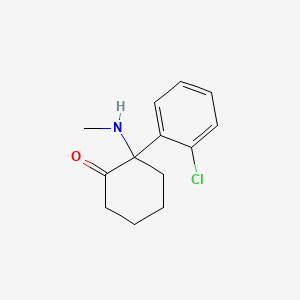
| Formula | C13H16ClNO |
|---|---|
| Molecular weight | 237.73 g/mol |
| IUPAC name | 2-(2-chlorophenyl)-2-(methylamino)cyclohexan-1-one |
| CAS | 6740-88-1 |
| PubChem CID | 3821 |
| InChIKey | YQEZLKZALYSWHR-UHFFFAOYSA-N |
| logP | 2.9 (XLogP 2.2) |
| Polar surface area | 29.1 Ų |
| H-bond acceptors / donors | 2 / 1 |
| Drug-likeness (QED) | 0.86 |
| Lipinski violations | 0 |
SMILES
CNC1(c2ccccc2Cl)CCCCC1=OBiology & Pharmacokinetics
Pharmacokinetics
| BBB penetrant | Yes |
|---|
Enzyme interactions
| Enzyme | Role | Detail |
|---|---|---|
| CYP1A2 | Substrate | — |
| CYP2B6 | Inhibitor | — |
| CYP2B6 | Substrate | — |
| CYP2C19 | Inhibitor | — |
| CYP2C19 | Substrate | — |
| CYP2C9 | Substrate | — |
| CYP2D6 | Substrate | — |
| CYP3A4 | Inhibitor | — |
| CYP3A4 | Substrate | — |
Receptor binding (top 2)
| Target | Action | Affinity |
|---|---|---|
| NMDA | Binding | pKi 6.2 |
| GluN2C (GRIN2C) | Channel blocker | pIC50 6.2 |
Transporters
BCRP (Inhibitor)BSEP (Inhibitor)BSEP (Inhibitor)MDR1 (Inhibitor)MRP1 (Inhibitor)MRP2 (Inhibitor)MRP3 (Inhibitor)MRP4 (Inhibitor)OATP1B1 (Inhibitor)OATP1B3 (Inhibitor)OCT1 (Inhibitor)OCT2 (Inhibitor)OCT3 (Inhibitor)P-gp (Inhibitor)MDR1 (Substrate)OCT1 (Substrate)P-gp (Substrate)
Drug–drug interactions (93, DDInter)
| Interacting drug | Severity | Management |
|---|---|---|
| Alimemazine | moderate | |
| Alpelisib | moderate | |
| Aminophylline | moderate | |
| Azatadine | moderate | |
| Azelastine (nasal) | moderate | |
| Brimonidine (ophthalmic) | moderate | |
| Brimonidine (topical) | moderate | |
| Brompheniramine | moderate | |
| Carbinoxamine | moderate | |
| Cetirizine | moderate | |
| Chlorphenesin | moderate | |
| Chlorpheniramine | moderate | |
| Clemastine | moderate | |
| Clofedanol | moderate | |
| Cocaine (nasal) | moderate | |
| Codeine | moderate | |
| Cyclizine | moderate | |
| Cyproheptadine | moderate | |
| Dabrafenib | moderate | |
| Dexbrompheniramine | moderate | |
| Dextromethorphan | moderate | |
| Diphenhydramine | moderate | |
| Diphenoxylate | moderate | |
| Doxepin | moderate | |
| Doxepin (topical) | moderate | |
| Doxylamine | moderate | |
| Dronabinol | moderate | |
| Dyphylline | moderate | |
| Ephedrine | moderate | |
| Epinephrine (topical) | moderate | |
| Ethanol | moderate | |
| Fenfluramine | moderate | |
| Formoterol | moderate | |
| Fostamatinib | moderate | |
| Hydrocodone | moderate | |
| Idelalisib | moderate | |
| Indacaterol | moderate | |
| Ioflupane I-123 | moderate | |
| Isometheptene | moderate | |
| Isoprenaline | moderate |
Showing 40 of 93.
Registered Products (9)
| Brand | Form / strength | Pack | Agent | Citizen (JOD) |
|---|---|---|---|---|
| Katiax 200mg/20ml Solution for Injection/Infusion | Infusion 200 mg/20 ml | 10 vial | MS PHARMA/JORDAN | — |
| Katiax 500mg/10ml Solution for Injection/Infusion | Infusion 500 mg/10 ml | 1 vial pack varies | MS PHARMA/JORDAN | — |
| Katiax 500mg/10ml Solution for Injection/Infusion | Infusion 500 mg/10 ml | 10 vial pack varies | MS PHARMA/JORDAN | — |
| Katiax 500mg/5ml Solution for Injection/Infusion | Infusion 500 mg/5 ml | 1 vial pack varies | MS PHARMA/JORDAN | — |
| Katiax 500mg/5ml Solution for Injection/Infusion | Infusion 500 mg/5 ml | 10 vial pack varies | MS PHARMA/JORDAN | — |
| Tekam 10 Vials | Vial 10 mg/ml | 10 pack varies | Hikma Pharmaceuticals Co.Ltd/Jordan | — |
| Tekam 10 Vials | Vial 10 mg/ml | 1 pack varies | Hikma Pharmaceuticals Co.Ltd/Jordan | — |
| Tekam 50 Vials | Vial 50 mg/ml | 1 vial pack varies | Hikma Pharmaceuticals Co.Ltd/Jordan | — |
| Tekam 50 Vials | Vial 50 mg/ml | 10 vial pack varies | Hikma Pharmaceuticals Co.Ltd/Jordan | — |