Celecoxib
🧬 Cross-allergy: NSAIDs
JFDA label: Joswe Flamex 400 Capsule
- Serious cardiovascular risk:
- Serious gastrointestinal risk:
Mechanism of Action
Inhibitor of Prostaglandin G/H synthase 2 — Cyclooxygenase-2 inhibitor
| Target | Action | Gene / class |
|---|---|---|
| Prostaglandin G/H synthase 2 efficacy | INHIBITOR | PTGS2 |
Indications
Approved
- Acute pain
- Ankylosing spondylitis
- Juvenile idiopathic arthritis
- Osteoarthritis
- Primary dysmenorrhea
- Rheumatoid arthritis
Off-label
- Acute gout
Class profile
| cox1_IC50_uM | 20.0 |
|---|---|
| cox2_IC50_uM | 0.04 |
| cox2_selectivity | 500.0 |
| inhibitionType | reversible |
| preferentialCOX2 | 1 |
| selectiveCOX2 | 1 |
| plateletEffect | 0 |
| source | Warner1999/Vane1996/ChEMBL |
Contraindications
Source: Lexicomp · Curated
- Additional contraindications (not in US labeling): Pregnancy (third trimester) Absolute
- Coronary artery bypass graft (CABG) surgery — peri-operative use Absolute
- Hypersensitivity to celecoxib, sulfonamides, aspirin, other NSAIDs, or any component of the formulation Absolute
- Sulfonamide allergy Absolute
- Third trimester of pregnancy Absolute
- active gastrointestinal bleeding Absolute
- active gastrointestinal ulcer (gastric, duodenal, peptic) Absolute
- cerebrovascular bleeding Absolute
- inflammatory bowel disease Absolute
- patients who have experienced asthma, urticaria, or allergic-type reactions after taking aspirin or other NSAIDs Absolute
- severe liver impairment or active hepatic disease Absolute
- severe renal impairment (CrCl Absolute
- severe, uncontrolled heart failure Absolute
- use in the setting of CABG surgery. Note: Although the FDA approved product labeling states this medication is contraindicated with other sulfonamide-containing drug classes, the scientific basis of this statement has been challenged. See “Warnings/Precautions” for more detail Absolute
- women who are breast-feeding Absolute
Adverse Reactions
Cardiac disorders (2)
Common Peripheral edema
Uncommon Cardiovascular thrombotic events (MI/stroke)
Vascular disorders (1)
Common Hypertension (worsening)
Hepatobiliary disorders (2)
Common Increased liver enzymes
Uncommon Elevated liver enzymes
Immune system disorders (2)
Not Known Anaphylaxis · DRESS syndrome
Gastrointestinal disorders (12)
Common abdominal pain · Diarrhea · Diarrhoea · Dyspepsia · dyspepsia · flatulence · gastroesophageal reflux disease · vomiting
Not Known gastrointestinaI ulcer · Gastrointestinal perforation · GI inflammation · intestinal perforation
Skin and subcutaneous tissue disorders (3)
Uncommon Rash
Not Known Acute generalized exanthematous pustulosis · exfoliative dermatitis
General disorders and administration site conditions (2)
Common Accidental injury · Peripheral oedema
Respiratory, thoracic and mediastinal disorders (6)
Common dyspnea · pharyngitis · rhinitis · sinusitis · Upper respiratory tract infection
Not Known Local alveolar osteitis (post oral surgery patients)
Dosing
Source: Lexicomp
Warnings & Precautions
Source: Lexicomp
Anaphylactoid reactions
Even in patients without prior exposure, anaphylactic reactions and angioedema may occur; patients with "aspirin triad" (bronchial asthma, aspirin intolerance, rhinitis) may be at increased risk. Contraindicated in patients who have experienced an anaphylactic reaction with NSAID or aspirin therapy.
Cardiovascular events
NSAIDs cause an increased risk of serious (and potentially fatal) adverse cardiovascular thrombotic events, including MI and stroke. Risk may occur early during treatment and may increase with duration of use. Relative risk appears to be similar in those with and without known cardiovascular disease or risk factors for cardiovascular disease; however, absolute incidence of cardiovascular events (which may occur early during treatment) was higher in patients with known cardiovascular disease or risk factors. New onset hypertension or exacerbation of hypertension may occur (NSAIDs may also impair response to ACE inhibitors, thiazide diuretics, or loop diuretics); may contribute to cardiovascular events; monitor blood pressure; use with caution in patients with hypertension. May cause sodium and fluid retention, use with caution in patients with edema. Avoid use in patients with heart failure (ACCF/AHA [Yancy 2013]). Avoid use in patients with recent MI unless benefits outweigh risk of cardiovascular thrombotic events. Long-term cardiovascular risk in children has not been evaluated. Use the lowest effective dose for the shortest duration of time, consistent with individual patient goals, to reduce risk of cardiovascular events; alternate therapies should be considered for patients at high risk.
Gastrointestinal events
NSAIDs cause an increased risk of serious gastrointestinal inflammation, ulceration, bleeding, and perforation (may be fatal); elderly patients and patients with history of peptic ulcer disease and/or GI bleeding are at greater risk for serious GI events. These events may occur at any time during therapy and without warning. Avoid use in patients with active GI bleeding. Use caution with a history of GI ulcers, concurrent therapy known to increase the risk of GI bleeding (eg, aspirin, anticoagulants and/or corticosteroids, selective serotonin reuptake inhibitors), smoking, use of alcohol, or in elderly or debilitated patients. Use the lowest effective dose for the shortest duration of time, consistent with individual patient goals, to reduce risk of GI adverse events; alternate therapies should be considered for patients at high risk. When used concomitantly with aspirin, a substantial increase in the risk of gastrointestinal complications (eg, ulcer) occurs; concomitant gastroprotective therapy (eg, proton pump inhibitors) is recommended (Bhatt 2008).
Hematologic effects
Anemia may occur; monitor hemoglobin or hematocrit in patients on long-term treatment. Celecoxib does not usually affect PT, PTT or platelet counts; does not inhibit platelet aggregation at approved doses.
Skin reactions
NSAIDs may cause serious skin adverse events including exfoliative dermatitis, Stevens-Johnson syndrome (SJS), and toxic epidermal necrolysis (TEN); may occur without warning and in patients without prior known sulfa allergy; discontinue use at first sign of rash (or any other hypersensitivity).
Sulfonamide ("sulfa") allergy
The FDA-approved product labeling for many medications containing a sulfonamide chemical group includes a broad contraindication in patients with a prior allergic reaction to sulfonamides. There is a potential for cross-reactivity between members of a specific class (eg, two antibiotic sulfonamides). However, concerns for cross-reactivity have previously extended to all compounds containing the sulfonamide structure (SO2NH2). An expanded understanding of allergic mechanisms indicates cross-reactivity between antibiotic sulfonamides and nonantibiotic sulfonamides may not occur or at the very least this potential is extremely low (Brackett 2004; Johnson 2005; Slatore 2004; Tornero 2004). In particular, mechanisms of cross-reaction due to antibody production (anaphylaxis) are unlikely to occur with nonantibiotic sulfonamides. T-cell-mediated (type IV) reactions (eg, maculopapular rash) are less well understood and it is not possible to completely exclude this potential based on current insights. In cases where prior reactions were severe (Stevens-Johnson syndrome/TEN), some clinicians choose to avoid exposure to these classes. Disease-related concerns:
Asthma
The manufacturer’s labeling states to not administer to patients with aspirin-sensitive asthma due to severe and potentially fatal bronchospasm that has been reported in such patients having received aspirin and the potential for cross reactivity with other NSAIDs. The manufacturer also states to use with caution in patients with other forms of asthma. However, in patients with known aspirin-exacerbated respiratory disease (AERD), the use of celecoxib initiated at a low dose with gradual titration in patients with stable, mild to moderate persistent asthma has been used without incident (Morales 2013).
Coronary artery bypass graft surgery
Celecoxib is contraindicated in the setting of coronary artery bypass graft surgery (CABG). Risk of MI and stroke may be increased with use following CABG surgery.
Cytochrome P450 isoenzyme 2C9 deficiency
Use with caution in patients with known or suspected deficiency of cytochrome P450 isoenzyme 2C9; poor metabolizers may have higher plasma levels due to reduced metabolism; consider reduced initial doses. Alternate therapies should be considered in patients with JIA who are poor metabolizers of CYP2C9.
Hepatic impairment
Use with caution in patients with moderate hepatic impairment; dosage adjustment recommended. Not recommended for patients with severe hepatic impairment. Transaminase elevations have been reported with use; closely monitor patients with any abnormal LFT. Rare (sometimes fatal), severe hepatic reactions (eg, fulminant hepatitis, hepatic necrosis, hepatic failure) have occurred with NSAID use; discontinue if signs or symptoms of liver disease develop, if systemic manifestations occur, or with persistent or worsening abnormal hepatic function tests.
Renal impairment
NSAID use may compromise existing renal function. Dose-dependent decreases in prostaglandin synthesis may result from NSAID use, causing a reduction in renal blood flow which may cause renal decompensation (usually reversible). Patients with impaired renal function, dehydration, hypovolemia, heart failure, liver dysfunction, those taking diuretics, ACE inhibitors, angiotensin II receptor blockers, and the elderly are at greater risk for renal toxicity. Rehydrate patient before starting therapy; monitor renal function closely. Avoid use in patients with advanced renal disease; discontinue use with persistent or worsening abnormal renal function tests. Long-term NSAID use may result in renal papillary necrosis. Concurrent drug therapy issues:
Drug-drug interactions
Potentially significant interactions may exist, requiring dose or frequency adjustment, additional monitoring, and/or selection of alternative therapy. Consult drug interactions database for more detailed information. Special populations:
Pediatric
Use with caution in pediatric patients with systemic-onset juvenile idiopathic arthritis (JIA); serious adverse reactions, including disseminated intravascular coagulation, may occur.
Pregnancy & Lactation
Pregnancy
Avoid
Avoid from 30 weeks. Generally no advantage over ibuprofen in pregnancy
Lactation
Celecoxib is present in breast milk. In general, NSAIDs may be used in postpartum women who wish to breastfeed (Montgomery 2012); however, use should be avoided in women breastfeeding infants with platelet dysfunction or thrombocytopenia (Bloor 2013; Sammaritano 2014). Although other agents are preferred, celecoxib is considered acceptable for short-term use (Montgomery 2012). According to the manufacturer, the decision to breastfeed during therapy should consider the risk of infant exposure,
Monitoring
| Efficacy | Pain and inflammation control (VAS/NRS scores, joint mobility, functional status); minimum effective dose |
|---|---|
| Toxicity | Blood pressure (raises BP, antagonises antihypertensives); renal function (SCr, eGFR — especially in elderly, heart failure, CKD, dehydrated); Hb/faecal occult blood (GI bleeding); LFTs; oedema |
| Clinical pearl | Use the lowest effective dose for the shortest duration. Consider co-prescribing a proton pump inhibitor if GI risk factors present. COX-2 selective agents reduce GI but not CV risk. |
| Counseling | Take with food or milk to reduce GI upset. Report black stools, blood in urine, or significant ankle swelling. Monitor blood pressure regularly if hypertensive. |
Chemistry & Properties
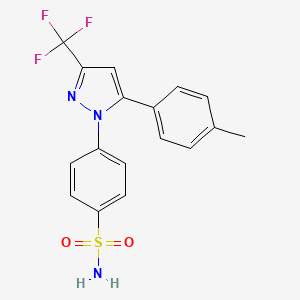
| Formula | C17H14F3N3O2S |
|---|---|
| Molecular weight | 381.38 g/mol |
| IUPAC name | 4-[5-(4-methylphenyl)-3-(trifluoromethyl)pyrazol-1-yl]benzenesulfonamide |
| CAS | 169590-42-5 |
| PubChem CID | 2662 |
| InChIKey | RZEKVGVHFLEQIL-UHFFFAOYSA-N |
| logP | 3.51 (XLogP 3.4) |
| Polar surface area | 77.98 Ų |
| H-bond acceptors / donors | 4 / 1 |
| Drug-likeness (QED) | 0.75 |
| Lipinski violations | 0 |
SMILES
Cc1ccc(-c2cc(C(F)(F)F)nn2-c2ccc(S(N)(=O)=O)cc2)cc1Biology & Pharmacokinetics
Pharmacokinetics
| BBB penetrant | Yes (logBB -1.0) |
|---|
Enzyme interactions
| Enzyme | Role | Detail |
|---|---|---|
| CYP1A2 | Inhibitor | — |
| CYP1A2 | Substrate | — |
| CYP2C19 | Inhibitor | — |
| CYP2C8 | Inhibitor | — |
| CYP2C9 | Inhibitor | IC₅₀ 10.0 µM |
| CYP2C9 | Substrate | — |
| CYP2D6 | Inhibitor | IC₅₀ 1.0 µM |
| CYP2D6 | Substrate | — |
| CYP3A4 | Substrate | — |
Receptor binding (top 5)
| Target | Action | Affinity |
|---|---|---|
| carbonic anhydrase 12 (CA12) | Inhibitor | pKi 7.7 |
| COX-2 (PTGS2) | Inhibitor | pIC50 6.5 |
| COX-2 | Binding | pKi 6.3 |
| COX-1 | Binding | pKi 6.3 |
| Dopamine Transporter (SLC6A3) | Binding | pKi 6.2 |
Transporters
BCRP (Inhibitor)BCRP (Inhibitor)BSEP (Inhibitor)BSEP (Inhibitor)CTR1 (Inhibitor)MDR1 (Inhibitor)MRP1 (Inhibitor)MRP1 (Inhibitor)MRP2 (Inhibitor)MRP3 (Inhibitor)MRP4 (Inhibitor)OAT1 (Inhibitor)OAT3 (Inhibitor)OATP1B1 (Inhibitor)OATP1B1 (Inhibitor)OATP1B3 (Inhibitor)OATP1B3 (Inhibitor)OATP2B1 (Inhibitor)OCT1 (Inhibitor)OCT2 (Inhibitor)P-gp (Inhibitor)Transporter(unspecified) (Inhibitor)P-gp (Substrate)Transporter(unspecified) (Substrate)
Drug–drug interactions (100+, DDInter)
| Interacting drug | Severity | Management |
|---|---|---|
| Aminolevulinic acid | major | |
| Brexpiprazole | major | |
| Cidofovir | major | |
| Deferasirox | major | |
| Diatrizoate | major | |
| Eliglustat | major | |
| Everolimus | major | |
| Human Rho(D) immune globulin | major | |
| Human botulinum neurotoxin A/B immune globulin | major | |
| Human cytomegalovirus immune globulin | major | |
| Human immunoglobulin G (intravenous and subcutaneous) | major | |
| Human immunoglobulin G (intravenous) | major | |
| Inotersen | major | |
| Iodipamide | major | |
| Iodixanol | major | |
| Iohexol | major | |
| Iopamidol | major | |
| Iopromide | major | |
| Iothalamic acid | major | |
| Ioversol | major | |
| Ioxilan | major | |
| Ketorolac | major | |
| Leflunomide | major | |
| Lithium carbonate | major | |
| Lomitapide | major | |
| Mipomersen | major | |
| Pexidartinib | major | |
| Pimozide | major | |
| Sirolimus | major | |
| Tacrolimus | major | |
| Tamoxifen | major | |
| Temsirolimus | major | |
| Teriflunomide | major | |
| Thioridazine | major | |
| Abciximab | moderate | |
| Acetohexamide | moderate | |
| Acetylsalicylic acid | moderate | |
| Alendronic acid | moderate | |
| Alimemazine | moderate | |
| Aliskiren | moderate |
Showing 40 of 100+.
Registered Products (17)
| Brand | Form / strength | Pack | Agent | Citizen (JOD) |
|---|---|---|---|---|
| Celox Capsule | Capsule 200 mg | 10 cap pack varies | SANA PHARMACEUTICAL INDUSTRY/JORDAN | 2.640 |
| Celox Capsule | Capsule 100 mg | 20 cap | SANA PHARMACEUTICAL INDUSTRY/JORDAN | 3.070 |
| Celebrex | Capsule 100 mg | 20 cap | Khoury Drug Store | 3.720 |
| Celebrex | Capsule 200 mg | 10 cap pack varies | Khoury Drug Store | 4.160 |
| Pedexa | Capsule 100 mg | 20 cap | Dar Al Dawa Development and Investment Co Ltd/Jordan | 4.160 |
| Joswe Flamex | Capsule 200 mg | 10 cap pack varies | Jordan Sweden Medical & Sterilization Co. | 4.460 |
| Pedexa | Capsule 200 mg | 10 cap pack varies | Dar Al Dawa Development and Investment Co Ltd/Jordan | 4.460 |
| Revcox | Capsule 200 mg | 20 cap | Nabulsi Drug Store | 4.650 |
| Celox Capsule | Capsule 200 mg | 20 cap pack varies | SANA PHARMACEUTICAL INDUSTRY/JORDAN | 5.020 |
| Joswe Flamex | Capsule 200 mg | 20 cap pack varies | Jordan Sweden Medical & Sterilization Co. | 8.470 |
| CELDOL | Capsule 200 mg | 30 cap | AL Rahma Drug Store | 8.830 |
| Joswe Flamex 400 Capsule | Capsule 400 mg | 10 cap pack varies | Jordan Sweden Medical & Sterilization Co. | 9.000 |
| Joswe Flamex | Capsule 200 mg | 30 cap pack varies | Jordan Sweden Medical & Sterilization Co. | 11.060 |
| Pedexa | Capsule 200 mg | 30 cap pack varies | Dar Al Dawa Development and Investment Co Ltd/Jordan | 11.060 |
| Celebrex | Capsule 200 mg | 30 cap pack varies | Khoury Drug Store | 11.760 |
| Joswe Flamex 400 Capsule | Capsule 400 mg | 20 cap pack varies | Jordan Sweden Medical & Sterilization Co. | 13.890 |
| Joswe Flamex 400 Capsule | Capsule 400 mg | 30 cap pack varies | Jordan Sweden Medical & Sterilization Co. | 18.750 |