Dapagliflozin
JFDA label: Forxiga F.C Tab 5mg
Mechanism of Action
Inhibitor of Sodium/glucose cotransporter 2 — Sodium/glucose cotransporter 2 inhibitor
| Target | Action | Gene / class |
|---|---|---|
| Sodium/glucose cotransporter 2 efficacy | INHIBITOR | SLC5A2 |
Indications
Approved
- Diabetes mellitus, type 2
Class profile
| mechanismClass | SGLT-2 inhibitor |
|---|---|
| insulinSecretagogue | 0 |
| weightEffect | Loss |
| hypoglycemiaRisk | None (DKA/UTI risk) |
| renalContraindicated | 0 |
| cardioProtective | 1 |
| renalProtective | 1 |
| source | ADA-EASD2023/Maruthur2016 |
Contraindications
Source: Lexicomp · Curated
- Additional contraindications (not in US labeling): Moderate renal impairment (eGFR 2) Absolute
- History of serious hypersensitivity to dapagliflozin or any component of the formulation Absolute
- Type 1 diabetes mellitus Absolute
- severe renal impairment (eGFR 2), end-stage renal disease (ESRD), or patients on dialysis Absolute
Adverse Reactions
Vascular disorders (1)
Uncommon Dehydration / hypotension
Renal and urinary disorders (8)
Common dysuria · Fungal vaginosis · genitourinary fungal infections · increased urine output · Polyuria · urinary tract infection
Not Known Decreased estimated GFR (eGFR) · increased serum creatinine
Blood and lymphatic system disorders (1)
Common Increased hematocrit
Metabolism and nutrition disorders (5)
Common Dyslipidemia · hyperphosphatemia · hypovolemia
Rare Diabetic ketoacidosis (euglycaemic)
Not Known Increased LDL cholesterol
Gastrointestinal disorders (1)
Common Nausea
Musculoskeletal and connective tissue disorders (3)
Common back pain · Bone fracture · limb pain
Infections and infestations (4)
Very Common Genital mycotic infections
Common Influenza · Urinary tract infection
Very Rare Fournier's gangrene
Respiratory, thoracic and mediastinal disorders (1)
Common Nasopharyngitis
Dosing
Source: Lexicomp
Warnings & Precautions
Source: Lexicomp
Bone fractures
An increased incidence of bone fractures has been observed with dapagliflozin in patients with moderate renal impairment (eGFR 30 to 60 mL/minute/1.73 m2).
Genital mycotic infections
May increase the risk of genital mycotic infections (eg, vulvovaginal mycotic infection, vulvovaginal candidiasis, vulvovaginitis, candida balanitis, balanoposthitis). Patients with a history of these infections or uncircumcised males are at greater risk.
Hypersensitivity reactions
Patients may experience hypersensitivity reactions (eg, angioedema, urticaria), with some being severe. Discontinue dapagliflozin if hypersensitivity occurs and treat as appropriate.
Hypotension
May cause symptomatic hypotension due to intravascular volume depletion, especially in patients with renal impairment (ie, eGFR 2), elderly, patients on other antihypertensives (eg, diuretics, ACE inhibitors, or angiotensin receptor blockers [ARBs]), or those with low systolic blood pressure. Assess volume status prior to initiation in patients at risk of hypotension and correct if depleted; monitor for signs and symptoms of hypotension after initiation.
Ketoacidosis
Cases of ketoacidosis (some fatal) have been reported in patients with type 1 and type 2 diabetes mellitus receiving sodium-glucose cotransporter 2 (SGLT2) inhibitors; in some cases, patients have presented with normal or only modestly elevated blood glucose (• Lipid abnormality: May cause LDL-cholesterol (C) elevation; monitor LDL-C and treat as needed.
Renal effects
Acute kidney injury has been reported. Prior to initiation, consider risk factors for acute kidney injury (eg, hypovolemia, chronic renal insufficiency, HF, use of concomitant medications [eg, diuretics, ACE inhibitors, angiotensin receptor blockers, or NSAIDs]). Temporarily discontinue use with reduced oral intake or fluid losses; discontinue use if acute kidney injury occurs. Additional abnormalities in renal function (decreased eGFR, increased serum creatinine) and adverse effects related to renal function may occur. Assess renal function prior to initiation and periodically during treatment.
Urinary tract infection
Serious urinary infections including urosepsis and pyelonephritis requiring hospitalization have been reported; treatment with SGLT2 inhibitors increases the risk for urinary tract infections (UTI); monitor for signs and symptoms of UTI and treat as needed. Disease-related concerns:
Bladder cancer
Newly diagnosed bladder cancer occurred more frequently in dapagliflozin patients; causal relationship could not be established. Do not use in patients with active bladder cancer; weigh the benefits of glycemic control versus the unknown risks for cancer recurrence in patients with a history of bladder cancer.
Hepatic impairment
Weigh benefits versus risk in patients with severe hepatic impairment (has not been studied).
Renal impairment
Glycemic efficacy may be decreased in renal impairment. Assess renal function prior to initiation and periodically during treatment. Dapagliflozin should not be initiated in patients with eGFR 2 and should be discontinued when eGFR is persistently 2. Use is contraindicated in severe renal impairment (eGFR 2), ESRD, and in dialysis patients. Concurrent drug therapy issues:
Drug-drug interactions
Potentially significant interactions may exist, requiring dose or frequency adjustment, additional monitoring, and/or selection of alternative therapy. Consult drug interactions database for more detailed information. Special populations:
Elderly
Elderly patients may be predisposed to symptoms related to intravascular volume depletion (eg, hypotension, orthostatic hypotension, dizziness, syncope, and dehydration) and renal impairment or failure. Other warnings/precautions:
Appropriate use
Not for use in patients with DKA or patients with type 1 diabetes mellitus (insulin-dependent, IDDM).
Pregnancy & Lactation
Pregnancy
Based on animal data, adverse fetal effects on renal development may occur in humans following in utero exposure during the second and third trimesters. In women with diabetes, maternal hyperglycemia can be associated with congenital malformations as well as adverse effects in the fetus, neonate, and the mother (ACOG 2005; ADA 2018c; Metzger 2007). To prevent adverse outcomes prior to conception and throughout pregnancy, maternal blood glucose and HbA1c should be kept as close to target goals as possible but without causing significant hypoglycemia (ADA 2018c; Blumer 2013). Agents other than dapagliflozin are currently recommended to treat diabetes in pregnant women (ADA 2018c).
Lactation
It is not known if dapagliflozin is present in breast milk. Due to the potential for serious adverse reactions in the breastfeeding infant, breastfeeding is not recommended by the manufacturer.
Monitoring
| Efficacy | HbA1c every 3 months initially, then every 6–12 months when stable; fasting and post-prandial blood glucose; patient-reported hypoglycaemia episodes |
|---|---|
| Toxicity | Hypoglycaemia symptoms; eGFR for renally-cleared agents; weight; blood pressure |
| Clinical pearl | Individualise HbA1c targets based on patient age, comorbidities, and hypoglycaemia risk. Targets of < 7% are appropriate for most patients but < 8% may be safer in frail elderly. |
| Counseling | Monitor blood glucose regularly. Know how to recognise and treat hypoglycaemia. Keep carbohydrate snacks available. |
Chemistry & Properties
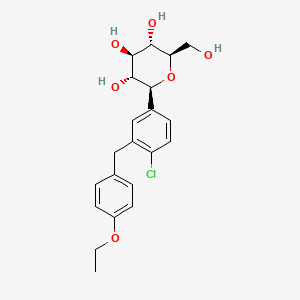
| Formula | C21H25ClO6 |
|---|---|
| Molecular weight | 408.88 g/mol |
| IUPAC name | (2S,3R,4R,5S,6R)-2-[4-chloro-3-[(4-ethoxyphenyl)methyl]phenyl]-6-(hydroxymethyl)oxane-3,4,5-triol |
| CAS | 461432-26-8 |
| PubChem CID | 9887712 |
| InChIKey | JVHXJTBJCFBINQ-ADAARDCZSA-N |
| logP | 1.84 (XLogP 2.3) |
| Polar surface area | 99.38 Ų |
| H-bond acceptors / donors | 6 / 4 |
| Drug-likeness (QED) | 0.58 |
| Lipinski violations | 0 |
SMILES
CCOc1ccc(Cc2cc([C@@H]3O[C@H](CO)[C@@H](O)[C@H](O)[C@H]3O)ccc2Cl)cc1Biology & Pharmacokinetics
Pharmacokinetics predicted
| Bioavailability | 70.0% |
|---|---|
| Half-life | 3.19 h |
| Volume of distribution | 1.563 L/kg |
| Protein binding | 88.3% |
| BBB penetrant | No |
Enzyme interactions
| Enzyme | Role | Detail |
|---|---|---|
| CYP1A2 | Substrate | — |
| CYP2B6 | Inhibitor | — |
| CYP2C8 | Inhibitor | — |
| CYP2C9 | Substrate | — |
| CYP3A4 | Substrate | — |
Receptor binding (top 2)
| Target | Action | Affinity |
|---|---|---|
| Sodium/glucose cotransporter 2 (SLC5A2) | Inhibitor | pIC50 9.3 |
| Sodium/glucose cotransporter 1 (SLC5A1) | Inhibitor | pIC50 6.4 |
Transporters
BCRP (Inhibitor)BSEP (Inhibitor)MRP1 (Inhibitor)OATP1B1 (Inhibitor)OATP1B3 (Inhibitor)P-gp (Inhibitor)MDR1 (Substrate)P-gp (Substrate)
Drug–drug interactions (100+, DDInter)
| Interacting drug | Severity | Management |
|---|---|---|
| Gatifloxacin | major | |
| Acebutolol | moderate | |
| Acetazolamide | moderate | |
| Acetohexamide | moderate | |
| Alfuzosin | moderate | |
| Alimemazine | moderate | |
| Aliskiren | moderate | |
| Aloe Vera Leaf | moderate | |
| Alpelisib | moderate | |
| Alprostadil | moderate | |
| Ambrisentan | moderate | |
| Amiloride | moderate | |
| Amlodipine | moderate | |
| Amprenavir | moderate | |
| Amyl Nitrite | moderate | |
| Apalutamide | moderate | |
| Aripiprazole | moderate | |
| Asenapine | moderate | |
| Asparaginase Erwinia chrysanthemi | moderate | |
| Asparaginase Escherichia coli | moderate | |
| Atazanavir | moderate | |
| Atenolol | moderate | |
| Avanafil | moderate | |
| Azilsartan medoxomil | moderate | |
| Benazepril | moderate | |
| Bendroflumethiazide | moderate | |
| Benzphetamine | moderate | |
| Benzthiazide | moderate | |
| Bepridil | moderate | |
| Betamethasone | moderate | |
| Betaxolol | moderate | |
| Bisoprolol | moderate | |
| Bortezomib | moderate | |
| Bosentan | moderate | |
| Brentuximab vedotin | moderate | |
| Brexpiprazole | moderate | |
| Brigatinib | moderate | |
| Bumetanide | moderate | |
| Calaspargase pegol | moderate | |
| Captopril | moderate |
Showing 40 of 100+.
Registered Products (22)
| Brand | Form / strength | Pack | Agent | Citizen (JOD) |
|---|---|---|---|---|
| DIAZAC 5 | Tablet Dapagliflozin 5 mg | 30 tab | Reda Jardaneh Drug Store | 13.250 |
| GLYXIGA 5 | Tablet Dapagliflozin 5.000 mg | (3 x 10 BLISTERS) / | Omicron Pharma | 15.640 |
| Divinus | Tablet 5 mg | 30 tab | Hikma Pharmaceuticals Co.Ltd/Jordan | 16.970 |
| Deplazen | Tablet 5 mg | 30 tab | Dar Al Dawa Development and Investment Co. Ltd. | 17.400 |
| Rencor 5 mg F.C.Tablet | Film-Coated Tablet 6.15 mg | 28 tab pack varies | Hayat Pharmaceutical industries Co.PLC | 18.770 |
| Rencor 5 mg F.C.Tablet | Film-Coated Tablet 6.15 mg | 30 tab pack varies | Hayat Pharmaceutical industries Co.PLC | 20.110 |
| Forxiga F.C Tab | Film-Coated Tablet as propanediol monohydrate 5 mg | 28 tab | Shawi & Rushedat Drug Store | 20.850 |
| DIAZAC 10 | Tablet Dapagliflozin 10 mg | 30 tab | Reda Jardaneh Drug Store | 21.530 |
| rencor 10 mg F.C.Tablet | Film-Coated Tablet 12.3 mg | 28 tab pack varies | Hayat Pharmaceutical industries Co.PLC | 24.240 |
| GLYXIGA 10 | Tablet Dapagliflozin 10.000 mg | (3x10 BLISTERS) / | Omicron Pharma | 25.650 |
| rencor 10 mg F.C.Tablet | Film-Coated Tablet 12.3 mg | 30 tab pack varies | Hayat Pharmaceutical industries Co.PLC | 25.970 |
| Xigduo XR film coated tablets10\1000 | Film-Coated Tablet 1000 mg, 10 mg | 30 tab | Shawi & Rushedat Drug Store | 27.500 |
| Dapamax 10 Tablet | Tablet 10 mg | 30 tab | Al-motakadema pharmaceutical Ltd/Jordan | 27.750 |
| Divinusmet XR tablets | Tablet 1000 mg, 10 mg | 30 tab | Hikma Pharmaceuticals Co.Ltd/Jordan | 27.930 |
| Deplazen | Tablet 10 mg | 30 tab | Dar Al Dawa Development and Investment Co. Ltd. | 28.530 |
| Dinovo | Tablet 10 mg | 30 tab | Pharma International Company/ Jordan | 28.530 |
| Divinus | Tablet 10 mg | 30 tab | Hikma Pharmaceuticals Co.Ltd/Jordan | 28.530 |
| Depafrox | Tablet 10 mg | 30 tab pack varies | AL-RAM PHARMA.INDUS.CO.LTD/JORDAN | 30.000 |
| Xigduo XR film coated tablets 5\1000 | Film-Coated Tablet 1000 mg, 5 mg | 60 tab | Shawi & Rushedat Drug Store | 31.940 |
| Forxiga F.C Tab | Film-Coated Tablet as propanediol monohydrate 10 mg | 28 tab | Shawi & Rushedat Drug Store | 36.440 |
| Enforza | Tablet 5 mg, 10 mg | 30 tab | Hikma Pharmaceuticals Co.Ltd/Jordan | 52.070 |
| Depafrox | Tablet 10 mg | 1000 tab pack varies | AL-RAM PHARMA.INDUS.CO.LTD/JORDAN | 800.000 |