Everolimus
JFDA label: Certican Tablets
- Immunosuppression (Zortress):
- Renal graft thrombosis (Zortress):
- Nephrotoxicity (Zortress):
- Mortality in heart transplant (Zortress):
Mechanism of Action
Inhibitor of Peptidyl-prolyl cis-trans isomerase FKBP1A — FK506-binding protein 1A inhibitor
| Target | Action | Gene / class |
|---|---|---|
| Peptidyl-prolyl cis-trans isomerase FKBP1A efficacy | INHIBITOR | FKBP1A |
Indications
Approved
- Breast cancer, advanced (Afinitor only)
- Liver transplantation (Zortress only)
- Neuroendocrine tumors (Afinitor only)
- Renal angiomyolipoma with tuberous sclerosis complex (Afinitor only)
- Renal cell carcinoma, advanced (Afinitor only)
- Renal transplantation (Zortress only)
- Subependymal giant cell astrocytoma (Afinitor or Afinitor Disperz only)
Off-label
- Carcinoid tumors (progressive, advanced)
- Heart transplantation (≥3 months post-transplantation) (Zortress only)
- Lung transplantation (Zortress only)
- Waldenström macroglobulinemia (relapsed or refractory)
Contraindications
Source: Lexicomp
- Additional contraindications (not in US labeling): Treatment of seizures (any type) in populations other than those with a definite tuberous sclerosis complex (TSC) diagnosis Absolute
- Hypersensitivity to everolimus, sirolimus, other rapamycin derivatives, or any component of the formulation Absolute
Adverse Reactions
Cardiac disorders (18)
Very Common hypertension · Peripheral edema
Common angina pectoris · atrial fibrillation · cardiac failure · chest discomfort · chest pain · deep vein thrombosis · deep vein thrombosis, paresthesia, chills · edema · Hypertensive crisis · hypotension · palpitations · pulmonary embolism · renal artery thrombosis · syncope · tachycardia · venous thromboembolism
Nervous system disorders (21)
Very Common behavioral problems · Headache · insomnia · procedural pain
Common agitation · anxiety · chills · depression · dizziness · drowsiness · Fatigue · hallucination · hemiparesis · hypoesthesia · lethargy · malaise · migraine · myasthenia · neuralgia · pain · paresthesia
Hepatobiliary disorders (9)
Very Common increased serum ALT · increased serum AST
Common Abnormal hepatic function tests · ascites · hepatitis (noninfections) · increased liver enzymes · increased serum alkaline phosphatase · increased serum bilirubin · Increased serum bilirubin, angioedema
Renal and urinary disorders (29)
Very Common dysuria · hematuria · Increased serum creatinine · irregular menses · Urinary tract infection
Common bladder spasm · cystitis · dysmenorrhea · Erectile dysfunction · Hydronephrosis · increased blood urea nitrogen · interstitial nephritis · perinephric abscess · perinephric hematoma · pollakiuria · polyuria · proteinuria · pyelonephritis · pyuria · Renal failure · renal failure (acute) · renal insufficiency · renal tubular necrosis · scrotal edema · urethritis · urinary retention · urinary urgency · uterine hemorrhage · Vaginal hemorrhage
Blood and lymphatic system disorders (14)
Very Common Anemia · Increase in fasting plasma glucose · leukopenia · lymphocytopenia · prolonged partial thromboplastin time
Common Hemorrhage · leukocytosis · lymphadenopathy · lymphorrhea · Neoplasm · neutropenia · pancytopenia · thrombocythemia · thrombocytopenia
Immune system disorders (1)
Common Angioedema, bacteremia, candidiasis, herpes virus infection, influenza, sepsis, wound infection
Metabolism and nutrition disorders (28)
Very Common decreased serum bicarbonate · decreased serum calcium · Diabetes mellitus · hypercholesterolemia · hyperglycemia · hyperkalemia · hypoalbuminemia · hypokalemia · hypomagnesemia · hypophosphatemia
Common Acidosis · amenorrhea · cushingoid appearance · cyanocobalamin deficiency · dehydration · Diabetes mellitus, hemorrhoids, dysphagia · fluid retention · gout · hirsutism · hypercalcemia · hyperparathyroidism · hypertriglyceridemia · hyperuricemia · hypocalcemia · hypoglycemia · hyponatremia · iron deficiency · ovarian cyst
Gastrointestinal disorders (29)
Very Common abdominal pain · Constipation · diarrhea · dysgeusia · mucositis · nausea · vomiting · weight loss · xerostomia
Common abdominal distention · anorexia · decreased appetite · dyspepsia · dysphagia · epigastric distress · flatulence · gastroenteritis · gastroesophageal reflux disease · gingival hyperplasia · hematemesis · hemorrhoids · intestinal obstruction · oral candidiasis · oral herpes · oral mucosa ulcer · peritoneal effusion · peritonitis · Stomatitis · upper abdominal pain
Skin and subcutaneous tissue disorders (18)
Very Common nail disease · xeroderma
Common acne vulgaris · Acneiform eruption · alopecia · cellulitis · diaphoresis · erythema · folliculitis · hypertrichosis · night sweats · onychoclasis · onychomycosis · palmar-plantar erythrodysesthesia · pruritus · skin lesion · skin rash · tinea pedis
Musculoskeletal and connective tissue disorders (13)
Very Common back pain · Limb pain
Common arthralgia · joint swelling · muscle spasm · musculoskeletal pain · myalgia · osteomyelitis · osteonecrosis · osteoporosis · spondylitis · Tremor · weakness
Eye disorders (4)
Common Blurred vision · cataract · conjunctivitis · Eyelid edema
Ear and labyrinth disorders (1)
Common Otitis media
Infections and infestations (5)
Very Common bacterial infection · hepatitis C · Infection · viral infection
Common Candidiasis, jaw pain
General disorders and administration site conditions (10)
Very Common fever · Incisional pain · Postoperative wound complication
Common polyoma virus infection · Postoperative wound complication (RC: Pneumocystis jirovecii) · progressive multifocal leukoencephalopathy · reactivation of HBV · respiratory distress · thrombosis of vascular graft (kidney) · thrombotic thrombocytopenic purpura
Respiratory, thoracic and mediastinal disorders (22)
Very Common pneumonitis · Respiratory tract infection · rhinitis · Upper respiratory tract infection
Common atelectasis · bronchitis · Cough · dyspnea · epistaxis · lower respiratory tract infection · nasal congestion · nasopharyngitis · oropharyngeal pain · pharyngolaryngeal pain · pleural effusion · pneumonia · pulmonary edema · rhinorrhea · sinus congestion · sinusitis · Streptococcal pharyngitis · wheezing
Dosing
Source: Lexicomp
Warnings & Precautions
Source: Lexicomp
Angioedema
Everolimus is associated with the development of angioedema; concomitant use with other agents known to cause angioedema (eg, ACE inhibitors) may increase the risk.
Bone marrow suppression
Decreases in hemoglobin, neutrophils, platelets, and lymphocytes have been reported. Monitor blood counts at baseline and periodically.
Edema
Generalized edema (including peripheral edema and lymphedema) and local fluid accumulation (eg, pericardial effusion, pleural effusion, ascites) may occur.
Fertility effects
May cause infertility. In females, menstrual irregularities, secondary amenorrhea, and increases in luteinizing hormone and follicle-stimulating hormone have occurred. Azoospermia and oligospermia have been observed in males.
Graft thrombosis
An increased risk of renal arterial and venous thrombosis has been reported with use in renal transplantation, generally within the first 30 days after transplant; may result in graft loss.
Hepatic artery thrombosis
MTOR inhibitors are associated with an increase in hepatic artery thrombosis, most cases have been reported within 30 days after transplant and usually proceeded to graft loss or death. Do not use everolimus prior to 30 days post liver transplant.
Infections
Everolimus has immunosuppressant properties which may result in infection; the risk of developing bacterial (including mycobacterial), viral, fungal, and protozoal infections and for local, opportunistic (including polyomavirus infection), and/or systemic infections is increased; may lead to sepsis, respiratory failure, hepatic failure, or fatality. Polyoma virus infection in transplant patients may be serious and/or fatal. Polyoma virus-associated nephropathy (due to BK virus), which may result in serious cases of deteriorating renal function and renal graft loss, has been observed with use in renal transplantation. JC virus-associated progressive multiple leukoencephalopathy (PML) may also be associated with everolimus use in transplantation. Reduced immunosuppression (taking into account the risks of rejection) should be considered with evidence of polyoma virus infection or PML. Reactivation of hepatitis B has been observed in patients receiving everolimus. Resolve preexisting invasive fungal infections prior to treatment initiation. Cases (some fatal) of Pneumocystis jirovecii pneumonia (PCP) have been reported with everolimus use. Consider PCP prophylaxis in patients receiving concomitant corticosteroid or other immunosuppressant therapy. In addition, transplant recipient patients should receive prophylactic therapy for PCP and for cytomegalovirus (CMV). Monitor for signs and symptoms of infection during treatment. Discontinue if invasive systemic fungal infection is di
Malignancy
Immunosuppressant use may result in the development of malignancy, including lymphoma and skin cancer. The risk is associated with treatment intensity and the duration of therapy. To minimize the risk for skin cancer, limit exposure to sunlight and ultraviolet light; wear protective clothing, and use effective sunscreen.
Metabolic effects
Hyperglycemia, hyperlipidemia, and hypertriglyceridemia have been reported. Higher serum everolimus concentrations are associated with an increased risk for hyperlipidemia. Use has not been studied in patients with baseline cholesterol >350 mg/dL. Monitor fasting glucose and lipid profile prior to treatment initiation and periodically thereafter. Monitor more frequently in patients with concomitant medications affecting glucose. Increases in serum glucose are common; may alter insulin and/or oral hypoglycemic therapy requirements in patients with diabetes. The risk for new-onset diabetes is increased with everolimus use after transplantation. Manage with appropriate medical therapy (if possible, optimize glucose control and lipids prior to treatment initiation). Antihyperlipidemic therapy may not normalize levels.
Mucositis/stomatitis
Everolimus is associated with mouth ulcers, mucositis, and stomatitis. Stomatitis typically occurs within the first 8 weeks of therapy. When used for oncology indications, dexamethasone 0.5 mg/5 mL alcohol-free oral solution mouthwash (10 mL swish and spit 4 times/day) may reduce the incidence and severity of stomatitis if initiated at the onset of everolimus treatment (avoid food or drink within 1 hour after dexamethasone). If stomatitis does occur, manage with topical therapy; avoid the use of alcohol-, hydrogen peroxide–, iodine-, or thyme-based mouthwashes. Due to the high potential for drug interactions, avoid the use of systemic antifungals unless fungal infection has been diagnosed.
Nephrotoxicity
Elevations in serum creatinine (generally mild), renal failure, and proteinuria have been observed with everolimus use; monitor renal function (BUN, creatinine, and/or urinary protein). Risk of nephrotoxicity may be increased when administered with calcineurin inhibitors (eg, cyclosporine, tacrolimus); dosage adjustment of calcineurin inhibitor is necessary. Monitor for proteinuria; the risk of proteinuria is increased when everolimus is used in combination with cyclosporine, and with higher serum everolimus concentrations.
Pulmonary toxicity
Noninfectious pneumonitis, interstitial lung disease (ILD), and/or noninfectious fibrosis have been observed with mTOR inhibitors, including everolimus; some cases were fatal. Symptoms include dyspnea, cough, hypoxia and/or pleural effusion; promptly evaluate worsening respiratory symptoms. Cases of ILD have been reported with pulmonary hypertension (including pulmonary arterial hypertension) as a secondary event. Consider opportunistic infections such as Pneumocystis jirovecii pneumonia (PCP) when evaluating clinical symptoms. May require treatment interruption followed by dose reduction (pneumonitis has developed even with reduced doses) and/or corticosteroid therapy; discontinue for grade 4 pneumonitis. Consider discontinuation for recurrence of grade 3 toxicity after dosage reduction. In patients who require steroid therapy for symptom management, consider PCP prophylaxis. Imaging may overestimate the incidence of clinical pneumonitis.
Wound healing complication
Everolimus use may delay wound healing and increase the occurrence of wound-related complications (eg, wound dehiscence, infection, incisional hernia, lymphocele, seroma); may require surgical intervention. Use everolimus with caution in the peri-surgical period. Disease-related concerns:
Heart transplantation
Increased mortality (usually associated with infections) within the first 3 months after transplant was noted in a study of patients with de novo heart transplant receiving immunosuppressive regimens containing everolimus (with or without induction therapy). Use in heart transplantation is not recommended. The boxed warning in the labeling (Zortress) is based on severe infectious complications, rather than efficacy (reduction in the incidence of cardiac allograft vasculopathy). Despite labeled warnings for this off-label indication, some centers continue to use everolimus (with reduced calcineurin inhibitor exposure). However, everolimus initiation in heart transplantation is delayed until 3 to 6 months post-transplantation due to impaired wound healing and pericardial effusions early on in the postoperative period (Andreassen 2014; Andreassen 2016; Costanza 2010; Hirt 2013; Hollis 2015).
Hepatic impairment
Everolimus exposure is increased in patients with hepatic impairment. For patients with breast cancer, neuroendocrine tumors, RCC, or renal angiomyolipoma with mild and moderate hepatic impairment, reduced doses are recommended; in patients with severe hepatic impairment, use is recommended (at reduced doses) if the potential benefit outweighs risks. Reduced doses are recommended in transplant patients with hepatic impairment (Child-Pugh class A, B, or C); monitor whole blood trough levels closely. For patients with SEGA, reduced doses may be needed (based on therapeutic drug monitoring) for mild and moderate hepatic impairment, and are recommended in severe hepatic impairment; monitor whole blood trough levels.
Hereditary galactose intolerance
Avoid use in patients with galactose intolerance, Lapp lactase deficiency, or glucose-galactose malabsorption; may result in diarrhea and malabsorption.
Renal impairment
An increased incidence of rash, infection and dose interruptions have been reported in patients with renal insufficiency (CrCl ≤60 mL/minute) who received mTOR inhibitors for the treatment of renal cell cancer (Gupta 2011). Serum creatinine elevations and proteinuria have been reported. Monitor renal function (BUN, serum creatinine, urinary protein) at baseline and periodically, especially if risk factors for further impairment exist. Pharmacokinetic studies have not been conducted; dosage adjustments are not required based on renal impairment.
Transplantation (solid organ)
The safety and efficacy of everolimus in renal transplantation patients with high-immunologic risk or in solid organ transplant other than renal or liver have not been established. In liver transplant, tacrolimus has minimal or no pharmacokinetic impact on everolimus concentrations. Concurrent drug therapy issues:
Calcineurin inhibitor combination therapy
Due to the increased risk for nephrotoxicity in renal transplantation, avoid standard doses of cyclosporine in combination with everolimus; reduced cyclosporine doses are recommended when everolimus is used in combination with cyclosporine. Therapeutic monitoring of cyclosporine and everolimus concentrations is recommended. Everolimus and cyclosporine combination therapy may result in increased proteinuria and may increase the risk for thrombotic microangiopathy/thrombotic thrombocytopenic purpura/hemolytic uremic syndrome (TMA/TTP/HUS); monitor blood counts. In liver transplantation, the tacrolimus dose and target range should be reduced to minimize the risk of nephrotoxicity. Eliminating calcineurin inhibitors from the immunosuppressive regimen may result in acute rejection.
Drug-drug/drug-food interactions
Potentially significant interactions may exist, requiring dose or frequency adjustment, additional monitoring, and/or selection of alternative therapy. Consult drug interactions database for more detailed information.
HMG-CoA reductase inhibitors
In transplant patients, avoid the use of certain HMG-CoA reductase inhibitors (eg, simvastatin, lovastatin); may increase the risk for rhabdomyolysis due to the potential interaction with cyclosporine (which may be given in combination with everolimus for transplantation). Dosage form specific issues:
Tablet formulations
Tablets (Afinitor, Zortress) and tablets for oral suspension (Afinitor Disperz) are not interchangeable; Afinitor Disperz is only indicated in conjunction with therapeutic monitoring for the treatment of SEGA. Do not combine formulations to achieve total desired dose. Other warnings/precautions:
Appropriate use
Continue treatment with everolimus for renal cell cancer as long as clinical benefit is demonstrated or until occurrence of unacceptable toxicity.
Assay method
For indications requiring whole blood trough concentrations to determine dosage adjustments, a consistent method should be used; concentration values from different assay methods may not be interchangeable.
Experienced physician
In transplantation, everolimus should only be used by physicians experienced in immunosuppressive therapy and management of transplant patients. Adequate laboratory and supportive medical resources must be readily available.
Immunizations
Patients should not be immunized with live viral vaccines during or shortly after treatment and should avoid close contact with recently vaccinated (live vaccine) individuals. In pediatric patients treated for SEGA, complete recommended series of live virus childhood vaccinations prior to treatment (if immediate everolimus treatment is not indicated); an accelerated vaccination schedule may be appropriate.
Pregnancy & Lactation
Pregnancy
Based on the mechanism of action and data from animal reproduction studies, everolimus may cause fetal harm if administered during pregnancy. Information related to the use of everolimus in pregnancy is limited (Yamamura 2017). Females of reproductive potential should be advised to avoid pregnancy and use highly effective birth control during treatment and for 8 weeks after the last everolimus dose. Male patients with female partners of reproductive potential should use effective contraception during treatment and for 4 weeks after the last everolimus dose. Everolimus may cause infertility. In females, menstrual irregularities, secondary amenorrhea, and increases in luteinizing hormone and follicle-stimulating hormone have occurred. Azoospermia and oligospermia have been observed in males. Females of reproductive potential should consider family planning options prior to therapy. The National Transplantation Pregnancy Registry (NTPR) is a registry which follows pregnancies which
Lactation
Everolimus is present in breast milk (Kociszewska-Najman 2017). Due to the potential for serious adverse reactions in the breastfed infant, breastfeeding is not recommended by the manufacturer during therapy (Afinitor, Zortress) and for 2 weeks following the last dose (Afinitor).
Monitoring
| Clinical pearl | CBC with differential (baseline and periodic); liver function (baseline and periodic); serum creatinine (baseline and periodic), urinary protein (baseline and periodic), and BUN (baseline and periodic); fasting serum glucose, HbA1c, and lipid profile (baseline and periodic); monitor for signs and symptoms of infection, noninfectious pneumonitis, stomatitis, or malignancy Solid organ transplantation: Monitor everolimus whole blood trough concentrations (based on an LC/MS/MS assay method), especially in patients with hepatic impairment, with concomitant CYP3A4 inhibitors and inducers, and when cyclosporine or tacrolimus formulations or doses are changed; dosage adjustments should be made on trough concentrations obtained 4 to 5 days after a previous dosage adjustment; monitor cyclosporine or tacrolimus concentrations; monitor for proteinuria SEGA: Monitor everolimus whole blood trough concentrations ~2 weeks after treatment initiation or with dosage modifications, initiation or changes to concurrent CYP3A4/P-glycoprotein (P-gp) inhibitor/inducer therapy, changes in hepatic function and when changing dosage forms between Afinitor tablets and Afinitor Disperz. Maintain trough concentrations between 5 and 15 ng/mL; once stable dose is attained and if BSA is stable throughout treatment, monitor trough concentrations every 6 to 12 months (monitor every 3 to 6 months if BSA is changing). Monitor adherence. |
|---|
Chemistry & Properties
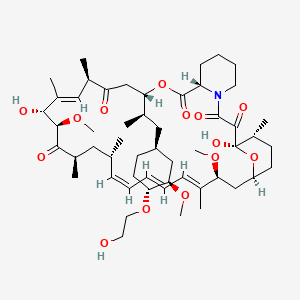
| Formula | C53H83NO14 |
|---|---|
| Molecular weight | 958.24 g/mol |
| IUPAC name | (1R,9S,12S,15R,16E,18R,19R,21R,23S,24E,26E,28E,30S,32S,35R)-1,18-dihydroxy-12-[(2R)-1-[(1S,3R,4R)-4-(2-hydroxyethoxy)-3-methoxycyclohexyl]propan-2-yl]-19,30-dimethoxy-15,17,21,23,29,35-hexamethyl-11,36-dioxa-4-azatricyclo[30.3.1.04,9]hexatriaconta-16,24,26,28-tetraene-2,3,10,14,20-pentone |
| CAS | 159351-69-6 |
| PubChem CID | 6442177 |
| InChIKey | HKVAMNSJSFKALM-GKUWKFKPSA-N |
| logP | 6.2 (XLogP 5.9) |
| Polar surface area | 204.66 Ų |
| H-bond acceptors / donors | 14 / 3 |
| Drug-likeness (QED) | 0.13 |
| Lipinski violations | 3 |
SMILES
CO[C@H]1C[C@@H]2CC[C@@H](C)[C@@](O)(O2)C(=O)C(=O)N2CCCC[C@H]2C(=O)O[C@H]([C@H](C)C[C@@H]2CC[C@@H](OCCO)[C@H](OC)C2)CC(=O)[C@H](C)/C=C(\C)[C@@H](O)[C@@H](OC)C(=O)[C@H](C)C[C@H](C)/C=C/C=C/C=C/1CBiology & Pharmacokinetics
Pharmacokinetics predicted
| Bioavailability | 70.0% |
|---|---|
| Half-life | 1.954 h |
| Volume of distribution | 1.421 L/kg |
| Protein binding | 94.7% |
| BBB penetrant | No |
Enzyme interactions
| Enzyme | Role | Detail |
|---|---|---|
| CYP2B6 | Inhibitor | — |
| CYP2C8 | Inhibitor | — |
| CYP3A4 | Inhibitor | — |
| CYP3A4 | Substrate | — |
Receptor binding (top 1)
| Target | Action | Affinity |
|---|---|---|
| mechanistic target of rapamycin kinase (MTOR) | Inhibitor | pIC50 8.7 |
Transporters
BCRP (Inhibitor)BSEP (Inhibitor)BSEP (Inhibitor)MDR1 (Inhibitor)MRP1 (Inhibitor)MRP2 (Inhibitor)MRP3 (Inhibitor)MRP4 (Inhibitor)OATP1A2 (Inhibitor)OATP1B1 (Inhibitor)OATP1B1 (Inhibitor)OATP1B3 (Inhibitor)OATP1B3 (Inhibitor)P-gp (Inhibitor)MDR1 (Substrate)OATP1A2 (Substrate)OATP1B3 (Substrate)P-gp (Substrate)
Drug–drug interactions (100+, DDInter)
| Interacting drug | Severity | Management |
|---|---|---|
| Acyclovir | major | |
| Adalimumab | major | |
| Amikacin | major | |
| Amikacin (liposome) | major | |
| Amphotericin B | major | |
| Amphotericin B (cholesteryl sulfate) | major | |
| Amphotericin B (lipid complex) | major | |
| Amphotericin B (liposomal) | major | |
| Amprenavir | major | |
| Apalutamide | major | |
| Aprepitant | major | |
| Atazanavir | major | |
| Bacillus calmette-guerin substrain tice live antigen | major | |
| Bacitracin | major | |
| Baricitinib | major | |
| Boceprevir | major | |
| Bromfenac | major | |
| Capreomycin | major | |
| Carbamazepine | major | |
| Celecoxib | major | |
| Ceritinib | major | |
| Certolizumab pegol | major | |
| Chloramphenicol | major | |
| Cisplatin | major | |
| Cladribine | major | |
| Clarithromycin | major | |
| Cobicistat | major | |
| Colistimethate | major | |
| Conivaptan | major | |
| Crizotinib | major | |
| Cyclosporine | major | |
| Dalfopristin | major | |
| Darunavir | major | |
| Deferiprone | major | |
| Delavirdine | major | |
| Dexamethasone | major | |
| Diatrizoate | major | |
| Diclofenac | major | |
| Diflunisal | major | |
| Diltiazem | major |
Showing 40 of 100+.
Registered Products (4)
| Brand | Form / strength | Pack | Agent | Citizen (JOD) |
|---|---|---|---|---|
| Certican Tablets | Tablet 0.25 mg | 60 tab | The Jordan Drugstore Co | 127.260 |
| Afinitor | Tablet 5 mg | 30 tab | The Jordan Drugstore Co | — |
| Afinitor | Tablet 10 mg | 30 tab | The Jordan Drugstore Co | — |
| Certican Tablets | Tablet 0.75 mg | 60 tab | The Jordan Drugstore Co | — |