Lamivudine
Active form: Lamivudine Triphosphate.
JFDA label: Mivux 100 mg Film Coated Tablet
- Lactic acidosis and severe hepatomegaly with steatosis:
- Exacerbations of hepatitis B:
- Important differences among lamivudine-containing products:
- Risk of HIV-1 resistance if lamivudine-HBV is used in patients with unrecognized or untreated HIV-1:
Mechanism of Action
Inhibitor of Human immunodeficiency virus type 1 reverse transcriptase — Human immunodeficiency virus type 1 reverse transcriptase inhibitor; Inhibitor of DNA — DNA inhibitor; Inhibitor of DNA polymerase/reverse transcriptase — DNA polymerase/reverse transcriptase inhibitor
| Target | Action | Gene / class |
|---|---|---|
| DNA efficacy | INHIBITOR | |
| DNA polymerase/reverse transcriptase efficacy | INHIBITOR | P |
| Human immunodeficiency virus type 1 reverse transcriptase efficacy | INHIBITOR | pol |
Indications
Approved
- Chronic hepatitis B (Epivir HBV)
- HIV-1 infection (Epivir)
Off-label
- HIV-1 nonoccupational postexposure prophylaxis
- Prevention of perinatal HIV transmission
Antimicrobial Spectrum
Expected / intrinsic spectrum (EUCAST breakpoints & labels) — not local resistance. Source: openfda-label.
Viruses
| Organism | Activity | MIC |
|---|---|---|
| Hepatitis C | Active | — |
Class profile
| targetVirus | HIV-1/HIV-2/HBV |
|---|---|
| viralClass | Retrovirus (+ssRNA) |
| targetStep | Reverse transcription (NRTI) |
| resistanceBarrier | Low (M184V/I) |
| crossResistance | Cross-resistance: emtricitabine |
| source | DHHS/AASLD/manufacturer-PIL |
Contraindications
Source: Lexicomp
- Hypersensitivity to lamivudine or any component of the formulation Absolute
Adverse Reactions
Nervous system disorders (8)
Very Common fatigue · Headache · insomnia · neuropathy
Common chills · depression · Dizziness · Headache
Hepatobiliary disorders (2)
Very Common Increased serum transaminases
Common Exacerbation of hepatitis B on discontinuation
Blood and lymphatic system disorders (3)
Very Common Neutropenia
Common hemoglobinemia · Thrombocytopenia
Metabolism and nutrition disorders (1)
Rare Lactic acidosis (mitochondrial toxicity)
Gastrointestinal disorders (13)
Very Common abdominal pain · diarrhea · Nausea · pancreatitis · sore throat · vomiting
Common abdominal cramps · Anorexia · dyspepsia · heartburn · increased amylase · increased serum lipase · Nausea
Skin and subcutaneous tissue disorders (1)
Common Skin rash
Musculoskeletal and connective tissue disorders (4)
Very Common musculoskeletal pain · Myalgia
Common arthralgia · Increased creatine phosphokinase
Infections and infestations (1)
Very Common Infection
General disorders and administration site conditions (2)
Common Fatigue · Fever
Respiratory, thoracic and mediastinal disorders (2)
Very Common cough · Nasal signs and symptoms
Dosing
Source: Lexicomp
Warnings & Precautions
Source: Lexicomp
Fat redistribution
May cause redistribution/accumulation of fat (eg, central obesity, buffalo hump, peripheral wasting, facial wasting, breast enlargement, cushingoid appearance).
Immune reconstitution syndrome
Patients may develop immune reconstitution syndrome resulting in the occurrence of an inflammatory response to an indolent or residual opportunistic infection during initial HIV treatment or activation of autoimmune disorders (eg, Graves disease, polymyositis, Guillain-Barré syndrome) later in therapy; further evaluation and treatment may be required.
Lactic acidosis/hepatomegaly
Lactic acidosis and severe hepatomegaly with steatosis have been reported with nucleoside analogues, including fatal cases; suspend treatment in any patient who develops clinical or laboratory findings suggestive of lactic acidosis or pronounced hepatotoxicity; use with caution in patients with risk factors for liver disease (risk may be increased with female gender, obesity, pregnancy, or prolonged exposure); transaminase elevation may/may not accompany hepatomegaly and steatosis.
Pancreatitis
Has been reported, particularly in HIV-infected children with a history of nucleoside use. Discontinue treatment if signs of symptoms of pancreatitis occur. Disease-related concerns:
Chronic hepatitis B
Severe acute exacerbations of hepatitis B (some fatal) have been reported in patients with HBV or HIB/HBV coinfection who have discontinued lamivudine; hepatic function should be monitored closely with both clinical and laboratory follow-up for at least several months after discontinuation. Initiate antihepatitis B (HBV) medications if clinically appropriate.
Renal impairment
Use with caution in patients with renal impairment; dosage reduction recommended.
Resistance
- HIV: [US Boxed Warning]: HIV-1 resistance may emerge in chronic hepatitis B-infection patients with unrecognized or untreated HIV-1 infection. Counseling and HIV testing should be offered to all patients before beginning treatment with lamivudine for hepatitis B and then periodically during treatment. Lamivudine dosing for hepatitis B is subtherapeutic if used for HIV-1 infection treatment. Lamivudine monotherapy is not appropriate for HIV-1 infection treatment. Lamivudine resistant HIV-1 can develop rapidly and limit treatment options if used in unrecognized or untreated HIV-1 infection or if a patient becomes coinfected during HBV treatment. Lamivudine dosing for hepatitis B is also subtherapeutic if used for HIV-1/HBV coinfection treatment. If lamivudine is chosen as part of a HIV-1 treatment regimen in coinfected patients, the higher lamivudine dosage indicated for HIV-1 therapy should be used, with other drugs, in an appropriate combination regimen. - HBV: Patients treated with lamivudine-HBV with YMDD-mutant HBV showed diminished treatment response (lower rates of HbeAg seroconversion and HbeAg loss, more frequent return of positive HBV DNA, more frequent ALT elevations) compared to patients without evidence of YMDD substitutions. Emergence of lamivudine resistant HBV variants has also been reported in HIV-1/HBV coinfected patients who have received lamivudine-containing antiretroviral regimens. Concurrent drug therapy issues:
Drug-drug interactions
Potentially significant interactions may exist, requiring dose or frequency adjustment, additional monitoring, and/or selection of alternative therapy. Consult drug interactions database for more detailed information
Interferon alfa
Use with caution in combination with interferon alfa with or without ribavirin in HIV/HCV coinfected patients; monitor closely for hepatic decompensation, anemia, or neutropenia; dose reduction or discontinuation of interferon and/or ribavirin may be required if toxicity evident. Special populations:
Pediatric
Use with caution in pediatric patients with a history of prior antiretroviral nucleoside exposure or pancreatitis, or other significant risk factors for development of pancreatitis. Dosage form specific issues:
Appropriate product selection
Epivir HBV: [US Boxed Warning]: Do not use Epivir HBV tablets or Epivir HBV oral solution for the treatment of HIV.
Oral solution
Use of lamivudine oral solution has been associated with lower rates of virologic suppression, lower plasma lamivudine exposure, and increased rates of resistance when compared to lamivudine tablets in pediatric clinical trials. Lamivudine scored tablet is the preferred formulation for HIV-1 infected pediatric patients weighing ≥14 kg and for whom a solid dosage form is appropriate; consider more frequent monitoring of HIV-1 viral load if oral solution is used.
Sucrose
Lamivudine oral solutions contains 3 g of sucrose/15 mL; advise diabetic patients of sucrose content.
Propylene glycol
Some dosage forms may contain propylene glycol; large amounts are potentially toxic and have been associated hyperosmolality, lactic acidosis, seizures and respiratory depression; use caution (AAP 1997; Zar 2007). Other warnings/precautions:
Appropriate use
-HIV: Do not use as monotherapy in treatment of HIV. Treatment of HIV in patients with unrecognized/untreated HBV may lead to rapid HBV resistance; HIV-infected patients should be screened for hepatitis B prior to starting lamivudine HIV therapy. Lamivudine combined with emtricitabine is not recommended as a dual-nucleoside reverse transcriptase inhibitor (NRTI) combination due to similar resistance patterns and negligible additive antiviral activity. Do not use lamivudine/abacavir (plus efavirenz or plus atazanavir/ritonavir) in adolescent and adult HIV-1 patients with a pre-ART HIV RNA >100,000 copies/mL (HHS [adult] 2017). - HBV: Current clinical hepatitis B practice guidelines do not recommend lamivudine for initial use in the management of chronic HBV due to low barrier to resistance; other antiviral agents with a high genetic barrier to drug resistance are preferred (eg, tenofovir or entecavir) (AASLD [Terrault 2016]). - HIV/HBV coinfection: Lamivudine and tenofovir is a recommended NRTI backbone in a fully suppressive antiretroviral regimen to provide activity against both HIV and HBV (HHS [adult] 2017).
Pregnancy & Lactation
Pregnancy
Lamivudine has a high level of transfer across the human placenta. No increased risk of overall birth defects has been observed following first trimester exposure according to data collected by the antiretroviral pregnancy registry. Maternal antiretroviral therapy (ART) may increase the risk of preterm delivery, although available information is conflicting possibly due to variability of maternal factors (disease severity; gestational age at initiation of therapy); however, maternal antiretroviral medication should not be withheld due to concerns of preterm birth. Based on data collected by the antiretroviral pregnancy registry, the risk of spontaneous abortions, induced abortions, and preterm birth is less in lamivudine-containing regimens compared with regimens without lamivudine. Information related to stillbirth, low birth weight, and small for gestational age infants is limited. Long-term follow-up is recommended for all infants exposed to antiretroviral medications; children who
Lactation
Lamivudine is present in breast milk and can be detected in the serum of breastfeeding infants. Maternal or infant antiretroviral therapy does not completely eliminate the risk of postnatal HIV transmission. In addition, multiclass-resistant virus has been detected in breastfeeding infants despite maternal therapy. Therefore, in the US, where formula is accessible, affordable, safe, and sustainable, and the risk of infant mortality due to diarrhea and respiratory infections is low, females wit
Monitoring
| Efficacy | Viral load (undetectable = success); CD4 count (HIV); hepatic enzymes and HBV/HCV DNA (hepatitis); clinical resolution of acute viral illness |
|---|---|
| Toxicity | Renal function (most antivirals are renally cleared); LFTs; resistance testing if virological failure; CBC |
| Clinical pearl | For HIV, undetectable viral load at 6 months predicts long-term treatment success. Resistance testing is mandatory at virological failure. |
| Counseling | Do not miss doses — even brief interruptions can cause viral rebound and resistance selection. Report any side effects early rather than stopping independently. |
Chemistry & Properties
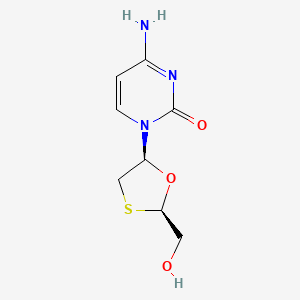
| Formula | C8H11N3O3S |
|---|---|
| Molecular weight | 229.26 g/mol |
| IUPAC name | 4-amino-1-[(2R,5S)-2-(hydroxymethyl)-1,3-oxathiolan-5-yl]pyrimidin-2-one |
| CAS | 134678-17-4 |
| PubChem CID | 60825 |
| InChIKey | JTEGQNOMFQHVDC-NKWVEPMBSA-N |
| logP | -0.59 (XLogP -0.9) |
| Polar surface area | 90.37 Ų |
| H-bond acceptors / donors | 7 / 2 |
| Drug-likeness (QED) | 0.70 |
| Lipinski violations | 0 |
SMILES
Nc1ccn([C@@H]2CS[C@H](CO)O2)c(=O)n1Biology & Pharmacokinetics
Pharmacokinetics
| BBB penetrant | No |
|---|
Enzyme interactions
| Enzyme | Role | Detail |
|---|---|---|
| CYP1A2 | Substrate | — |
| CYP2C19 | Substrate | — |
| CYP2C9 | Substrate | — |
| CYP2D6 | Substrate | — |
| CYP3A4 | Substrate | — |
Transporters
BCRP (Inhibitor)BSEP (Inhibitor)BSEP (Inhibitor)CNT1 (Inhibitor)MATE1 (Inhibitor)MDR1 (Inhibitor)MRP1 (Inhibitor)MRP1 (Inhibitor)MRP2 (Inhibitor)MRP3 (Inhibitor)MRP4 (Inhibitor)OATP1B1 (Inhibitor)OATP1B3 (Inhibitor)OATP2B1 (Inhibitor)OCT1 (Inhibitor)OCT2 (Inhibitor)OCT3 (Inhibitor)OCTN2 (Inhibitor)P-gp (Inhibitor)Transporter(unspecified) (Inhibitor)BCRP (Substrate)MDR1 (Substrate)MRP1 (Substrate)MRP3 (Substrate)OAT1 (Substrate)OCT1 (Substrate)OCT2 (Substrate)OCT3 (Substrate)P-gp (Substrate)Transporter(unspecified) (Substrate)
Drug–drug interactions (23, DDInter)
| Interacting drug | Severity | Management |
|---|---|---|
| Bexarotene | major | |
| Leflunomide | major | |
| Teriflunomide | major | |
| Asparaginase Escherichia coli | moderate | |
| Brentuximab vedotin | moderate | |
| Cabozantinib | moderate | |
| Cladribine | moderate | |
| Clofarabine | moderate | |
| Cobicistat | moderate | |
| Epirubicin | moderate | |
| Idelalisib | moderate | |
| Interferon beta-1a | moderate | |
| Interferon beta-1b | moderate | |
| Lactitol | moderate | |
| Mannitol | moderate | |
| Methotrexate | moderate | |
| Naltrexone | moderate | |
| Orlistat | moderate | |
| Pegaspargase | moderate | |
| Peginterferon beta-1a | moderate | |
| Sorbitol | moderate | |
| Tioguanine | moderate | |
| Trabectedin | moderate |
Registered Products (2)
| Brand | Form / strength | Pack | Agent | Citizen (JOD) |
|---|---|---|---|---|
| Mivux 100 mg Film Coated Tablet | Film-Coated Tablet 100 mg | 28 tab | Ibn Rushd Drug Store | 14.240 |
| Zeffix Tablet | Tablet 100 mg | 28 tab | Suleiman Tannous & Sons Co. Ltd | 27.980 |