Midazolam
JFDA label: Dormicum IV,IM Amp
- Respiratory depression and personnel/equipment for monitoring and resuscitation:
- Risks from concomitant use with opioids:
- Individualization of dosage (injection):
- Neonates (injection):
Mechanism of Action
Positive Allosteric Modulator of GABA-A receptor; anion channel — GABA-A receptor; anion channel positive allosteric modulator
| Target | Action | Gene / class |
|---|---|---|
| GABA-A receptor; anion channel efficacy | POSITIVE ALLOSTERIC MODULATOR |
Indications
Approved
- Anesthesia
- IM
- IV
- Oral
- Sedation for mechanically-ventilated patients
- Sedation/anxiolysis/amnesia (preoperative/procedural)
Off-label
- Palliative sedation
- Seizures (children/adolescents)
- Status epilepticus (children/adolescents/adults)
- Status epilepticus, refractory (adults)
- Status epilepticus, refractory (children/adolescents)
Contraindications
Source: Lexicomp
- Additional contraindications (not in US labeling): Hypersensitivity to benzodiazepines Absolute
- Hypersensitivity to midazolam or any component of the formulation Absolute
- acute narrow-angle glaucoma. Concurrent use of oral midazolam with protease inhibitors (atazanavir, atazanavir-cobicistat, darunavir, indinavir, lopinavir-ritonavir, nelfinavir, ritonavir, saquinavir, tipranavir) Absolute
- acute pulmonary insufficiency Absolute
- concurrent use of oral or injectable midazolam with fosamprenavir. Documentation of allergenic cross-reactivity for benzodiazepines is limited. However, because of similarities in chemical structure and/or pharmacologic actions, the possibility of cross-sensitivity cannot be ruled out with certainty Absolute
- intrathecal or epidural injection of parenteral forms containing preservatives (ie, benzyl alcohol) Absolute
- severe chronic obstructive pulmonary disease Absolute
- use in premature infants for parenteral forms containing benzyl alcohol Absolute
Adverse Reactions
Cardiac disorders (1)
Common Hypotension
Nervous system disorders (6)
Common Drowsiness · drug dependence (physical and psychological dependence with prolonged use) · headache · myoclonus (preterm infants) · seizure-like activity · severe sedation
Gastrointestinal disorders (3)
Common Hiccups · nausea · vomiting
Eye disorders (1)
Common Nystagmus
General disorders and administration site conditions (3)
Common Injection site reaction · pain at injection site · Paradoxical reaction
Other (2)
Very Common decreased tidal volume · Respiratory: Bradypnea
Respiratory, thoracic and mediastinal disorders (2)
Common Apnea · cough
Dosing
Source: Lexicomp
Warnings & Precautions
Source: Lexicomp
Anterograde amnesia
Benzodiazepines have been associated with anterograde amnesia (Nelson 1999).
Cardiorespiratory effects
Has been associated with respiratory depression and respiratory arrest, especially when used for sedation in noncritical care settings; airway obstruction, desaturation, hypoxia, and apnea have also been reported, most often when used concomitantly with other CNS depressants (eg, opioids). In some cases, death or hypoxic encephalopathy resulted. Use only in hospital or ambulatory care settings that provide for continuous monitoring of respiratory and cardiac function (ie, pulse oximetry). Immediate availability of resuscitative drugs and age- and size-appropriate equipment for bag/valve/mask ventilation and intubation, and personnel trained in their use and skilled in airway management should be assured. For deeply sedated patients, a dedicated individual, other than the practitioner performing the procedure, should monitor the patient throughout the procedure. Risk of cardiorespiratory adverse events is increased in patients with abnormal airway anatomy, cyanotic congenital heart disease, sepsis or severe pulmonary disease.
CNS depression
May cause CNS depression, which may impair physical or mental abilities; patients must be cautioned about performing tasks that require mental alertness (eg, operating machinery, driving). A minimum of 1 day should elapse after midazolam administration before attempting these tasks.
Hypotension
May cause hypotension, particularly in pediatric patients or patients with hemodynamic instability. Hypotension may occur more frequently in patients who have received opioid analgesics.
Paradoxical reactions
Paradoxical reactions, including agitation, hyperactive or aggressive behavior, involuntary movements (including tonic/clonic movements and muscle tremor) and combativeness have been reported with benzodiazepines. Consideration should be given to the possibility of cerebral hypoxia or true paradoxical reactions. Should such reactions occur, the response to each dose of midazolam and all other drugs, including local anesthetics, should be evaluated before proceeding. May consider treatment with flumazenil (Massanari 1997). Disease-related concerns:
Acute illness
Use IV midazolam with caution in patients with uncompensated acute illnesses, such as severe fluid or electrolyte disturbances.
Cardiovascular disease
Use with caution in patients with heart failure. Adverse hemodynamic events have been reported in pediatric patients with cardiovascular instability; avoid rapid IV administration in these patients.
Glaucoma
Use with caution in patients with glaucoma; contraindicated in patients with acute narrow angle glaucoma; may use in patients with open-angle glaucoma only if receiving appropriate therapy.
Renal impairment
Use with caution in patients with renal impairment; half-life of midazolam and metabolites may be prolonged.
Respiratory disease
Use with caution in patients with respiratory disease (eg, COPD); these patients may be sensitive to the respiratory depressant effects of midazolam. Concurrent drug therapy issues:
Concomitant use with opioids
Concomitant use of benzodiazepines and opioids may result in profound sedation, respiratory depression, coma, and death. Reserve concomitant prescribing of these drugs for use in patients for whom alternative treatment options are inadequate. Limit dosages and durations to the minimum required. Follow patients for signs and symptoms of respiratory depression and sedation.
Drug-drug interactions
Potentially significant interactions may exist, requiring dose or frequency adjustment, additional monitoring, and/or selection of alternative therapy. Consult drug interactions database for more detailed information. Special populations:
Debilitated patients
Use with caution in debilitated patients; decreased dosages recommended. These patients take longer to recover completely after midazolam administration for the induction of anesthesia.
Elderly
Use with caution in elderly patients; decreased dosages recommended. These patients take longer to recover completely after midazolam administration for the induction of anesthesia. Use of oral midazolam is not recommended in elderly patients.
Fall risk
Use with extreme caution in patients who are at risk of falls; benzodiazepines have been associated with falls and traumatic injury (Nelson 1999).
Obese patients
Use benzodiazepines with caution in obese patients; may have prolonged action when discontinued.
Neonates
Injection: [US Boxed Warning]: Do not administer by rapid IV injection in neonates; severe hypotension and seizures have been reported following rapid IV administration, particularly with concomitant fentanyl use. Neonates are also vulnerable to profound and/or prolonged respiratory effects of midazolam.
Pediatric
Pediatric patients with cardiac or respiratory compromise may be sensitive to the respiratory depressant effect of midazolam. Pediatric patients undergoing procedures involving the upper airway (eg, upper endoscopy, dental care) are vulnerable to episodes of desaturation and hypoventilation.
Pediatric neurotoxicity
In pediatric and neonatal patients Dosage form specific issues:
Benzyl alcohol and derivatives
Some dosage forms may contain benzyl alcohol; large amounts of benzyl alcohol (≥99 mg/kg/day) have been associated with a potentially fatal toxicity ("gasping syndrome") in neonates; the "gasping syndrome" consists of metabolic acidosis, respiratory distress, gasping respirations, CNS dysfunction (including convulsions, intracranial hemorrhage), hypotension, and cardiovascular collapse (AAP ["Inactive" 1997]; CDC 1982); some data suggest that benzoate displaces bilirubin from protein binding sites (Ahlfors 2001); avoid or use dosage forms containing benzyl alcohol with caution in neonates. See manufacturer's labeling.
Injection
Midazolam must never be used without individualization of dosage. The initial IV dose for sedation in adults may be as little as 1 mg, but should not exceed 2.5 mg in a healthy adult. Lower doses are necessary for older (>60 years of age) or debilitated patients and in patients receiving concomitant opioids or other CNS depressants. The initial dose and all subsequent doses should always be titrated slowly; administer over at least 2 minutes and allow an additional 2 or more minutes to fully evaluate the sedative effect. The use of the 1 mg/mL formulation or dilution of the 1 mg/mL or 5 mg/mL formulation is recommended to facilitate slower injection. Doses of sedative medications in pediatric patients must be calculated on a mg/kg basis, and initial doses and all subsequent doses should always be titrated slowly. The initial pediatric dose of midazolam for sedation/anxiolysis/amnesia is age, procedure, and route dependent. Other warnings/precautions:
Appropriate use
Does not have analgesic, antidepressant, or antipsychotic properties. Does not protect against increases in intracranial pressure, heart rate, and/or blood pressure during intubation. Do not use in shock, coma, or acute alcohol intoxication with depression of vital signs. Avoid intra-arterial administration or extravasation of parenteral formulation. Use during upper airway procedures (ie, endoscopy, dental care) may increase risk of hypoventilation. Prolonged responses have been noted following extended administration by continuous infusion (possibly due to metabolite accumulation) or in the presence of drugs which inhibit midazolam metabolism. Oral midazolam is intended for use in monitored settings only and not for chronic or home use.
Tolerance
Midazolam is a short half-life benzodiazepine and may be of benefit in patients where a rapidly and short-acting agent is desired (acute agitation). Duration of action after a single dose is determined by redistribution rather than metabolism. Tolerance develops to the sedative and anticonvulsant effects. It does not develop to the anxiolytic effects (Vinkers 2012).
Withdrawal
Withdrawal symptoms (convulsions, hallucinations, tremor, abdominal and muscle cramps, vomiting and sweating) may occur following abrupt discontinuation or large decreases in dose. Use caution when reducing dose or withdrawing therapy; decrease slowly and monitor for withdrawal symptoms.
Pregnancy & Lactation
Pregnancy
Adverse events have not been observed in animal reproduction studies. Midazolam has been found to cross the human placenta and can be detected in the serum of the umbilical vein and artery, as well as the amniotic fluid. Teratogenic effects have been observed with some benzodiazepines; however, additional studies are needed. The incidence of premature birth and low birth weights may be increased following maternal use of benzodiazepines; hypoglycemia and respiratory problems in the neonate may occur following exposure late in pregnancy. Neonatal withdrawal symptoms may occur within days to weeks after birth and “floppy infant syndrome” (which also includes withdrawal symptoms) have been reported with some benzodiazepines (Bergman 1992, Iqbal 2002, Wikner 2007). Based on animal data, repeated or prolonged use of general anesthetic and sedation medications that block N-methyl-D-aspartate (NMDA) receptors and/or potentiate gamma-aminobutyric acid (GABA) activity may affect brain develop
Lactation
Midazolam and hydroxymidazolam are present in breast milk. The relative infant dose (RID) of midazolam is 0.35% when calculated using the highest breast milk concentration located and compared to a weight-adjusted maternal dose of 30 mg. In general, breastfeeding is considered acceptable when an RID of a medication is The RID of midazolam was calculated using a milk concentration of 0.0001 mg/mL (30 nmol/L), providing an estimated daily infant dose via breast milk of 0.0015 mg/kg/day. This m
LactMed: monitor the infant.
Monitoring
| Clinical pearl | Level of sedation, respiratory rate, heart rate, blood pressure, oxygen saturation (ie, pulse oximetry). Critically-ill patients: Monitor depth of sedation with either the Richmond Agitation-Sedation Scale (RASS) or Sedation-Agitation Scale (SAS) (SCCM [Barr 2013]) |
|---|
Chemistry & Properties
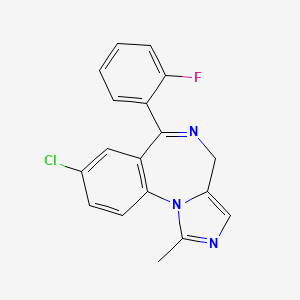
| Formula | C18H13ClFN3 |
|---|---|
| Molecular weight | 325.77 g/mol |
| IUPAC name | 8-chloro-6-(2-fluorophenyl)-1-methyl-4H-imidazo[1,5-a][1,4]benzodiazepine |
| CAS | 59467-70-8 |
| PubChem CID | 4192 |
| InChIKey | DDLIGBOFAVUZHB-UHFFFAOYSA-N |
| logP | 4.32 (XLogP 2.5) |
| Polar surface area | 30.18 Ų |
| H-bond acceptors / donors | 3 / 0 |
| Drug-likeness (QED) | 0.65 |
| Lipinski violations | 0 |
SMILES
Cc1ncc2n1-c1ccc(Cl)cc1C(c1ccccc1F)=NC2Biology & Pharmacokinetics
Pharmacokinetics
| BBB penetrant | Yes (logBB 0.4) |
|---|
Enzyme interactions
| Enzyme | Role | Detail |
|---|---|---|
| CYP1A2 | Inhibitor | — |
| CYP1A2 | Substrate | — |
| CYP2B6 | Inhibitor | — |
| CYP2C19 | Inhibitor | — |
| CYP2C19 | Substrate | — |
| CYP2C8 | Inhibitor | — |
| CYP2C9 | Inhibitor | — |
| CYP2C9 | Substrate | — |
| CYP2D6 | Inhibitor | — |
| CYP3A4 | Inhibitor | Ki 2.4700000000000006 µM |
| CYP3A4 | Substrate | — |
Transporters
BCRP (Inhibitor)BSEP (Inhibitor)BSEP (Inhibitor)MDR1 (Inhibitor)MRP1 (Inhibitor)MRP2 (Inhibitor)MRP4 (Inhibitor)OATP1B1 (Inhibitor)OATP1B1 (Inhibitor)OATP1B3 (Inhibitor)OATP1B3 (Inhibitor)OATP2B1 (Inhibitor)OCT1 (Inhibitor)P-gp (Inhibitor)MDR1 (Substrate)OATP1A2 (Substrate)OATP1B1 (Substrate)OATP1B3 (Substrate)OATP2B1 (Substrate)P-gp (Substrate)Transporter(unspecified) (Substrate)
Drug–drug interactions (100+, DDInter)
| Interacting drug | Severity | Management |
|---|---|---|
| Ceritinib | major | |
| Cobicistat | major | |
| Fluconazole | major | |
| Idelalisib | major | |
| Ketoconazole | major | |
| Lumacaftor | major | |
| Adalimumab | moderate | |
| Aldesleukin | moderate | |
| Alefacept | moderate | |
| Alimemazine | moderate | |
| Amyl Nitrite | moderate | |
| Anakinra | moderate | |
| Apalutamide | moderate | |
| Aprepitant | moderate | |
| Azatadine | moderate | |
| Azelastine (nasal) | moderate | |
| Bexarotene | moderate | |
| Brigatinib | moderate | |
| Brimonidine (ophthalmic) | moderate | |
| Brimonidine (topical) | moderate | |
| Brompheniramine | moderate | |
| Bupropion | moderate | |
| Canakinumab | moderate | |
| Carbinoxamine | moderate | |
| Certolizumab pegol | moderate | |
| Cetirizine | moderate | |
| Chlorphenesin | moderate | |
| Chlorpheniramine | moderate | |
| Cimetidine | moderate | |
| Clarithromycin | moderate | |
| Clemastine | moderate | |
| Clofedanol | moderate | |
| Clotrimazole | moderate | |
| Codeine | moderate | |
| Crizotinib | moderate | |
| Cyproheptadine | moderate | |
| Dabrafenib | moderate | |
| Dasatinib | moderate | |
| Deferasirox | moderate | |
| Dexbrompheniramine | moderate |
Showing 40 of 100+.
Registered Products (9)
| Brand | Form / strength | Pack | Agent | Citizen (JOD) |
|---|---|---|---|---|
| DORMICUM IV,IM AMP | Ampoule 15 mg/3 ml | 5 | Shawi & Rushedat Drug Store | — |
| Dormicum IV,IM Amp | Ampoule 5 mg/ml | 10 | Shawi & Rushedat Drug Store | — |
| Dormixal solution for injection | Injection 5 mg/1 ml | 50 amp pack varies | Al Hilal Drug Store | — |
| Dormixal solution for injection | Injection 5 mg/1 ml | 10 amp pack varies | Al Hilal Drug Store | — |
| Dormixal solution for injection | Injection 5 mg/1 ml | 5 amp pack varies | Al Hilal Drug Store | — |
| Hikma Midazolam Ampoules | Ampoule 5 mg/ml | 10 pack varies | Hikma Pharmaceuticals Co.Ltd/Jordan | — |
| Hikma Midazolam Ampoules | Ampoule 5 mg/ml | 5 pack varies | Hikma Pharmaceuticals Co.Ltd/Jordan | — |
| Sedalam 15mg/3ml Sol for Inj | Injection 15 mg/3 ml | 5 vial | MS PHARMA/JORDAN | — |
| Sedalam 5mg/5ml Sol For Inj | Injection 5 mg/5 ml | 10 vial | MS PHARMA/JORDAN | — |