Neostigmine Metilsulfate
JFDA label: Prostigmin
Mechanism of Action
Inhibitor of Acetylcholinesterase — Acetylcholinesterase inhibitor
| Target | Action | Gene / class |
|---|---|---|
| Acetylcholinesterase efficacy | INHIBITOR | ACHE |
Indications
Approved
- Canadian labeling
- Myasthenia gravis
- Postoperative bladder distention, Urinary retention
- Reversal of nondepolarizing muscle relaxants
- US labeling
Off-label
- Acute colonic pseudo-obstruction (Ogilvie’s syndrome)
Contraindications
Source: Lexicomp
- Additional contraindications (not in US labeling): Hypersensitivity to bromides (tablets only) Documentation of allergenic cross-reactivity for cholinesterase inhibitors is limited. However, because of similarities in chemical structure and/or pharmacologic actions, the possibility of cross-sensitivity cannot be ruled out with certainty Absolute
- Hypersensitivity to neostigmine or any component of the formulation Absolute
- peritonitis or mechanical obstruction of the intestinal or urinary tract Absolute
Adverse Reactions
Cardiac disorders (9)
Not Known Atrioventricular block · cardiac arrhythmia (especially bradycardia) · ECG changes (nonspecific) · flushing · hypotension · nodal arrhythmia · syncope · tachycardia · thrombophlebitis (IV)
Nervous system disorders (7)
Not Known Dizziness · drowsiness · dysarthria · headache · loss of consciousness · seizure · voice disorder
Renal and urinary disorders (1)
Not Known Urinary urgency
Immune system disorders (2)
Not Known Anaphylaxis · hypersensitivity reaction
Gastrointestinal disorders (8)
Not Known Diarrhea · dysphagia · flatulence · increased peristalsis · nausea · salivation · stomach cramps · vomiting
Skin and subcutaneous tissue disorders (3)
Not Known Diaphoresis · skin rash · urticaria
Musculoskeletal and connective tissue disorders (6)
Not Known Arthralgia · fasciculations · laryngospasm · muscle cramps · muscle spasm · weakness
Eye disorders (2)
Not Known Lacrimation · miosis
Respiratory, thoracic and mediastinal disorders (6)
Not Known Bronchospasm · dyspnea · exacerbation of asthma · increased bronchial secretions · respiratory depression · respiratory paralysis
Dosing
Source: Lexicomp
Warnings & Precautions
Source: Lexicomp
Cardiovascular effects
Bradycardia, hypotension, and dysrhythmias may occur, particularly with IV use; risk may be increased in patients with certain cardiovascular conditions (eg, coronary artery disease, cardiac arrhythmias, recent acute coronary syndrome). Risk may also be increased in patients with myasthenia gravis. When IV neostigmine is administered for the reversal of nondepolarizing neuromuscular-blocking agents, atropine or glycopyrrolate should be administered concurrently or prior to neostigmine to lessen the risk of bradycardia.
Cholinergic crisis
Overdosage may result in cholinergic crisis, characterized by extreme muscle weakness and potentially fatal respiratory paralysis. Cholinergic crisis should be distinguished from myasthenic crisis, which is also characterized by extreme muscle weakness, but would require radically different treatment.
Hypersensitivity reactions
Symptoms of hypersensitivity have included anaphylaxis, angioedema, bradycardia, bronchospasm, erythema multiforme, facial swelling, flushing, generalized rash, hypotension, peripheral edema, pyrexia, and urticaria. Have atropine and epinephrine ready to treat hypersensitivity reactions.
Neuromuscular effects
Large doses of IV neostigmine administered for the reversal of nondepolarizing neuromuscular-blocking agents when neuromuscular blockade is minimal can result in neuromuscular dysfunction. Reduce dose if recovery from neuromuscular blockade is nearly complete. Disease-related concerns:
Asthma
Use with caution in patients with asthma.
Cardiovascular disease
Use with caution in patients with bradycardia, cardiac arrhythmias, coronary artery disease, or recent acute coronary syndrome.
Hyperthyroidism
Use with caution in patients with hyperthyroidism.
Megacolon/GI dysfunction
Large oral doses should be avoided with megacolon or decreased GI motility. Neostigmine may accumulate; toxicity may result when motility is restored.
Myasthenia gravis
Adequate facilities should be available for cardiopulmonary resuscitation when testing and adjusting dose for myasthenia gravis.
Peptic ulcer disease
Use with caution in patients with peptic ulcer disease.
Seizure disorder
Use with caution in patients with epilepsy.
Vagotonia
Use with caution in patients with vagotonia. Special populations:
Pediatric
When used IV for the reversal of nondepolarizing muscle relaxants, pediatric and adult dosing is similar. However, recovery may be more rapid and risk of complications may be greater in infants and small children. Monitor closely.
Elderly
Use with caution and monitor for a longer period. Elderly patients experience slower spontaneous recovery from neuromuscular blocking agents.
Pregnancy & Lactation
Pregnancy
Adverse events were not observed in animal reproduction studies (doses used were below maximum expected human exposure based on BSA). Anticholinesterases have caused uterine irritability and induced premature labor with IV use in near-term pregnant women. When used as adjunct to analgesia in labor, adverse events to the fetus and mother are dose- and route-dependent (Habib 2006). Neostigmine may be used to treat myasthenia gravis in pregnant women; however, if an acetylcholinesterase inhibitor is needed during pregnancy, another agent may be preferred (Massey 2014; Norwood 2014; Silvestri 2012).
Lactation
It is not known if neostigmine is excreted into breast milk. The manufacturer recommends caution be used if administered to nursing women. Babies born to women with myasthenia gravis may have feeding difficulties due to transient myasthenia gravis of the newborn (Norwood 2014).
LactMed: monitor the infant.
Monitoring
| Clinical pearl | ECG, blood pressure, and heart rate especially with IV use; consult individual institutional policies and procedures Acute colonic pseudo-obstruction (off-label use): Keep patient supine upon administration. Patient should receive continuous ECG monitoring with vital signs for 30 minutes and continuous clinical assessment for 15 to 30 minutes after administration (Saunders, 2005). |
|---|
Chemistry & Properties
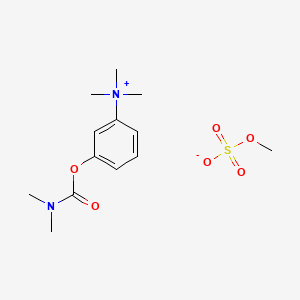
| Formula | C13H22N2O6S |
|---|---|
| Molecular weight | 334.39 g/mol |
| IUPAC name | [3-(dimethylcarbamoyloxy)phenyl]-trimethylazanium;methyl sulfate |
| CAS | 51-60-5 |
| PubChem CID | 5824 |
| InChIKey | OSZNNLWOYWAHSS-UHFFFAOYSA-M |
| logP | 1.94 |
| Polar surface area | 29.54 Ų |
| H-bond acceptors / donors | 2 / 0 |
| Drug-likeness (QED) | 0.72 |
| Lipinski violations | 0 |
SMILES
CN(C)C(=O)Oc1cccc([N+](C)(C)C)c1.COS(=O)(=O)[O-]Biology & Pharmacokinetics
Pharmacokinetics predicted
| Bioavailability | 70.0% |
|---|---|
| Half-life | 0.812 h |
| Volume of distribution | 0.881 L/kg |
| Protein binding | -1.5% |
| BBB penetrant | No |
Enzyme interactions
| Enzyme | Role | Detail |
|---|---|---|
| CYP1A2 | Substrate | — |
| CYP2B6 | Inhibitor | — |
| CYP2D6 | Substrate | — |
Transporters
BCRP (Inhibitor)BSEP (Inhibitor)BSEP (Inhibitor)MDR1 (Inhibitor)MRP1 (Inhibitor)MRP2 (Inhibitor)MRP3 (Inhibitor)MRP4 (Inhibitor)OATP1B1 (Inhibitor)OATP1B1 (Inhibitor)OATP1B3 (Inhibitor)OATP1B3 (Inhibitor)OCT1 (Inhibitor)P-gp (Inhibitor)MDR1 (Substrate)P-gp (Substrate)
Drug–drug interactions (46, DDInter)
| Interacting drug | Severity | Management |
|---|---|---|
| Bupropion | major | |
| Iohexol | major | |
| Iopamidol | major | |
| Siponimod | major | |
| Alectinib | moderate | |
| Amikacin | moderate | |
| Amikacin (liposome) | moderate | |
| Atropine | moderate | |
| Betamethasone | moderate | |
| Brigatinib | moderate | |
| Budesonide | moderate | |
| Clidinium | moderate | |
| Corticotropin | moderate | |
| Crizotinib | moderate | |
| Deflazacort | moderate | |
| Dexamethasone | moderate | |
| Dicyclomine | moderate | |
| Edrophonium | moderate | |
| Fingolimod | moderate | |
| Fludrocortisone | moderate | |
| Gentamicin | moderate | |
| Glycopyrronium | moderate | |
| Hydrocortisone | moderate | |
| Hyoscyamine | moderate | |
| Kanamycin | moderate | |
| Lindane | moderate | |
| Mepenzolate | moderate | |
| Methscopolamine | moderate | |
| Methylprednisolone | moderate | |
| Neomycin | moderate | |
| Ozanimod | moderate | |
| Paromomycin | moderate | |
| Physostigmine | moderate | |
| Picosulfuric acid | moderate | |
| Polyethylene glycol (3350 with electrolytes) | moderate | |
| Prednisolone | moderate | |
| Prednisone | moderate | |
| Propantheline | moderate | |
| Scopolamine | moderate | |
| Sodium sulfate | moderate |
Showing 40 of 46.
Registered Products (3)
| Brand | Form / strength | Pack | Agent | Citizen (JOD) |
|---|---|---|---|---|
| Epimeen | Vial 2.5 mg/ml | 1 vial | AL-Faiasel Drug Store | — |
| Neostigmine | Ampoule 2.5 mg/ml | 10 amp | JAWEDA INT. DRUD STORE | — |
| Prostigmin | Vial 12.5 mg/5 ml | 1 vial | Khoury Drug Store | — |