Pirfenidone
JFDA label: HETOPIR 801
Mechanism of Action
— Unknown
Indications
Approved
- Idiopathic pulmonary fibrosis
Contraindications
Source: Lexicomp
- Additional contraindications (not in US labeling): Hypersensitivity to pirfenidone or any component of the formulation Absolute
- There are no contraindications listed in the manufacturer’s labeling Absolute
- concomitant use of fluvoxamine Absolute
- history of angioedema with pirfenidone Absolute
- severe hepatic impairment or end-stage liver disease Absolute
- severe renal impairment (CrCl Absolute
Adverse Reactions
Cardiac disorders (1)
Common Angina pectoris
Nervous system disorders (6)
Very Common dizziness · Fatigue · headache
Common drowsiness · Insomnia · noncardiac chest pain
Hepatobiliary disorders (3)
Common Abnormal hepatic function tests · Increased serum ALT · increased serum transaminases
Renal and urinary disorders (2)
Common Urinary tract infection · vaginal infection
Metabolism and nutrition disorders (14)
Common Dyslipidemia · fluid retention · gout · hot flash · hyperglycemia · hyperlipidemia · hypertriglyceridemia · hypoglycemia · hypokalemia · hyponatremia · increased gamma-glutamyl transferase · increased lactate dehydrogenase · vitamin D deficiency · Weight loss
Gastrointestinal disorders (15)
Very Common abdominal pain · anorexia · diarrhea · dyspepsia · gastroesophageal reflux disease · Nausea · vomiting
Common Abdominal distension · abdominal distress · decreased appetite · dysgeusia · flatulence · Frequent bowel movements · gastritis · increased appetite
Skin and subcutaneous tissue disorders (12)
Very Common skin photosensitivity · Skin rash
Common Desquamation · erythema · erythematous rash · hyperhidrosis · macular eruption · maculopapular rash · Pruritus · sunburn · urticaria · xeroderma
Musculoskeletal and connective tissue disorders (5)
Common Arthralgia · Increased creatine phosphokinase · myalgia · tremor · weakness
Infections and infestations (1)
Common Influenza
General disorders and administration site conditions (1)
Common Fever
Respiratory, thoracic and mediastinal disorders (5)
Very Common sinusitis · Upper respiratory tract infection
Common Cough · Dyspnea · throat irritation
Other (3)
Common Lethargy · malaise · paresthesia
Dosing
Source: Lexicomp
Warnings & Precautions
Source: Lexicomp
CNS effects
May cause dizziness and/or fatigue which may impair physical or mental abilities; patients must be cautioned about performing tasks which require mental alertness (eg, operating machinery or driving). Incidence of dizziness may be reduced by administering with food. Dose reduction or discontinuation may be necessary if symptoms fail to improve or worsen.
GI effects
Adverse effects including nausea/vomiting, diarrhea, dyspepsia, gastroesophageal reflux disease, and abdominal pain have been reported; incidence may be reduced by administering with food. The incidence of gastrointestinal events was highest early in the course of treatment (initial 3 months) and decreased over time. Consider dose reduction or discontinuation of therapy if lack of improvement or worsening of symptoms.
Hepatic effects
Increased transaminases (ALT/AST) and hyperbilirubinemia have been reported with use; evaluate liver function prior to therapy initiation and during therapy. Dose reduction or discontinuation of therapy may be necessary. Discontinue therapy immediately for transaminases >5 x ULN or for increased transaminases that are accompanied by symptoms (eg, jaundice) or hyperbilirubinemia; monitor closely and do not rechallenge with pirfenidone.
Photosensitivity
Photosensitivity reactions and rash have been reported with the majority of reactions occurring during the initial 6 months of therapy (severe reactions are uncommon); instruct patients to avoid or minimize exposure to the sun and/or sun lamps, to apply sunscreen (SPF ≥50 against UVA and UVB), wear protective clothing/hats, and to avoid concurrent use of other photosensitizing drugs. Patients should promptly report symptoms, reaction, or rash; dose reduction or therapy interruption may be necessary. If appropriate, may reinitiate therapy with re-escalation of dose as tolerated.
Weight loss
Weight loss/anorexia have been reported with use; monitor weight during therapy. Disease-related concerns:
Hepatic impairment
Use with caution in mild to moderate impairment (Child-Pugh class A and B); pirfenidone systemic exposure increased by 60% in moderate impairment. Use in severe impairment (Child-Pugh class C) is not recommended (has not been studied).
Renal impairment
Use with caution in patients with renal impairment; consider dose reduction and/or discontinuation as necessary; use in patients with end stage renal disease requiring dialysis is not recommended. Concurrent drug therapy issues:
Drug-drug interactions
Potentially significant interactions may exist, requiring dose or frequency adjustment, additional monitoring, and/or selection of alternative therapy. Consult drug interactions database for more detailed information. Special populations:
Cigarette smokers
Clearance may be increased and systemic exposure decreased in cigarette smokers due to hepatic enzyme (ie, CYP1A2) induction. Patients should be instructed to quit smoking prior to initiation of therapy; cigarette smoking should be avoided during therapy.
Pregnancy & Lactation
Pregnancy
Adverse events have been observed in animal reproduction studies.
Lactation
It is not known if pirfenidone is present in breast milk. According to the manufacturer, the decision to continue or discontinue breastfeeding during therapy should take into account the risk of infant exposure, the benefits of breastfeeding to the infant, and benefits of treatment to the mother.
Monitoring
| Clinical pearl | Hepatic function (prior to initiation, monthly for first 6 months, then every 3 months); signs of photosensitivity; gastrointestinal events (eg, diarrhea, nausea, vomiting); weight loss |
|---|
Chemistry & Properties
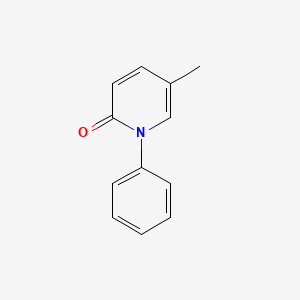
| Formula | C12H11NO |
|---|---|
| Molecular weight | 185.23 g/mol |
| IUPAC name | 5-methyl-1-phenylpyridin-2-one |
| CAS | 53179-13-8 |
| PubChem CID | 40632 |
| InChIKey | ISWRGOKTTBVCFA-UHFFFAOYSA-N |
| logP | 2.15 (XLogP 1.9) |
| Polar surface area | 22.0 Ų |
| H-bond acceptors / donors | 2 / 0 |
| Drug-likeness (QED) | 0.67 |
| Lipinski violations | 0 |
SMILES
Cc1ccc(=O)n(-c2ccccc2)c1Biology & Pharmacokinetics
Pharmacokinetics
| BBB penetrant | No |
|---|
Enzyme interactions
| Enzyme | Role | Detail |
|---|---|---|
| CYP1A2 | Inhibitor | — |
| CYP1A2 | Substrate | — |
| CYP2B6 | Inhibitor | — |
| CYP2C8 | Inhibitor | — |
| CYP2C9 | Substrate | — |
| CYP2D6 | Substrate | — |
| CYP3A4 | Substrate | — |
Transporters
BCRP (Inhibitor)BSEP (Inhibitor)MDR1 (Inhibitor)MRP1 (Inhibitor)OATP1B1 (Inhibitor)OATP1B3 (Inhibitor)P-gp (Inhibitor)MDR1 (Substrate)P-gp (Substrate)
Drug–drug interactions (100+, DDInter)
| Interacting drug | Severity | Management |
|---|---|---|
| Aminolevulinic acid | major | |
| Amiodarone | major | |
| Capmatinib | major | |
| Ciprofloxacin | major | |
| Enoxacin | major | |
| Fluvoxamine | major | |
| Givosiran | major | |
| Leflunomide | major | |
| Lomitapide | major | |
| Mipomersen | major | |
| Osilodrostat | major | |
| Pexidartinib | major | |
| Rucaparib | major | |
| Teriflunomide | major | |
| Vemurafenib | major | |
| Abametapir (topical) | moderate | |
| Abiraterone | moderate | |
| Alpelisib | moderate | |
| Aminolevulinic acid (topical) | moderate | |
| Anagrelide | moderate | |
| Asparaginase Erwinia chrysanthemi | moderate | |
| Asparaginase Escherichia coli | moderate | |
| Bedaquiline | moderate | |
| Berotralstat | moderate | |
| Brentuximab vedotin | moderate | |
| Bupropion | moderate | |
| Calaspargase pegol | moderate | |
| Cannabidiol | moderate | |
| Carbamazepine | moderate | |
| Cenobamate | moderate | |
| Ceritinib | moderate | |
| Chloramphenicol | moderate | |
| Cimetidine | moderate | |
| Cinacalcet | moderate | |
| Clofarabine | moderate | |
| Dacomitinib | moderate | |
| Deferasirox | moderate | |
| Delavirdine | moderate | |
| Dextropropoxyphene | moderate | |
| Disulfiram | moderate |
Showing 40 of 100+.
Registered Products (3)
| Brand | Form / strength | Pack | Agent | Citizen (JOD) |
|---|---|---|---|---|
| Pirfeqan | Film-Coated Tablet 267 mg | 30 F.C.Tab | Itqan Pharmaceutical Industries | 38.290 |
| HETOPIR 267 | Tablet Pirfenidone 267 mg | 100 tab | Omicron Pharma | 119.980 |
| HETOPIR 801 | Tablet Pirfenidone 801 mg | 100 tab | Omicron Pharma | — |