Ponatinib
JFDA label: Iclusig
- Arterial occlusion:
- Heart failure:
- Hepatotoxicity:
- Venous thromboembolism:
- hepatotoxicity
- venous thromboembolism
Mechanism of Action
Ponatinib is a pan-BCR-ABL tyrosine kinase inhibitor with in vitro activity against cells expressing native or mutant BCR-ABL (including T315I); it also inhibits VEGFR, FGFR, PDGFR, EPH, and SRC kinases, as well as KIT, RET, TIE2, and FLT3.
Indications
Approved
- Acute lymphoblastic leukemia
- Chronic myeloid leukemia
Contraindications
Source: Lexicomp
- Hypersensitivity to ponatinib or any component of the formulation Absolute
- There are no contraindications listed in the manufacturer’s US labeling Absolute
- patients not adequately hydrated and with uncorrected hyperuricemia Absolute
- unmanaged cardiovascular risk factors, including uncontrolled hypertension Absolute
Adverse Reactions
Cardiac disorders (23)
Very Common arterial embolism · arterial ischemia · cardiac arrhythmia · cardiac failure · cerebral ischemia · cerebrovascular accident · coronary occlusion · Hypertension · hypertensive crisis · mesenteric artery occlusion, headache, peripheral neuropathy, pain, dizziness, insomnia, chills · myocardial infarction · occlusive arterial disease · peripheral edema · peripheral vascular disease
Common atrial fibrillation · deep vein thrombosis · Left ventricular systolic dysfunction (≤9) · pericardial effusion · pulmonary embolism · reduced ejection fraction · retinal vein occlusion · subdural hematoma · syncope
Nervous system disorders (6)
Common cerebral hemorrhage · cranial nerve palsy · hyperesthesia · hypoesthesia · myasthenia · Paresthesia
Hepatobiliary disorders (5)
Very Common increased serum alkaline phosphatase · Increased serum ALT · increased serum AST · increased serum bilirubin
Common Ascites
Renal and urinary disorders (3)
Very Common Increased serum creatinine · Urinary tract infection
Not Known Decreased renal blood flow
Blood and lymphatic system disorders (9)
Very Common anemia · bone marrow depression · febrile neutropenia · hemorrhage · Leukopenia · lymphocytopenia · neutropenia · thrombocytopenia
Common Major hemorrhage
Metabolism and nutrition disorders (15)
Very Common decreased serum albumin · decreased serum bicarbonate · decreased serum calcium · decreased serum glucose · decreased serum phosphate · decreased serum potassium · decreased serum sodium · fluid retention · increased serum calcium · Increased serum glucose · increased serum potassium · weight loss
Common hyperuricemia · Increased serum sodium · increased serum triglycerides
Gastrointestinal disorders (12)
Very Common abdominal pain · Constipation · decreased appetite · diarrhea · increased serum amylase · increased serum lipase · nausea · stomatitis · vomiting
Common dysgeusia · Gastrointestinal hemorrhage · pancreatitis
Skin and subcutaneous tissue disorders (6)
Very Common alopecia · cellulitis · pruritus · Skin rash · xeroderma
Common Erythema
Musculoskeletal and connective tissue disorders (7)
Very Common Arthralgia · back pain · limb pain · muscle spasm · musculoskeletal pain · myalgia · ostealgia
Eye disorders (21)
Very Common Conjunctival edema · conjunctival hemorrhage · conjunctival hyperemia · conjunctival irritation · conjunctivitis · corneal abrasion · corneal erosion · dry eye syndrome · eye pain
Common Blurred vision · macular edema (≤2) · retinal hemorrhage (≤2)
Not Known Blepharitis · cataract · corneal ulcer · eyelid edema · glaucoma · iridocyclitis · iritis · ocular hyperemia · periorbital edema
Infections and infestations (1)
Very Common Sepsis
General disorders and administration site conditions (1)
Very Common Fever
Respiratory, thoracic and mediastinal disorders (6)
Very Common Cough · dyspnea · nasopharyngitis · pleural effusion · pneumonia · upper respiratory tract infection
Dosing
Source: Lexicomp
Warnings & Precautions
Source: Lexicomp
Arrhythmias
Cardiac arrhythmias (bradyarrhythmias and tachyarrhythmias) have been reported. The most commonly reported arrhythmia was atrial fibrillation; ~50% of events were grade 3 or 4. Other grade 3 or 4 rhythm disorders have occurred (case reports). Some events required hospitalization; symptomatic bradyarrhythmia which required pacemaker implantation occurred in a few cases. Monitor for sign/symptoms of bradycardia (fainting, dizziness, chest pain) and tachycardia (palpitations, dizziness). May require therapy interruption and further evaluation.
Arterial occlusion
Arterial occlusions have occurred in at least 35% of ponatinib-treated patients. Some patients experienced more than 1 type of event. Events included fatal myocardial infarction (MI), stroke, stenosis of large arterial vessels of the brain, severe peripheral vascular disease, and the need for urgent revascularization procedures; incidents were observed in patients with and without cardiovascular risk factors (including patients ≤50 years of age). Monitor closely for arterial occlusion; interrupt or discontinue therapy immediately for arterial occlusion. Consider risk:benefit ratio when deciding to restart therapy. Fatal and life-threatening arterial occlusion may occur within 2 weeks of therapy initiation and is not dose dependent (events have occurred at doses as low as 15 mg daily), and may cause recurrent or multisite occlusion. The most common risk factors for developing arterial occlusive events were hypertension, hyperlipidemia, and history of cardiac disease. Increasing age and a prior history of ischemia, hypertension, diabetes, or hyperlipidemia are also risk factors for development of ponatinib-associated vascular occlusion. Patients have required a revascularization procedure (cerebrovascular, coronary, and peripheral arterial) due to serious arterial thrombosis/occlusion. MI and coronary artery occlusion may result in heart failure due to myocardial ischemia. Cerebrovascular occlusion (including fatal stroke) has occurred; may cause stenosis over multiple segments
Bone marrow suppression
Severe myelosuppression (grade 3 or 4) is commonly observed with ponatinib, and the incidence was greater in patients with accelerated or blast phase CML and Ph+ ALL. The median onset to severe myelosuppression was 1 month (range: up to 40 months). Monitor blood counts closely; may require therapy interruption and/or dosage reduction.
Fluid retention/edema
Serious fluid retention events, including fatality due to brain edema (case report), were observed in ponatinib-treated patients. Peripheral edema, pleural effusions, pericardial effusions, and peripheral swelling were commonly seen. Monitor patients for fluid retention; may require therapy interruption, dosage reduction, or discontinuation.
Gastrointestinal perforation
Serious gastrointestinal perforation (fistula) occurred very rarely; monitor for signs/symptoms of perforation and/or fistula.
Heart failure
Serious heart failure (HF) or left ventricular dysfunction, including fatalities, were reported in clinical trials. Monitor for signs/symptoms of HF; interrupt or discontinue ponatinib therapy for new or worsening HF.The most commonly reported heart failure events were congestive heart failure and decreased ejection fraction. Treat as clinically warranted if HF develops. Consider ponatinib discontinuation in the event of serious HF.
Hemorrhage
Hemorrhagic events occurred in ponatinib-treated patients, including serious events such as cerebral (subdural hematoma) and gastrointestinal hemorrhages; fatalities were reported. Serious bleeding episodes occurred more frequently in patients with accelerated or blast phase CML, and Ph+ ALL; most patients had grade 4 thrombocytopenia. Monitor platelet levels closely and for signs/symptoms of bleeding, and interrupt therapy if necessary.
Hepatotoxicity
Liver failure and death resulting from ponatinib-induced hepatotoxicity were observed; monitor liver function prior to and at least monthly (or as clinically indicated) during treatment. The median time to onset was 3 months (range: less than 1 month to 47 months). Hepatotoxicity may require treatment interruption (followed by dose reduction) or discontinuation. One case of fulminant hepatic failure leading to death occurred within 1 week of therapy initiation; acute liver failure has also occurred. Treatment may commonly result in ALT and/or AST, bilirubin, and alkaline phosphatase elevations. ALT/AST elevations may be irreversible.
Hypertension
Treatment-emergent blood pressure elevations (systolic or diastolic) developed in over two-thirds of ponatinib-treated patients; symptomatic hypertension or hypertensive crisis were reported in several patients, requiring urgent intervention. Blood pressure may worsen in patients with preexisting hypertension. Monitor blood pressure closely, and manage elevated pressures as clinically indicated. May require therapy interruption, dosage reduction, or discontinuation if hypertension is resistant to medical management. Renal artery stenosis (associated with worsening, labile, or treatment-resistant hypertension) has occurred in some patients receiving ponatinib. Evaluate for renal artery stenosis for hypertension that significantly worsens, is labile, or treatment-resistant.
Neuropathy
Peripheral and cranial neuropathy have been reported. Peripheral neuropathy, paresthesia, hypoesthesia, hyperesthesia, dysguesia, and muscular weakness occurred most frequently; cranial neuropathy occurred rarely. In one-quarter of patients who experienced symptoms, neuropathy developed during the first month of therapy. Monitor for signs/symptoms of neuropathy; consider interrupting treatment if neuropathy develops.
Ocular toxicity
Serious ocular events such as blindness and blurred vision have occurred with ponatinib use. Macular edema, retinal vein occlusion, and retinal hemorrhage have been reported in a small percentage of patients; conjunctival irritation, corneal erosion or abrasion, dry eye, conjunctivitis, conjunctival hemorrhage, hyperaemia and edema, or eye pain occurred more frequently. Other toxicities include cataracts, periorbital edema, blepharitis, glaucoma, eyelid edema, ocular hyperaemia, iritis, iridocyclitis, and ulcerative keratitis. Perform comprehensive ophthalmic exams prior to therapy initiation and periodically during treatment.
Pancreatitis
Treatment-related lipase elevations and clinical pancreatitis occurred in clinical studies, including grade 3 and 4 events. The median time to onset was 14 days (range; 3 days to ~48 months); the majority of cases resolved within 2 weeks of therapy interruption or dose reduction. Monitor serum lipase every 2 weeks for the first 2 months and monthly thereafter or as clinically indicated; more frequent monitoring may be considered in patients with a history of pancreatitis or alcohol abuse. Monitor for clinical signs of pancreatitis, such as abdominal symptoms; interrupt therapy if necessary. Do not reinitiate treatment until complete resolution of symptoms and lipase level is • Reversible posterior leukoencephalopathy syndrome: Reversible posterior leukoencephalopathy syndrome (RPLS) has been reported in postmarketing surveillance. Signs/symptoms include seizure, headache, decreased awareness, altered mental status, vision loss, and other visual and/or neurological disturbances. Hypertension is common; RPLS is diagnosed through MRI of the brain. Discontinue ponatinib for RPLS diagnosis; resume only if RPLS resolves and the benefit of treatment outweighs the risk.
Tumor lysis syndrome
Hyperuricemia and serious tumor lysis syndrome (rare) were reported. Patients should receive adequate hydration and be monitored for elevated uric acid levels and/or the development of tumor lysis syndrome. Manage elevated uric acid levels prior to initiating therapy.
Venous thromboembolism
Venous occlusive events have occurred in 6% of ponatinib-treated patients. Monitor for evidence of venous thromboembolism. Consider dose modification or discontinuation of ponatinib in patients who develop serious venous thromboembolism. Venous thromboembolism, including deep vein thrombosis, pulmonary embolism, superficial thrombophlebitis, and retinal vein thrombosis have been reported.
Wound healing impairment
As ponatinib inhibits VEGF activity, therapy may impair wound healing. Hold therapy for at least 1 week prior to major surgery; resume therapy post procedure based on clinical judgment of appropriate wound healing. Disease-related concerns:
Cardiovascular disease
Patients with or without cardiovascular risk factors, and those with a prior history of ischemia, hypertension, diabetes, or hyperlipidemia may be at increased risk for vascular occlusion when treated with ponatinib. Monitor for signs/symptoms of occlusion; interrupt therapy and consider discontinuation if thrombosis/occlusion occurs.
Chronic phase CML (newly diagnosed)
In a randomized study of first-line treatment of newly diagnosed chronic phase CML, a 2-fold increased risk of serious adverse reaction was demonstrated for ponatinib as compared to imatinib; the study was stopped due to safety concerns. Arterial and venous thrombosis and occlusion events occurred at least twice as frequently in the ponatinib arm of the study (compared to the imatinib arm); a higher incidence of hematologic toxicity, pancreatitis, hepatotoxicity, heart failure, hypertension, and dermatologic/subcutaneous tissue disorders was also observed in patients receiving ponatinib. Ponatinib is not indicated and not recommended for treatment of newly diagnosed chronic phase CML.
Hepatic impairment
A single-dose (30 mg) pharmacokinetic study found that ponatinib exposure was not increased in patients with hepatic impairment (Child-Pugh class A, B, or C) as compared to patients with normal hepatic function. While generally well tolerated, patients with hepatic impairment did have an increased overall incidence of adverse reactions (eg, gastrointestinal disorders, pancreatitis). Monitor closely when administering to patients with impaired hepatic function. The starting dose should be reduced in patients with hepatic impairment. Concurrent drug therapy issues:
Drug-drug interactions
Potentially significant interactions may exist, requiring dose or frequency adjustment, additional monitoring, and/or selection of alternative therapy. Consult drug interactions database for more detailed information. Special populations:
Elderly
Patients ≥65 years of age may be more likely to experience vascular occlusion, weakness, decreased appetite, dyspnea, increased lipase, muscle spasms, peripheral edema, and thrombocytopenia; monitor closely. Cautious dose selection is recommended based on greater frequency of decreased hepatic, renal, or cardiac function, and of concomitant disease or other drug therapy.
Pregnancy & Lactation
Pregnancy
Based on animal data and its mechanism of action, ponatinib is expected to cause fetal harm if used during pregnancy. Verify pregnancy status prior to initiating ponatinib treatment. Women of childbearing potential should use effective contraception during treatment and for 3 weeks after the last dose.
Lactation
It is not known if ponatinib is excreted in breast milk. Due to the potential for serious adverse reactions in the nursing infant, the manufacturer recommends that breast-feeding be discontinued during therapy and for 6 days after the last dose.
Monitoring
| Clinical pearl | CBC with differential and platelets every 2 weeks for the first 3 months, then monthly or as clinically needed; liver function tests at baseline and at least monthly thereafter or more frequently if clinically warranted; serum lipase every 2 weeks for the first 2 months and monthly thereafter (more frequently in patients with a history of pancreatitis or alcohol abuse); serum electrolytes and uric acid; monitor cardiac function and blood pressure. Monitor for signs/symptoms of arterial/venous occlusion or thromboembolism, hemorrhage, fluid retention, pancreatitis (clinical signs), gastrointestinal perforation/fistula, hepatotoxicity (jaundice, anorexia, bleeding, bruising), reversible posterior leukoencephalopathy syndrome; comprehensive ocular exam at baseline and periodically; signs/symptoms of neuropathy |
|---|
Chemistry & Properties
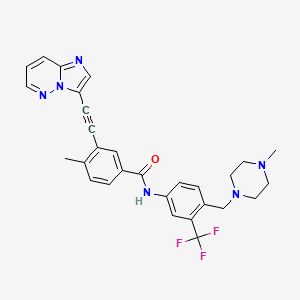
| Formula | C29H27F3N6O |
|---|---|
| Molecular weight | 532.57 g/mol |
| IUPAC name | 3-(2-imidazo[1,2-b]pyridazin-3-ylethynyl)-4-methyl-N-[4-[(4-methylpiperazin-1-yl)methyl]-3-(trifluoromethyl)phenyl]benzamide |
| CAS | 943319-70-8 |
| PubChem CID | 24826799 |
| InChIKey | PHXJVRSECIGDHY-UHFFFAOYSA-N |
| logP | 4.46 (XLogP 4.1) |
| Polar surface area | 65.77 Ų |
| H-bond acceptors / donors | 6 / 1 |
| Drug-likeness (QED) | 0.39 |
| Lipinski violations | 1 |
SMILES
Cc1ccc(C(=O)Nc2ccc(CN3CCN(C)CC3)c(C(F)(F)F)c2)cc1C#Cc1cnc2cccnn12Biology & Pharmacokinetics
Pharmacokinetics
| BBB penetrant | No |
|---|
Enzyme interactions
| Enzyme | Role | Detail |
|---|---|---|
| CYP1A2 | Substrate | — |
| CYP2C19 | Inhibitor | — |
| CYP2C8 | Inhibitor | — |
| CYP2D6 | Inhibitor | — |
| CYP3A4 | Inhibitor | IC₅₀ 11.400000000000004 µM |
| CYP3A4 | Substrate | — |
Receptor binding (top 7)
| Target | Action | Affinity |
|---|---|---|
| receptor interacting serine/threonine kinase 3 (RIPK3) | Inhibitor | pKi 8.8 |
| ret proto-oncogene (RET) | Inhibitor | pIC50 8.2 |
| cyclin dependent kinase 8 (CDK8) | Inhibitor | pKd 8.2 |
| ABL proto-oncogene 1, non-receptor tyrosine kinase (ABL1) | Inhibitor | pIC50 8.1 |
| cyclin dependent kinase 19 (CDK19) | Inhibitor | pKd 7.9 |
| receptor interacting serine/threonine kinase 1 (RIPK1) | Inhibitor | pIC50 7.9 |
| receptor interacting serine/threonine kinase 2 (RIPK2) | Inhibitor | pIC50 7.8 |
Transporters
BCRP (Inhibitor)BCRP (Inhibitor)BSEP (Inhibitor)BSEP (Inhibitor)CNT3 (Inhibitor)ENT1 (Inhibitor)ENT2 (Inhibitor)MDR1 (Inhibitor)MRP1 (Inhibitor)OAT1 (Inhibitor)OAT3 (Inhibitor)OATP1B1 (Inhibitor)OATP1B1 (Inhibitor)OATP1B3 (Inhibitor)OATP1B3 (Inhibitor)OATP2B1 (Inhibitor)OCT1 (Inhibitor)OCT2 (Inhibitor)P-gp (Inhibitor)BCRP (Substrate)MDR1 (Substrate)OATP1B1 (Substrate)OATP1B3 (Substrate)OCT1 (Substrate)P-gp (Substrate)
Drug–drug interactions (100+, DDInter)
| Interacting drug | Severity | Management |
|---|---|---|
| Abciximab | major | |
| Acalabrutinib | major | |
| Acetylsalicylic acid | major | |
| Adalimumab | major | |
| Alteplase | major | |
| Amprenavir | major | |
| Anagrelide | major | |
| Anisindione | major | |
| Anistreplase | major | |
| Antithrombin III human | major | |
| Apixaban | major | |
| Ardeparin | major | |
| Argatroban | major | |
| Atazanavir | major | |
| Avapritinib | major | |
| Bacillus calmette-guerin substrain tice live antigen | major | |
| Baricitinib | major | |
| Betrixaban | major | |
| Bexarotene | major | |
| Binimetinib | major | |
| Bivalirudin | major | |
| Boceprevir | major | |
| Bromfenac | major | |
| Cabozantinib | major | |
| Cangrelor | major | |
| Caplacizumab | major | |
| Ceritinib | major | |
| Certolizumab pegol | major | |
| Cilostazol | major | |
| Cladribine | major | |
| Clarithromycin | major | |
| Clopidogrel | major | |
| Clozapine | major | |
| Cobicistat | major | |
| Colchicine | major | |
| Conivaptan | major | |
| Dalteparin | major | |
| Danaparoid | major | |
| Dasatinib | major | |
| Deferasirox | major |
Showing 40 of 100+.
Registered Products (2)
| Brand | Form / strength | Pack | Agent | Citizen (JOD) |
|---|---|---|---|---|
| Iclusig | Tablet 45 mg | 30 tab | Petra Drug Store | — |
| Iclusig | Tablet 15 mg | 30 tab | Petra Drug Store | — |