Tacrolimus
JFDA label: Prograf Con. for IV Infusion
- carcinogenicity — ChEMBL drug_warning (Black Box Warning) | United States
- immune system toxicity — ChEMBL drug_warning (Black Box Warning) | United States
- infectious disease — ChEMBL drug_warning (Black Box Warning) | United States
- and SERIOUS INFECTIONS Increased risk for developing serious infections and malignancies with Tacrolimus or other immunosuppressants that may lead to hospitalization or death. ( 5.1 , 5.2 ) WARNING: M
Mechanism of Action
Inhibitor of Peptidyl-prolyl cis-trans isomerase FKBP1A — FK506-binding protein 1A inhibitor
| Target | Action | Gene / class |
|---|---|---|
| Peptidyl-prolyl cis-trans isomerase FKBP1A efficacy | INHIBITOR | FKBP1A |
Indications
Approved
- Delayed Graft Function
- Dermatitis, Atopic — atopic eczema
- Eczema — Eczematoid dermatitis
- Immune System Diseases — immune system disease
- Kidney Transplantation — kidney transplant
- Liver Transplantation — liver transplant
Off-label
- Anemia, Aplastic
- Anemia, Sickle Cell
- Conjunctivitis, Allergic
- Graft vs Host Disease
- Keratoconjunctivitis
- Lichen Planus, Oral
- Thalassemia
Contraindications
Source: Curated · openFDA
- Known hypersensitivity to polyoxyl 60 hydrogenated castor oil (IV formulation) Absolute
- Tacrolimus capsules are contraindicated in patients with a hypersensitivity to tacrolimus. Tacrolimus injection is contraindicated in patients with a hypersensitivity to HCO-60 (polyoxyl 60 hydrogenated castor oil). Hypersensitivity symptoms reported include dyspnea, rash, pruritus, and acute respiratory distress syndrome [ see Adverse Reactions (6) ] . Hypersensitivity to tacrolimus or HCO-60 (polyoxyl 60 hydrogenated castor oil) ( 4 ) Absolute
Dosing
Source: openFDA
Warnings & Precautions
Source: openFDA
Boxed Warning
and SERIOUS INFECTIONS Increased risk for developing serious infections and malignancies with Tacrolimus or other immunosuppressants that may lead to hospitalization or death. ( 5.1 , 5.2 ) WARNING: MALIGNANCIES and SERIOUS INFECTIONS See full prescribing information for complete boxed warning Increased risk for developing serious infections and malignancies with Tacrolimus capsules or other immunosuppressants that may lead to hospitalization or death. ( 5.1 , 5.2 )
Warnings & Precautions
Not Interchangeable with Extended Release Tacrolimus Products-Medication Errors : Instruct patients or caregivers to recognize the appearance of tacrolimus capsules. ( 5.3 ) New Onset Diabetes After Transplant: Monitor blood glucose. ( 5.4 ) Nephrotoxicity (acute and/or chronic): Reduce the dose; use caution with other nephrotoxic drugs. ( 5.5 ) Neurotoxicity: Including risk of Posterior Reversible Encephalopathy Syndrome (PRES), monitor for neurologic abnormalities; reduce or discontinue tacrolimus. ( 5.6 ) Hyperkalemia: Monitor serum potassium levels. Consider carefully before using with other agents also associated with hyperkalemia. ( 5.7 ) Hypertension: May require antihypertensive therapy. Monitor relevant drug-drug interactions. ( 5.8 ) Anaphylactic Reactions with IV formulation: Observe patients receiving tacrolimus injection for signs and symptoms of anaphylaxis. ( 5.9 ) Not recommended for use with sirolimus: Not recommended in liver and heart transplant due to increased risk of serious adverse reactions. ( 5.10 ) Myocardial Hypertrophy: Consider dose reduction/discontinuation. ( 5.13 ) Immunizations: Avoid live vaccines. ( 5.14 ) Pure Red Cell Aplasia: Consider discontinuation of tacrolimus. ( 5.15 ) Thrombotic Microangiopathy, Including Hemolytic Uremic Syndrome and Thrombotic Thrombocytopenic Purpura: May occur, especially in patients with infections and certain other concomitant medications. ( 5.16 )
Lymphoma and Other Malignancies Patients receiving immunosuppressants,
Lymphoma and Other Malignancies Patients receiving immunosuppressants, including tacrolimus, are at increased risk of developing lymphomas and other malignancies, particularly of the skin. The risk appears to be related to the intensity and duration of immunosuppression rather than to the use of any specific agent. As usual for patients with increased risk for skin cancer,examine patients for skin changes; exposure to sunlight and UV light should be limited by wearing protective clothing and using a board-spectrum sunscreen with a high protection factor. Post-transplant lymphoproliferative disorder (PTLD) has been reported in immunosuppressed organ transplant recipients. The majority of PTLD events appear related to Epstein-Barr Virus (EBV) infection. The risk of PTLD appears greatest in those individuals who are EBV seronegative, a population which includes many young children. Monitor EBV serology during treatment.
Serious Infections Patients receiving immunosuppressants, including ta
Serious Infections Patients receiving immunosuppressants, including tacrolimus, are at increased risk of developing bacterial, viral, fungal, and protozoal infections, including opportunistic infections. These infections may lead to serious, including fatal, outcomes. Serious viral infections reported include: • Polyomavirus-associated nephropathy (PVAN), mostly due to BK virus infection • JC virus-associated progressive multifocal leukoencephalopathy (PML) • Cytomegalovirus infections: CMV seronegative transplant patients who receive an organ from a CMV seropositive donor disease are at higher risk of developing CMV viremia and CMV disease. Monitor for the development of infection and adjust the immunosuppressive regimen to balance the risk of rejection with the risk of infection [ see Adverse Reactions ( 6.1 , 6.2 ) ] .
Not Interchangeable with Extended-Release Tacrolimus Products -Medicat
Not Interchangeable with Extended-Release Tacrolimus Products -Medication Errors Medication errors, including substitution and dispensing errors, between tacrolimus immediate-release products and tacrolimus extended-release products were reported outside the U.S. This led to serious adverse reactions, including graft rejection, or other adverse reactions due to under-or over-exposure to tacrolimus. Tacrolimus capsules are not interchangeable or substitutable for tacrolimus extended-release products. Changes between tacrolimus immediate-release and extended-release dosage forms must occur under physician supervision. Instruct patients and caregivers to recognize the appearance of tacrolimus capsules [ see Dosage Forms and Strengths (3) ] and to confirm with the healthcare provider if a different product is dispensed.
New Onset Diabetes After Transplant Tacrolimus was shown to cause new
New Onset Diabetes After Transplant Tacrolimus was shown to cause new onset diabetes mellitus in clinical trials of kidney, liver, or heart transplantation. New onset diabetes after transplantation may be reversible in some patients. African-American and Hispanic kidney transplant patients are at an increased risk. Blood glucose concentrations should be monitored closely in patients using tacrolimus [ see Adverse Reactions (6.1) ] .
Nephrotoxicity due to Tacrolimus and Drug Interactions Tacrolimus, lik
Nephrotoxicity due to Tacrolimus and Drug Interactions Tacrolimus, like other calcineurin inhibitors, can cause acute or chronic nephrotoxicity in transplant patients due to its vasoconstrictive effect on renal vasculature, toxic tubulopathy and tubular-interstitial effects. Nephrotoxicity was reported in clinical trials [ see Adverse Reactions (6.1) ] . Acute renal impairment associated with tacrolimus toxicity can result in high serum creatinine, hyperkalemia, decreased secretion of urea and hyperuricemia, and is usually reversible. In patients with elevated serum creatinine and tacrolimus whole blood trough concentrations greater than the recommended range, consider dosage reduction or temporary interruption of tacrolimus administration. The risk for nephrotoxicity may increase when tacrolimus is concomitantly administered with CYP3A inhibitors (by increasing tacrolimus whole blood concentrations) or drugs associated with nephrotoxicity (e.g., aminoglycosides, ganciclovir, amphotericin B, cisplatin, nucleotide reverse transcriptase inhibitors, protease inhibitors). When tacrolimus is used concurrently with other known nephrotoxic drugs, monitor renal function and tacrolimus blood concentrations, and adjust doses of both tacrolimus and/or concomitant medications during concurrent use [ see Drug Interactions (7.2) ].
Neurotoxicity Tacrolimus may cause a spectrum of neurotoxicities
Neurotoxicity Tacrolimus may cause a spectrum of neurotoxicities. The most severe neurotoxicities include posterior reversible encephalopathy syndrome (PRES), delirium, seizure and coma; others include tremors, paresthesias, headache, mental status changes, and changes in motor and sensory functions [ see Adverse Reactions ( 6.1 , 6.2 ) ] . As symptoms may be associated with tacrolimus whole blood trough concentrations at or above the recommended range, monitor for neurologic symptoms and consider dosage reduction or discontinuation of tacrolimus if neurotoxicity occurs.
Hyperkalemia Hyperkalemia has been reported with tacrolimus use
Hyperkalemia Hyperkalemia has been reported with tacrolimus use. Serum potassium levels should be monitored. Careful consideration should be given prior to use of other agents also associated with hyperkalemia (e.g., potassium-sparing diuretics, ACE inhibitors, angiotensin receptor blockers) during tacrolimus therapy [ see Adverse Reactions (6.1) ] . Monitor serum potassium levels periodically during treatment.
Hypertension Hypertension is a common adverse effect of tacrolimus the
Hypertension Hypertension is a common adverse effect of tacrolimus therapy and may require antihypertensive therapy [ see Adverse Reactions (6.1) ] . The control of blood pressure can be accomplished with any of the common antihypertensive agents, though careful consideration should be given prior to use of antihypertensive agents associated with hyperkalemia (e.g., potassium-sparing diuretics, ACE inhibitors, angiotensin receptor blockers) [ see Warnings and Precautions (5.7) ] . Calcium-channel blocking agents may increase tacrolimus blood concentrations and therefore require dosage reduction of tacrolimus [ see Drug Interactions (7.2) ] .
Anaphylactic Reactions with Tacrolimus Injection Anaphylactic reaction
Anaphylactic Reactions with Tacrolimus Injection Anaphylactic reactions have occurred with injectables containing castor oil derivatives, including tacrolimus, in a small percentage of patients (0.6%). The exact cause of these reactions is not known. Tacrolimus injection should be reserved for patients who are unable to take tacrolimus orally. Monitor patients for anaphylaxis when using the intravenous route of administration [ see Dosage and Administration (2.1) ] .
Not Recommended for Use with Sirolimus Tacrolimus is not recommended f
Not Recommended for Use with Sirolimus Tacrolimus is not recommended for use with sirolimus: • The use of sirolimus with tacrolimus in studies of de novo liver transplant patients was associated with an excess mortality, graft loss, and hepatic artery thrombosis (HAT) and is not recommended. • The use of sirolimus (2 mg per day) with tacrolimus in heart transplant patients in a U.S. trial was associated with increased risk of renal function impairment, wound healing complications, and insulin-dependent post-transplant diabetes mellitus, and is not recommended [ see Clinical Studies (14.3) ] . • The use of sirolimus with tacrolimus may increase the risk of thrombotic microangiopathy [ see Warnings and Precautions (5.16 ) ] .
Interactions with CYP3A4 Inhibitors and Inducers When co-administering
Interactions with CYP3A4 Inhibitors and Inducers When co-administering tacrolimus with strong CYP3A4 inhibitors (e.g., telaprevir, boceprevir, ritonavir, ketoconazole, itraconazole, voriconazole, clarithromycin) and strong inducers (e.g., rifampin, rifabutin), adjustments in the dosing regimen of tacrolimus and subsequent frequent monitoring of tacrolimus whole blood trough concentrations and tacrolimus-associated adverse reactions are recommended. A rapid, sharp rise in tacrolimus levels has been reported after co-administration with a strong CYP3A4 inhibitor, clarithromycin, despite an initial reduction of tacrolimus dose. Early and frequent monitoring of tacrolimus whole blood trough levels is recommended [ see Drug Interactions (7.2) ] .
QT Prolongation Tacrolimus may prolong the QT/QTc interval and may cau
QT Prolongation Tacrolimus may prolong the QT/QTc interval and may cause Torsades de pointes . Avoid tacrolimus in patients with congenital long QT syndrome. In patients with congestive heart failure, bradyarrhythmias, those taking certain antiarrhythmic medications or other medicinal products that lead to QT prolongation, and those with electrolyte disturbances such as hypokalemia, hypocalcemia, or hypomagnesemia, consider obtaining electrocardiograms and monitoring electrolytes (magnesium, potassium, calcium) periodically during treatment. When co-administering tacrolimus with other substrates and/or inhibitors of CYP3A4 that also have the potential to prolong the QT interval, a reduction in tacrolimus dose, frequent monitoring of tacrolimus whole blood concentrations, and monitoring for QT prolongation is recommended. Use of tacrolimus with amiodarone has been reported to result in increased tacrolimus whole blood concentrations with or without concurrent QT prolongation [ see Drug Interactions (7.2) ] .
Myocardial Hypertrophy Myocardial hypertrophy has been reported in inf
Myocardial Hypertrophy Myocardial hypertrophy has been reported in infants, children, and adults, particularly those with high tacrolimus trough concentrations, and is generally manifested by echocardiographically demonstrated concentric increases in left ventricular posterior wall and interventricular septum thickness. This condition appears reversible in most cases following dose reduction or discontinuance of therapy. In patients who develop renal failure or clinical manifestations of ventricular dysfunction while receiving tacrolimus therapy, echocardiographic evaluation should be considered. If myocardial hypertrophy is diagnosed, dosage reduction or discontinuation of tacrolimus should be considered [ see Adverse Reactions (6.2) ] .
Immunizations Whenever possible, administer the complete complement of
Immunizations Whenever possible, administer the complete complement of vaccines before transplantation and treatment with tacrolimus. The use of live vaccines should be avoided during treatment with tacrolimus; examples include (not limited to) the following: intranasal influenza, measles, mumps, rubella, oral polio, BCG, yellow fever, varicella, and TY21a typhoid vaccines. Inactivated vaccines noted to be safe for administration after transplantation may not be sufficiently immunogenic during treatment with tacrolimus.
Pure Red Cell Aplasia Cases of pure red cell aplasia (PRCA) have been
Pure Red Cell Aplasia Cases of pure red cell aplasia (PRCA) have been reported in patients treated with tacrolimus. A mechanism for tacrolimus-induced PRCA has not been elucidated. All patients reported risk factors for PRCA such as parvovirus B19 infection, underlying disease, or concomitant medications associated with PRCA. If PRCA is diagnosed, discontinuation of tacrolimus should be considered [see Adverse Reactions (6.2)] .
Thrombotic Microangiopathy (Including Hemolytic Uremic Syndrome and Th
Thrombotic Microangiopathy (Including Hemolytic Uremic Syndrome and Thrombotic Thrombocytopenic Purpura) Cases of thrombotic microangiopathy (TMA), including hemolytic uremic syndrome (HUS) and thrombotic thrombocytopenic purpura (TTP), have been reported in patients treated with tacrolimus. TMA may have a multifactorial etiology. Risk factors for TMA that can occur in transplant patients include, for example, severe infections, graft-versus- host disease (GVHD), Human Leukocyte Antigen (HLA) mismatch, the use of calcineurin inhibitors and mammalian target of rapamycin (mTOR) inhibitors. These risk factors may, either alone or combined, contribute to the risk of TMA. In patients with signs and symptoms of TMA, consider tacrolimus as a risk factor. Concurrent use of tacrolimus and mTOR inhibitors may contribute to the risk of TMA
Cannabidiol Drug Interactions When cannabidiol and tacrolimus capsules
Cannabidiol Drug Interactions When cannabidiol and tacrolimus capsules are co-administered, closely monitor for an increase in tacrolimus blood levels and for adverse reactions suggestive of tacrolimus toxicity. A dose reduction of tacrolimus should be considered as needed when tacrolimus is co-administered with cannabidiol [see Dosage and Administration (2.2 , 2.6 ) and Drug Interactions (7.3) ].
Pregnancy & Lactation
Pregnancy
Caution
Continue in transplant patients — rejection risk outweighs drug risk. TDM essential (levels fall in T3). Neonatal monitoring required
Lactation
Topical tacrolimus presents a low risk to the nursing infant because it is poorly absorbed after topical application and peak blood concentrations are less than 2 mcg/L in most patients.
Monitoring
| Efficacy | Trough whole-blood tacrolimus level (target varies by organ and time post-transplant; typically 5–20 ng/mL early, 3–12 ng/mL maintenance); renal function; blood pressure |
|---|---|
| Toxicity | Nephrotoxicity (SCr, eGFR); neurotoxicity (tremor, headache); hyperglycaemia; hyperkalaemia; opportunistic infections |
| Clinical pearl | Tacrolimus levels are highly variable due to food (high-fat meals, grapefruit), drug interactions (CYP3A4/PGP), and genetic polymorphisms in CYP3A5. Sample consistently (immediately before next dose). |
| Counseling | Take at the same time every day, consistently with or without food. Never switch brands without monitoring. Avoid grapefruit. Sun protection is important (skin cancer risk). |
Chemistry & Properties
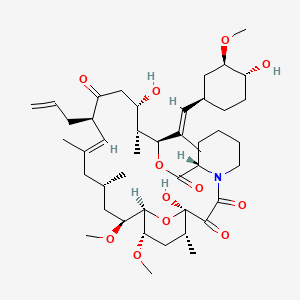
| Formula | C44H71NO13 |
|---|---|
| Molecular weight | 822.05 g/mol |
| IUPAC name | (1R,9S,12S,13R,14S,17R,18E,21S,23S,24R,25S,27R)-1,14-dihydroxy-12-[(E)-1-[(1R,3R,4R)-4-hydroxy-3-methoxycyclohexyl]prop-1-en-2-yl]-23,25-dimethoxy-13,19,21,27-tetramethyl-17-prop-2-enyl-11,28-dioxa-4-azatricyclo[22.3.1.04,9]octacos-18-ene-2,3,10,16-tetrone |
| CAS | 104987-11-3 |
| PubChem CID | 445643 |
| InChIKey | NWJQLQGQZSIBAF-MLAUYUEBSA-N |
| logP | 4.64 (XLogP 2.7) |
| Polar surface area | 178.36 Ų |
| H-bond acceptors / donors | 12 / 3 |
| Drug-likeness (QED) | 0.18 |
| Lipinski violations | 2 |
SMILES
C=CC[C@@H]1/C=C(\C)C[C@H](C)C[C@H](OC)[C@H]2O[C@@](O)(C(=O)C(=O)N3CCCC[C@H]3C(=O)O[C@H](/C(C)=C/[C@@H]3CC[C@@H](O)[C@H](OC)C3)[C@H](C)[C@@H](O)CC1=O)[C@H](C)C[C@@H]2OC.OBiology & Pharmacokinetics
Pharmacokinetics
| BBB penetrant | No |
|---|
Enzyme interactions
| Enzyme | Role | Detail |
|---|---|---|
| CYP2B6 | Inhibitor | — |
| CYP3A4 | Substrate | — |
Receptor binding (top 1)
| Target | Action | Affinity |
|---|---|---|
| FKBP prolyl isomerase 1A (FKBP1A) | Inhibitor | pKi 9.4 |
Transporters
BCRP (Inhibitor)BCRP (Inhibitor)BSEP (Inhibitor)BSEP (Inhibitor)MDR1 (Inhibitor)MRP (Inhibitor)MRP1 (Inhibitor)MRP2 (Inhibitor)MRP3 (Inhibitor)MRP4 (Inhibitor)OAT1 (Inhibitor)OAT3 (Inhibitor)OATP1A2 (Inhibitor)OATP1B1 (Inhibitor)OATP1B1 (Inhibitor)OATP1B3 (Inhibitor)OATP1B3 (Inhibitor)P-gp (Inhibitor)PEPT1 (Inhibitor)MDR1 (Substrate)OATP1B1 (Substrate)P-gp (Substrate)
Drug–drug interactions (100+, DDInter)
| Interacting drug | Severity | Management |
|---|---|---|
| Acyclovir | major | |
| Adalimumab | major | |
| Amikacin | major | |
| Amikacin (liposome) | major | |
| Amiloride | major | |
| Amiodarone | major | |
| Amisulpride | major | |
| Amphotericin B | major | |
| Amphotericin B (cholesteryl sulfate) | major | |
| Amphotericin B (lipid complex) | major | |
| Amphotericin B (liposomal) | major | |
| Amprenavir | major | |
| Anagrelide | major | |
| Apalutamide | major | |
| Arsenic trioxide | major | |
| Atazanavir | major | |
| Bacillus calmette-guerin substrain tice live antigen | major | |
| Bacitracin | major | |
| Balsalazide | major | |
| Baricitinib | major | |
| Bedaquiline | major | |
| Bepridil | major | |
| Betrixaban | major | |
| Boceprevir | major | |
| Bromfenac | major | |
| Cabozantinib | major | |
| Capreomycin | major | |
| Carbamazepine | major | |
| Celecoxib | major | |
| Ceritinib | major | |
| Certolizumab pegol | major | |
| Chloroquine | major | |
| Cidofovir | major | |
| Cisapride | major | |
| Cisplatin | major | |
| Citalopram | major | |
| Cladribine | major | |
| Clarithromycin | major | |
| Clotrimazole | major | |
| Clozapine | major |
Showing 40 of 100+.
Registered Products (18)
| Brand | Form / strength | Pack | Agent | Citizen (JOD) |
|---|---|---|---|---|
| Tacrus Oin | Cream 0.1 % | 10 g tube pack varies | PELLA PHARMACEUTICALS CO.LTD/JORDAN | 7.260 |
| Atopic | Cream 0.030 % as Monohydrate | 30 GM | PHILADELPHIA PHAEMACEUTICALS.COMP/JORDAN | 8.220 |
| Atopic Ointment | Ointment 0.1 % | 15 gm pack varies | PHILADELPHIA PHAEMACEUTICALS.COMP/JORDAN | 10.790 |
| Atopic Ointment | Ointment 0.1 % | 30 gm pack varies | PHILADELPHIA PHAEMACEUTICALS.COMP/JORDAN | 20.560 |
| Tacrus Oin | Cream 0.1 % | 30 g tube pack varies | PELLA PHARMACEUTICALS CO.LTD/JORDAN | 20.560 |
| Protopic 0.03% Ointment | Ointment 0.03 % | 30 g tube | Khoury Drug Store | 20.570 |
| Protopic 0.1% Ointment | Ointment 0.1 % | 30 g tube | Khoury Drug Store | 22.830 |
| Pangraf | Capsule 1 mg | 60 cap | JAWEDA INT. DRUD STORE | 24.850 |
| Prograf | Capsule 0.5 mg | 100 cap | Hikma Pharmaceuticals Co.Ltd/Jordan | 64.570 |
| Rolitac 0.5 | Tablet 0.5 mg | 100 tab | Nabulsi Drug Store | 90.630 |
| Advagraf | Capsule 0.5 mg | 100 cap | Hikma Pharmaceuticals Co.Ltd/Jordan | 97.770 |
| Pangraf | Capsule 5 mg | 100 cap | JAWEDA INT. DRUD STORE | 133.910 |
| Advagraf | Capsule 5 mg | 100 cap | Hikma Pharmaceuticals Co.Ltd/Jordan | — |
| Advagraf | Capsule 1 mg | 100 cap | Hikma Pharmaceuticals Co.Ltd/Jordan | — |
| Advagraf | Capsule 3 mg | 100 cap | Hikma Pharmaceuticals Co.Ltd/Jordan | — |
| Prograf | Capsule 1 mg | 100 cap | Hikma Pharmaceuticals Co.Ltd/Jordan | — |
| Prograf | Capsule 5 mg | 100 cap | Hikma Pharmaceuticals Co.Ltd/Jordan | — |
| Prograf Con. for IV Infusion | Infusion 5 mg/ml | 10 amp | Hikma Pharmaceuticals Co.Ltd/Jordan | — |