Deferasirox
JFDA label: Difirax 500mg Disp Tab
- Renal failure:
- Hepatic failure:
- Gastrointestinal hemorrhage:
- gastrointestinal hemorrhage
Mechanism of Action
Chelating Agent of Iron — Iron chelating agent
| Target | Action | Gene / class |
|---|---|---|
| Iron efficacy | CHELATING AGENT |
Indications
Approved
- Chronic iron overload due to transfusions
- Chronic iron overload in nontransfusion-dependent thalassemia syndromes
Contraindications
Source: Lexicomp
- Additional contraindications (not in US labeling): MDS patients with Absolute
- CrCl 2 times the age-appropriate ULN Absolute
- Known hypersensitivity to deferasirox or any component of the formulation Absolute
- advanced malignancies Absolute
- high-risk myelodysplastic syndromes Absolute
- platelet counts 3 Absolute
- poor performance status Absolute
Adverse Reactions
Cardiac disorders (1)
Common Edema
Nervous system disorders (5)
Common Anxiety · dizziness · fatigue · sleep disorder
Not Known Headache (Phatak 2010; Vichinsky 2007)
Hepatobiliary disorders (2)
Common Increased serum ALT
Not Known Increased serum bilirubin (Vichinsky 2007)
Renal and urinary disorders (3)
Very Common Increased serum creatinine · Proteinuria
Common Renal tubular disease
Gastrointestinal disorders (10)
Very Common Abdominal pain · diarrhea · nausea · vomiting
Common Acute pancreatitis · cholelithiasis · duodenal ulcer · gastric ulcer · gastritis
Not Known Constipation (Vichinsky 2007)
Skin and subcutaneous tissue disorders (2)
Very Common Skin rash
Common Dyschromia
Musculoskeletal and connective tissue disorders (2)
Not Known Arthralgia (Vichinsky 2007) · back pain (Vichinsky 2007)
Eye disorders (2)
Common Cataract · maculopathy
Ear and labyrinth disorders (1)
Common Hearing loss (including high frequency)
Infections and infestations (1)
Not Known Viral infection (Vichinsky 2007)
General disorders and administration site conditions (1)
Common Fever
Respiratory, thoracic and mediastinal disorders (5)
Common Pharyngolaryngeal pain
Not Known Cough (Vichinsky 2007) · nasopharyngitis (Vichinsky 2007) · pharyngitis (Vichinsky 2007) · respiratory tract infection (Vichinsky 2007)
Dosing
Source: Lexicomp
Warnings & Precautions
Source: Lexicomp
Auditory disturbances
Decreased hearing and high-frequency hearing loss have been reported (rare) with use; perform auditory testing prior to initiation and regularly (every 12 months) during use; if abnormalities develop, monitor more closely and consider dose reduction or treatment interruption.
Bone marrow suppression
Cytopenias (including agranulocytosis, neutropenia, thrombocytopenia, and worsening anemia) have been reported (some fatal); risk may be increased in patients with preexisting hematologic disorders; monitor blood counts regularly. Interrupt treatment in patients who develop cytopenias; may reinitiate once cause of cytopenia has been determined; use contraindicated if platelet count 3.
Dermatologic toxicity
May cause skin rash (dose-related); mild to moderate rashes may resolve without treatment interruption; for severe rash, interrupt and consider restarting at a lower dose with dose escalation and oral steroids. Severe skin reactions, including Stevens-Johnson syndrome (SJS), toxic epidermal necrolysis and erythema multiforme, have also been reported; the risk of other skin reactions including drug reaction with eosinophilia and systemic symptoms (DRESS) cannot be excluded. If severe skin reactions are suspected, discontinue immediately and evaluate; do not reintroduce therapy.
Gastrointestinal events
GI hemorrhages (including fatalities) may occur; observed more frequently in elderly patients with advanced hematologic malignancies and/or low platelet counts; discontinue treatment for suspected GI hemorrhage or ulceration. Nonfatal upper GI irritation, hemorrhage, and ulceration (sometimes complicated with GI perforation, including fatalities) have been reported. Use caution with concurrent medications that may increase risk of adverse GI effects (eg, NSAIDs, corticosteroids, anticoagulants, oral bisphosphonates). Monitor patients closely for signs/symptoms of GI ulceration/bleeding.
Hepatic failure
Hepatic injury and failure (including fatalities) may occur. Monitor transaminases and bilirubin at baseline, every 2 weeks for 1 month, then at least monthly thereafter. Hepatitis and elevated transaminases have also been reported. Hepatotoxicity is more common in patients >55 years and in patients with significant comorbidities (eg, cirrhosis, multiorgan failure). Reduce dose or temporarily interrupt treatment for severe or persistent increases in transaminases/bilirubin.
Hypersensitivity
Hypersensitivity reactions, including severe reactions (anaphylaxis and angioedema) have been reported; onset is usually within the first month of treatment. Discontinue if reaction is severe and do not reintroduce patients with previous hypersensitivity reactions due to risk of anaphylactic shock.
Ocular disturbances
Lens opacities, cataracts, intraocular pressure elevation, and retinal disorders have been reported (rare) with use; perform ophthalmic testing prior to initiation and regularly (every 12 months) during use; if abnormalities develop, monitor more closely and consider dose reduction or treatment interruption.
Renal failure
Acute renal failure (including fatalities and cases requiring dialysis) may occur; observed more frequently in patients with comorbid conditions and patients in advanced stages of hematologic disorders. Obtain serum creatinine and calculate CrCl in duplicate prior to initiation of therapy and monitor at least monthly thereafter. For patients with baseline renal impairment or at increased risk of acute renal failure, monitor creatinine weekly during the first month then at least monthly thereafter. Consider dose reduction, interruption, or discontinuation based on increases in serum creatinine. Monitor serum creatinine and/or CrCl more frequently if creatinine levels are increasing. May cause proteinuria; monitor monthly although the clinical significance of proteinuria is unknown. Renal tubular damage, including Fanconi syndrome, has also been reported, primarily in pediatric/adolescent patients with beta-thalassemia and serum ferritin levels Disease-related concerns:
Hepatic impairment
Avoid use in patients with severe (Child-Pugh class C) hepatic impairment; dose reduction is required in patients with moderate (Child-Pugh class B) hepatic impairment. Monitor patients with mild (Child-Pugh class A) or moderate (Child-Pugh class B) impairment closely for efficacy and for adverse reactions requiring dosage reduction.
Renal impairment
In patients with baseline renal impairment, monitor creatinine weekly during the first month then at least monthly thereafter. Consider dose reduction, interruption, or discontinuation based on increases in serum creatinine. Reductions in initial dose are recommended for patients with CrCl 40 to 60 mL/minute; use is contraindicated in patients with a CrCl 2 times age-appropriate ULN. Concurrent drug therapy issues:
Drug-drug interactions
Potentially significant interactions may exist, requiring dose or frequency adjustment, additional monitoring, and/or selection of alternative therapy. Consult drug interactions database for more detailed information. Special populations:
Elderly
Use with caution due to the higher incidence of toxicity (eg, hepatotoxicity) and fatal events during use; monitor elderly patients closely. Dosage form specific issues:
Lactose
Some formulations may contain lactose. Other warnings/precautions:
Appropriate use
For transfusion-related iron overload, treatment should be initiated with evidence of chronic iron overload (ie, transfusion of ≥100 mL/kg of packed RBCs [eg, ≥20 units for a 40 kg individual] and serum ferritin consistently >1,000 mcg/L). For non-transfusion-dependent iron overload, initiate with liver iron concentration ≥5 mg Fe/g dry liver weight, and serum ferritin >300 mcg/L. Prior to use, consider risk versus anticipated benefit with respect to individual patient's life expectancy, prognosis, and comorbidities. An improvement in survival or disease-related symptoms due to the therapy has not been established in clinical trials. Postmarketing experience indicates serious reactions, including fatalities, have occurred with deferasirox use, particularly when used in older patients with comorbidities or advanced disease.
Other minerals
Deferasirox has a low affinity for binding with zinc and copper, may cause variable decreases in the serum concentration of these trace minerals.
Overchelation
Overchelation of iron may increase development of toxicity; monitor sodium ferritin; consider temporary interruption of treatment in transfusional iron overload when serum ferritin
Pregnancy & Lactation
Pregnancy
Adverse events were observed in animal reproduction studies. Information related to the use of deferasirox in pregnant women is limited (Vini 2011).
Lactation
It is not known if deferasirox is present in breast milk. Due to the potential for serious adverse reactions in the breastfed infant, the manufacturer recommends a decision be made to discontinue breastfeeding or to discontinue the drug, taking into account the importance of treatment to the mother.
Monitoring
| Clinical pearl | Serum ferritin (baseline, monthly thereafter), iron levels (baseline), CBC with differential, serum creatinine (weekly during the first month after initiation or modification of therapy and at least monthly thereafter), and CrCl (2 baseline assessments then monthly thereafter; in patients who are at increased risk of complications [eg, preexisting renal conditions, elderly, comorbid conditions, or receiving other potentially nephrotoxic medications]: Weekly for the first month then at least monthly thereafter); hepatic iron concentration (non-transfusion-dependent thalassemia; baseline, every 6 months); urine protein (monthly); monitor serum creatinine and/or CrCl more frequently if creatinine levels are increasing; serum transaminases (ALT/AST) and bilirubin (baseline, every 2 weeks for the first month, then monthly); baseline and annual auditory and ophthalmic examination (including slit lamp examinations and dilated fundoscopy); performance status (in patients with hematologic malignancies); signs/symptoms of GI ulcers or hemorrhage; cumulative number of RBC units received |
|---|
Chemistry & Properties
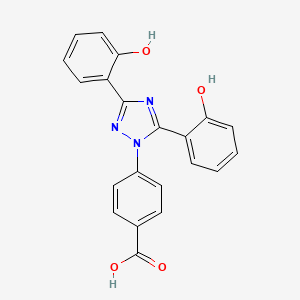
| Formula | C21H15N3O4 |
|---|---|
| Molecular weight | 373.37 g/mol |
| IUPAC name | 4-[3,5-bis(2-hydroxyphenyl)-1,2,4-triazol-1-yl]benzoic acid |
| CAS | 201530-41-8 |
| PubChem CID | 214348 |
| InChIKey | BOFQWVMAQOTZIW-UHFFFAOYSA-N |
| logP | 3.71 (XLogP 3.8) |
| Polar surface area | 108.47 Ų |
| H-bond acceptors / donors | 6 / 3 |
| Drug-likeness (QED) | 0.50 |
| Lipinski violations | 0 |
SMILES
O=C(O)c1ccc(-n2nc(-c3ccccc3O)nc2-c2ccccc2O)cc1Biology & Pharmacokinetics
Pharmacokinetics
| BBB penetrant | No |
|---|
Enzyme interactions
| Enzyme | Role | Detail |
|---|---|---|
| CYP2C19 | Inhibitor | — |
| CYP2C8 | Inhibitor | — |
| CYP2C9 | Substrate | — |
| CYP2D6 | Substrate | — |
Transporters
BCRP (Inhibitor)BSEP (Inhibitor)BSEP (Inhibitor)MDR1 (Inhibitor)MRP (Inhibitor)MRP1 (Inhibitor)MRP2 (Inhibitor)MRP3 (Inhibitor)MRP4 (Inhibitor)OATP (Inhibitor)OATP1B1 (Inhibitor)OATP1B3 (Inhibitor)P-gp (Inhibitor)Transporter(unspecified) (Inhibitor)BCRP (Substrate)MDR1 (Substrate)MRP2 (Substrate)OATP (Substrate)OATP1B1 (Substrate)OCT1 (Substrate)P-gp (Substrate)Transporter(unspecified) (Substrate)
Drug–drug interactions (100+, DDInter)
| Interacting drug | Severity | Management |
|---|---|---|
| Abciximab | major | |
| Acalabrutinib | major | |
| Acetylsalicylic acid | major | |
| Alendronic acid | major | |
| Alteplase | major | |
| Amikacin | major | |
| Amikacin (liposome) | major | |
| Aminophylline | major | |
| Aminosalicylic acid | major | |
| Amphotericin B | major | |
| Amphotericin B (cholesteryl sulfate) | major | |
| Amphotericin B (lipid complex) | major | |
| Amphotericin B (liposomal) | major | |
| Anagrelide | major | |
| Anisindione | major | |
| Anistreplase | major | |
| Antithrombin Alfa | major | |
| Antithrombin III human | major | |
| Apixaban | major | |
| Ardeparin | major | |
| Argatroban | major | |
| Avapritinib | major | |
| Bacitracin | major | |
| Balsalazide | major | |
| Betamethasone | major | |
| Betrixaban | major | |
| Binimetinib | major | |
| Bismuth subsalicylate | major | |
| Bivalirudin | major | |
| Bromfenac | major | |
| Cabozantinib | major | |
| Cangrelor | major | |
| Caplacizumab | major | |
| Capreomycin | major | |
| Celecoxib | major | |
| Choline salicylate | major | |
| Cidofovir | major | |
| Cilostazol | major | |
| Cisplatin | major | |
| Clopidogrel | major |
Showing 40 of 100+.
Registered Products (31)
| Brand | Form / strength | Pack | Agent | Citizen (JOD) |
|---|---|---|---|---|
| Zeno 90 mg Film Coated tablet | Film-Coated Tablet 90 mg | 30 tab | Ibn Rushd Drug Store | 55.340 |
| Zeno 180 mg Film Coated tablet | Film-Coated Tablet 180 mg | 30 tab | Ibn Rushd Drug Store | 90.680 |
| Magneto DispersibleTablet | Tablet 125 mg | 28 tab pack varies | Jordan Sweden Medical & Sterilization Co. | 95.710 |
| Magneto DispersibleTablet | Tablet 125 mg | 30 tab pack varies | Jordan Sweden Medical & Sterilization Co. | 102.550 |
| Deropharm | Tablet Deferasirox 90 mg | 30 tab | / Pharma International Company/Jordan / General | 110.220 |
| Rexiron | Tablet 90 mg | 30 tab | UNITED PHARM.MFG.CO.LTD(UPM)/JORDAN | 110.220 |
| Lufacto 125 mg dispersible tablets | Tablet 125.0 mg | 30 tab | JORDAN RIVER PHARMA.IND(JORIVER)/JORDAN | 112.830 |
| Hemoplex | Tablet 125 mg | 28 tab | Dar Al Dawa Development and Investment Co Ltd/Jordan | 127.560 |
| Zeno | Tablet 360 mg | 30 tab | Ibn Rushd Drug Store | 153.160 |
| Hemoplex | Tablet 500 mg | 28 tab | Dar Al Dawa Development and Investment Co Ltd/Jordan | 343.090 |
| Deropharm | Tablet Deferasirox 180 mg | 30 tab | / Pharma International Company/Jordan / General | — |
| Deropharm | Tablet Deferasirox 360 mg | 30 tab | / Pharma International Company/Jordan / General | — |
| Difirax 250 mg Disp Tab | Tablet 250 mg | 30 tab | Hikma Pharmaceuticals Co.Ltd/Jordan | — |
| Difirax 500mg Disp Tab | Tablet 500 mg | 28 tab | Hikma Pharmaceuticals Co.Ltd/Jordan | — |
| Exjade Dispirsable Tab | Tablet 250 mg | 28 tab | The Jordan Drugstore Co | — |
| Exjade Dispirsable Tab | Tablet 500 mg | 28 tab | The Jordan Drugstore Co | — |
| FERASIRO 250 DT (Deferasirox Dispersible Tablets 250 mg) | Tablet 250.00 mg | 7 tab pack varies | Manar Drug Store | — |
| FERASIRO 250 DT (Deferasirox Dispersible Tablets 250 mg) | Tablet 250.00 mg | 7 tab pack varies | Manar Drug Store | — |
| FERASIRO 500 DT (Deferasirox Dispersible Tablets 500 mg) | Tablet 500.00 mg | 7 tab pack varies | Manar Drug Store | — |
| FERASIRO 500 DT (Deferasirox Dispersible Tablets 500 mg) | Tablet 500.00 mg | 7 tab pack varies | Manar Drug Store | — |
| Hemoplex | Tablet 250 mg | 28 tab | Dar Al Dawa Development and Investment Co Ltd/Jordan | — |
| Lufacto 250 mg dispersible tablets | Tablet 250.0 mg | 30 tab | JORDAN RIVER PHARMA.IND(JORIVER)/JORDAN | — |
| Lufacto 500 mg dispersible tablets | Tablet 500.0 mg | 30 tab | JORDAN RIVER PHARMA.IND(JORIVER)/JORDAN | — |
| Magneto DispersibleTablet | Tablet 500 mg | 30 tab | Jordan Sweden Medical & Sterilization Co. | — |
| Magneto DispersibleTablet | Tablet 250 mg | 28 tab pack varies | Jordan Sweden Medical & Sterilization Co. | — |
| Magneto DispersibleTablet | Tablet 250 mg | 30 tab pack varies | Jordan Sweden Medical & Sterilization Co. | — |
| Rexiron | Tablet 360 mg | 30 tab | UNITED PHARM.MFG.CO.LTD(UPM)/JORDAN | — |
| Rexiron | Tablet 180 mg | 30 tab | UNITED PHARM.MFG.CO.LTD(UPM)/JORDAN | — |
| Rexiron Disp Tab | Tablet 500 mg | 28 Disp Tab | United Pharmaceutical | — |
| Rexiron Disp Tab | Tablet 250 mg | 28 Disp Tab | United Pharmaceutical | — |
| Rexiron Disp Tab | Tablet 125 mg | 28 Disp Tab | United Pharmaceutical | — |