Furosemide
JFDA label: Diusemide Tablets
- Fluid/electrolyte loss:
Mechanism of Action
Inhibitor of Solute carrier family 12 member 1 — Sodium-(potassium)-chloride cotransporter 2 inhibitor
| Target | Action | Gene / class |
|---|---|---|
| Solute carrier family 12 member 1 efficacy | INHIBITOR | SLC12A1 |
Indications
Approved
- Edema
- Hypertension
Contraindications
Source: Lexicomp
- Additional contraindications (not in US labeling): Hypersensitivity to sulfonamide-derived drugs Absolute
- Hypersensitivity to furosemide or any component of the formulation Absolute
- breast-feeding. Note: Manufacturer labeling for Lasix Special and Furosemide Special Injection also includes: GFR 20 mL/minute Absolute
- complete renal shutdown Absolute
- hepatic cirrhosis Absolute
- hepatic coma and precoma Absolute
- jaundiced newborn infants or infants with disease(s) capable of causing hyperbilirubinemia and possibly kernicterus Absolute
- renal failure accompanied by hepatic coma and precoma Absolute
- renal failure due to poisoning with nephrotoxic or hepatotoxic substances. Note: Although the approved product labeling states this medication is contraindicated with other sulfonamide-containing drug classes, the scientific basis of this statement has been challenged. See “Warnings/Precautions” for more detail Absolute
- uncorrected states of electrolyte depletion, hypovolemia, dehydration, or hypotension Absolute
Adverse Reactions
Cardiac disorders (4)
Not Known Necrotizing angiitis · orthostatic hypotension · thrombophlebitis · vasculitis
Vascular disorders (1)
Common Hypotension (orthostatic)
Nervous system disorders (5)
Not Known Dizziness · headache · paresthesia · restlessness · vertigo
Hepatobiliary disorders (3)
Not Known Hepatic encephalopathy · intrahepatic cholestatic jaundice · liver enzymes increased
Renal and urinary disorders (3)
Not Known Bladder spasm · Interstitial nephritis (allergic) · renal disease
Blood and lymphatic system disorders (8)
Not Known Agranulocytosis · anemia · aplastic anemia · eosinophilia · hemolytic anemia · leukopenia · purpura · thrombocytopenia
Immune system disorders (4)
Not Known anaphylactic shock · anaphylactoid reaction · Anaphylaxis · DRESS syndrome
Metabolism and nutrition disorders (8)
Very Common Hypokalaemia
Common Hyperuricaemia / gout · Hyponatraemia
Not Known Glycosuria · hyperglycemia · hyperuricemia · increased serum cholesterol · increased serum triglycerides
Gastrointestinal disorders (9)
Not Known Abdominal cramps · anorexia · constipation · diarrhea · gastric irritation · mouth irritation · nausea · pancreatitis · vomiting
Skin and subcutaneous tissue disorders (11)
Rare Photosensitivity
Not Known Acute generalized exanthematous pustulosis · bullous pemphigoid · erythema multiforme · exfoliative dermatitis · pruritus · skin photosensitivity · skin rash · Stevens-Johnson syndrome · toxic epidermal necrolysis · urticaria
Musculoskeletal and connective tissue disorders (2)
Not Known Muscle spasm · weakness
Eye disorders (2)
Not Known Blurred vision · xanthopsia
Ear and labyrinth disorders (3)
Rare Ototoxicity (high-dose IV)
Not Known Deafness · tinnitus
Investigations (1)
Common Elevated serum creatinine
General disorders and administration site conditions (3)
Common Dehydration
Not Known Fever · Pain at injection site (following IM injection)
Dosing
Source: Lexicomp
Warnings & Precautions
Source: Lexicomp
Fluid/electrolyte loss
If given in excessive amounts, furosemide, similar to other loop diuretics, can lead to profound diuresis, resulting in fluid and electrolyte depletion. Close medical supervision and dose evaluation are required. Watch for and correct electrolyte disturbances; adjust dose to avoid dehydration. When electrolyte depletion is present, therapy should not be initiated unless serum electrolytes, especially potassium, are normalized. Risk of hypokalemia may be increased by: rapid diuresis, poor oral potassium intake, cirrhosis, and combined use with large amounts of licorice, corticosteroids, or laxatives (chronic use). In contrast to thiazide diuretics, a loop diuretic can also lower serum calcium concentrations. Electrolyte disturbances can predispose a patient to serious cardiac arrhythmias.
Hyperuricemia
Asymptomatic hyperuricemia has been reported with use; rarely, may precipitate gout.
Nephrotoxicity
Monitor fluid status and renal function in an attempt to prevent oliguria, azotemia, and reversible increases in BUN and creatinine; close medical supervision of aggressive diuresis required. May increase risk of radiocontrast-induced nephropathy in high-risk patients.
Ototoxicity
Rapid IV administration, severe renal impairment, excessive doses, hypoproteinemia, and concurrent use of other ototoxins is associated with ototoxicity.
Photosensitivity
Photosensitization may occur.
Sulfonamide (“sulfa”) allergy
The approved product labeling for many medications containing a sulfonamide chemical group includes a broad contraindication in patients with a prior allergic reaction to sulfonamides. There is a potential for cross-reactivity between members of a specific class (eg, two antibiotic sulfonamides). However, concerns for cross-reactivity have previously extended to all compounds containing the sulfonamide structure (SO2NH2). An expanded understanding of allergic mechanisms indicates cross-reactivity between antibiotic sulfonamides and nonantibiotic sulfonamides may not occur or at the very least this potential is extremely low (Brackett 2004; Johnson 2005; Slatore 2004; Tornero 2004). In particular, mechanisms of cross-reaction due to antibody production (anaphylaxis) are unlikely to occur with nonantibiotic sulfonamides. T-cell-mediated (type IV) reactions (eg, maculopapular rash) are less well understood and it is not possible to completely exclude this potential based on current insights. In cases where prior reactions were severe (Stevens-Johnson syndrome/TEN), some clinicians choose to avoid exposure to these classes.
Thyroid effects
Doses >80 mg may result in transient increase in free thyroid hormones, followed by an overall decrease in total thyroid hormone levels. Disease-related concerns:
Adrenal insufficiency
Avoid use of diuretics for treatment of elevated blood pressure in patients with primary adrenal insufficiency (Addison disease). Adjustment of glucocorticoid/mineralocorticoid therapy and/or use of other antihypertensive agents is preferred to treat hypertension (Bornstein 2016; Inder 2015).
Cirrhosis
In cirrhosis, avoid electrolyte and acid/base imbalances that might lead to hepatic encephalopathy; correct electrolyte and acid/base imbalances prior to initiation when hepatic coma is present. Supplemental potassium or an aldosterone antagonist, when appropriate, may reduce risk of hypokalemia and metabolic alkalosis. Close monitoring warranted, especially with initiation of therapy.
Diabetes
Use with caution in patients with prediabetes or diabetes mellitus; may see a change in glucose control.
Prostatic hyperplasia/urinary stricture
May cause urinary retention due to increased urine production, especially upon initiation of therapy.
Systemic lupus erythematosus (SLE)
May cause SLE exacerbation or activation. Concurrent drug therapy issues:
Drug-drug interactions
Potentially significant interactions may exist, requiring dose or frequency adjustment, additional monitoring, and/or selection of alternative therapy. Consult drug interactions database for more detailed information. Special populations:
Pediatric
May lead to nephrocalcinosis or nephrolithiasis in premature infants or in children • Surgical patients: If given the morning of surgery, furosemide may render the patient volume depleted and blood pressure may be labile during general anesthesia. Dosage form specific issues:
Propylene glycol
Some dosage forms may contain propylene glycol; large amounts are potentially toxic and have been associated hyperosmolality, lactic acidosis, seizures, and respiratory depression; use caution (AAP 1997; Zar 2007). Other warnings and precautions:
Diuretic resistance
For some patients, despite higher doses of loop diuretic treatment, an adequate diuretic response cannot be attained. Diuretic resistance can usually be overcome by intravenous administration, the use of two diuretics together (eg, furosemide and chlorothiazide), or the use of a diuretic with a positive inotropic agent. When such combinations are used, serum electrolytes need to be monitored even more closely (ACC/AHA [Yancy 2013]; Cody 1994; HFSA 2010).
Pregnancy & Lactation
Pregnancy
Caution
Use only for specific indications (pulmonary oedema, volume overload). Avoid chronic use for hypertension (reduces placental blood flow)
Lactation
Furosemide is present in breast milk; maternal use may suppress lactation. The manufacturer recommends that caution be used if administered to a breastfeeding woman. Although some sources consider furosemide compatible with breastfeeding (Garg 2015), others recommend to avoid if possible because usual maternal doses can suppress lactation (WHO 2002).
Monitoring
| Clinical pearl | Monitor I & O (inpatient setting) and weight daily; blood pressure, orthostasis; serum electrolytes, renal function; monitor hearing with high doses or rapid IV administration |
|---|
Chemistry & Properties
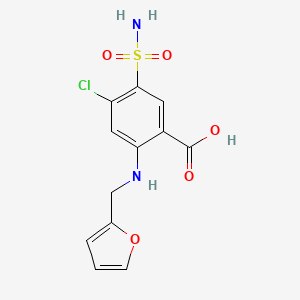
| Formula | C12H11ClN2O5S |
|---|---|
| Molecular weight | 330.75 g/mol |
| IUPAC name | 4-chloro-2-(furan-2-ylmethylamino)-5-sulfamoylbenzoic acid |
| CAS | 54-31-9 |
| PubChem CID | 3440 |
| InChIKey | ZZUFCTLCJUWOSV-UHFFFAOYSA-N |
| logP | 1.89 (XLogP 2.0) |
| Polar surface area | 122.63 Ų |
| H-bond acceptors / donors | 5 / 3 |
| Drug-likeness (QED) | 0.77 |
| Lipinski violations | 0 |
SMILES
NS(=O)(=O)c1cc(C(=O)O)c(NCc2ccco2)cc1ClBiology & Pharmacokinetics
Pharmacokinetics
| BBB penetrant | No |
|---|
Receptor binding (top 2)
| Target | Action | Affinity |
|---|---|---|
| Kidney-specific Na-K-Cl symporter (SLC12A1) | Inhibitor | pIC50 5.2 |
| Basolateral Na-K-Cl symporter (SLC12A2) | Inhibitor | pIC50 5.1 |
Transporters
BCRP (Inhibitor)BCRP (Inhibitor)BSEP (Inhibitor)BSEP (Inhibitor)MATE1 (Inhibitor)MCT6 (Inhibitor)MDR1 (Inhibitor)MRP1 (Inhibitor)MRP2 (Inhibitor)MRP3 (Inhibitor)MRP4 (Inhibitor)NTCP (Inhibitor)OAT (Inhibitor)OAT1 (Inhibitor)OAT2 (Inhibitor)OAT3 (Inhibitor)OAT4 (Inhibitor)OATP1B1 (Inhibitor)OATP1B1 (Inhibitor)OATP1B3 (Inhibitor)OATP1B3 (Inhibitor)OATP2B1 (Inhibitor)OCT1 (Inhibitor)OCTN2 (Inhibitor)P-gp (Inhibitor)BCRP (Substrate)MDR1 (Substrate)MRP2 (Substrate)MRP4 (Substrate)OAT (Substrate)OAT1 (Substrate)OAT2 (Substrate)OAT3 (Substrate)P-gp (Substrate)PEPT1 (Substrate)
Drug–drug interactions (100+, DDInter)
| Interacting drug | Severity | Management |
|---|---|---|
| Amikacin | major | |
| Amikacin (liposome) | major | |
| Aminolevulinic acid | major | |
| Arsenic trioxide | major | |
| Cisapride | major | |
| Desmopressin | major | |
| Dolasetron | major | |
| Etelcalcetide | major | |
| Gentamicin | major | |
| Kanamycin | major | |
| Neomycin | major | |
| Streptomycin | major | |
| Acarbose | moderate | |
| Acetohexamide | moderate | |
| Activated charcoal | moderate | |
| Albiglutide | moderate | |
| Aldesleukin | moderate | |
| Alimemazine | moderate | |
| Alogliptin | moderate | |
| Amifostine | moderate | |
| Aminolevulinic acid (topical) | moderate | |
| Amphotericin B | moderate | |
| Amphotericin B (cholesteryl sulfate) | moderate | |
| Amphotericin B (lipid complex) | moderate | |
| Amphotericin B (liposomal) | moderate | |
| Beclomethasone dipropionate | moderate | |
| Betamethasone | moderate | |
| Bisacodyl | moderate | |
| Brimonidine (ophthalmic) | moderate | |
| Brimonidine (topical) | moderate | |
| Bupropion | moderate | |
| Cabozantinib | moderate | |
| Canagliflozin | moderate | |
| Carboplatin | moderate | |
| Castor oil | moderate | |
| Celecoxib | moderate | |
| Chlorpropamide | moderate | |
| Cisplatin | moderate | |
| Codeine | moderate | |
| Corticotropin | moderate |
Showing 40 of 100+.
Registered Products (12)
| Brand | Form / strength | Pack | Agent | Citizen (JOD) |
|---|---|---|---|---|
| Lasix Tabs | Tablet 40 mg | 20 tab | Ulfa Pharma Co. | 1.000 |
| Diusemide Ampoules | Ampoule 20 mg/2 ml | 5 amp pack varies | The Arab Pharmaceutical Manufacturing PSC/Salt | 1.330 |
| Diutric Solution for Injection | Injection 20 mg/2 ml | 5 vial | MS PHARMA/JORDAN | 1.380 |
| Diusemide Tablets | Tablet 40 mg | 30 tab pack varies | The Arab Pharmaceutical Manufacturing PSC/Salt | 1.500 |
| Lasix Amps | Ampoule 20 mg/2 ml | 5 amp | Ulfa Pharma Co. | 1.710 |
| Furosemide | Ampoule 20 mg | 2 ml pack varies | AL Rahma Drug Store | 2.450 |
| Lixamed | Injection 10 mg/ml | 120 ml | Pharma International Company/ Jordan | 3.900 |
| Diramide Syrup | Syrup 1 % | 60 ml pack varies | Alrazi Pharmaceutical Industries | 4.950 |
| Diramide Syrup | Syrup 1 % | 100 ml pack varies | Alrazi Pharmaceutical Industries | 6.100 |
| Furosemide | Ampoule 20 mg | 100 amp pack varies | AL Rahma Drug Store | 17.350 |
| Diusemide Ampoules | Ampoule 20 mg/2 ml | 100 amp pack varies | The Arab Pharmaceutical Manufacturing PSC/Salt | 22.610 |
| Diusemide Tablets | Tablet 40 mg | 1000 tab pack varies | The Arab Pharmaceutical Manufacturing PSC/Salt | 42.500 |