Oxcarbazepine
Active form: Licarbazepine.
🧬 Cross-allergy: Aromatic anticonvulsants
JFDA label: Trileptal
Mechanism of Action
Blocker of Sodium channel alpha subunit — Sodium channel alpha subunit blocker
| Target | Action | Gene / class |
|---|---|---|
| Sodium channel alpha subunit efficacy | BLOCKER |
Indications
Approved
- Canadian labeling
- Extended-release
- Immediate-release
- Partial seizures
- US labeling
Off-label
- Neuropathic pain
Contraindications
Source: Lexicomp
- Hypersensitivity to oxcarbazepine, eslicarbazepine acetate, or any component of the formulation Documentation of allergenic cross-reactivity for carbamazepine and analogues is limited. However, because of similarities in chemical structure and/or pharmacologic actions, the possibility of cross-sensitivity cannot be ruled out with certainty Absolute
Adverse Reactions
Cardiac disorders (10)
Common bradycardia · cardiac failure · flushing · hypertension · hypotension · Lower extremity edema · orthostatic hypotension · palpitations · syncope · tachycardia
Nervous system disorders (59)
Very Common abnormal gait · ataxia · Dizziness · drowsiness · fatigue · headache · vertigo
Common abnormal electroencephalogram · abnormality in thinking · aggressive behavior · agitation · amnesia · anxiety · apathy · aphasia · aura · cerebral hemorrhage · confusion · delirium · delusion · depression · dysmetria · dystonia · emotional lability · Equilibrium disturbance · euphoria extrapyramidal reaction · falling · feeling abnormal · hemiplegia · hyperkinesia · hyperreflexia · hypertonia · hypokinesia · hyporeflexia · hypotonia · hysteria · impaired consciousness · insomnia · intoxicated feeling · lack of concentration · malaise · manic behavior · migraine · myasthenia · nervousness · neuralgia · nightmares · oculogyric crisis · panic disorder · paralysis · personality disorder · precordial pain · psychosis · rigors · seizure · seizure (aggravated) · speech disorder · stupor · voice disorder
Hepatobiliary disorders (1)
Common Increased liver enzymes
Renal and urinary disorders (9)
Common dysuria · hematuria · leukorrhea · Nephrolithiasis · polyuria · priapism · renal pain · Urinary frequency · urinary tract pain
Blood and lymphatic system disorders (4)
Common Bruise · purpura · rectal hemorrhage · thrombocytopenia
Immune system disorders (2)
Common angioedema · Hypersensitivity reaction
Metabolism and nutrition disorders (1)
Common Decreased serum sodium, dyspepsia, constipation, dysgeusia, xerostomia, gastritis, upper abdominal pain, aphthous stomatitis, biliary colic, bloody stools, cholelithiasis, colitis, duodenal ulcer, dys
Gastrointestinal disorders (3)
Very Common abdominal pain · nausea · Vomiting
Skin and subcutaneous tissue disorders (16)
Common acne vulgaris · alopecia · contact dermatitis · diaphoresis · eczema · erythematosus rash · facial rash · folliculitis · genital pruritus · maculopapular rash · miliaria · psoriasis · skin photosensitivity · Skin rash · urticaria · vitiligo
Musculoskeletal and connective tissue disorders (8)
Very Common Tremor
Common back pain · muscle spasm · right hypochondrium pain · sprain · systemic lupus erythematosus · tetany · Weakness
Eye disorders (14)
Very Common Diplopia · nystagmus · visual disturbance
Common accommodation disturbance · blepharoptosis · Blurred vision · cataract · conjunctival hemorrhage · hemianopia · mydriasis · ocular edema · photophobia · scotoma · xerophthalmia
Ear and labyrinth disorders (2)
Common Otitis externa · tinnitus
General disorders and administration site conditions (1)
Common Fever
Respiratory, thoracic and mediastinal disorders (11)
Common asthma · dyspnea · epistaxis · laryngismus · nasopharyngitis · pleurisy · pneumonia · pulmonary infection · Rhinitis · sinusitis · upper respiratory tract infection
Dosing
Source: Lexicomp
Warnings & Precautions
Source: Lexicomp
Blood dyscrasias
Agranulocytosis, leukopenia, and pancytopenia have been reported with use (rare); discontinuation and conversion to alternate therapy may be required.
Bone disorders
Long term use has been associated with decreased bone mineral density, osteopenia, osteoporosis, and fractures.
CNS effects
Use has been associated with CNS-related adverse events, most significant of these were cognitive symptoms including psychomotor slowing, difficulty with concentration, and speech or language problems, somnolence or fatigue, and coordination abnormalities, including ataxia and gait disturbances. Caution patients about performing tasks which require mental alertness (eg, operating machinery or driving).
Dermatologic reactions
Potentially serious, sometimes fatal, dermatologic reactions (eg, Stevens-Johnson, toxic epidermal necrolysis) have been reported in adults and children; the median time to onset was 19 days after treatment initiation. Monitor for signs and symptoms of skin reactions; discontinuation and conversion to alternate therapy may be required. Recurrence of serious skin reactions have been reported with oxcarbazepine rechallenge.
Hepatic dysfunction
Hepatitis has been reported rarely (Hsu 2010). Promptly evaluate any symptoms of hepatic dysfunction (eg, anorexia, nausea/vomiting, right upper quadrant pain, pruritus) and discontinue therapy immediately if significant abnormalities are confirmed.
Hypersensitivity reactions
Rare cases of anaphylaxis and angioedema have been reported, even after initial dosing; permanently discontinue should symptoms occur. Use caution in patients with previous hypersensitivity to carbamazepine (cross-sensitivity occurs in 25% to 30% of patients). Potentially serious, sometimes fatal drug reaction with eosinophilia and systemic symptoms (DRESS) also known as multiorgan hypersensitivity reactions have also been reported in close association with initiation of oxcarbazepine; monitor for signs and symptoms of possible disparate manifestations associated with lymphatic, hepatic, renal, cardiovascular, and/or hematologic organ systems; discontinuation and conversion to alternate therapy may be required.
Hyponatremia
Clinically significant hyponatremia (serum sodium • Hypothyroidism: Hypothyroidism has been reported; consider monitoring thyroid function, particularly in pediatric patients. Discontinuation of therapy has been associated with return of normal thyroxine levels.
Suicidal ideation
Pooled analysis of trials involving various antiepileptics (regardless of indication) showed an increased risk of suicidal thoughts/behavior (incidence rate: 0.43% treated patients compared to 0.24% of patients receiving placebo); risk observed as early as 1 week after initiation and continued through duration of trials (most trials ≤24 weeks). Monitor all patients for notable changes in behavior that might indicate suicidal thoughts or depression; patients should be instructed to notify healthcare provider immediately if symptoms occur. Disease-related concerns:
Cardiovascular disease
Clinical trials excluded patients with significant cardiovascular disease or ECG abnormalities. Monitor body weight/fluid retention in patients with HF; evaluate serum sodium with worsening cardiac function or fluid retention.
Renal impairment
Single-dose studies show that half-life of the primary active metabolite is prolonged 3- to 4-fold and AUC is doubled in patients with CrCl • Seizure disorder: Exacerbation of or new onset primary generalized seizures has been reported, particularly in children. In case of seizure aggravation, discontinue oxcarbazepine. Concurrent drug therapy issues:
Drug-drug interactions
Potentially significant interactions may exist, requiring dose or frequency adjustment, additional monitoring, and/or selection of alternative therapy. Consult drug interactions database for more detailed information. Special populations:
Asian ancestry
Consider screening patients of Asian descent for the variant human leukocyte antigen (HLA) allele B*1502 prior to initiating therapy. This genetic variant has been associated with a significantly increased risk of developing Stevens-Johnson syndrome and/or toxic epidermal necrolysis in patients receiving carbamazepine. Structural similarity of oxcarbazepine to carbamazepine, available clinical evidence, and data from nonclinical studies showing a direct interaction of oxcarbazepine with the HLA-B*1502 protein suggest patients receiving oxcarbazepine may also be at a similar risk. Consider avoiding use of oxcarbazepine in patients with a positive result. Screening is not recommending in low-risk populations or in current oxcarbazepine patients (risk usually during first few months of therapy). Other warnings/precautions:
Withdrawal
Anticonvulsants should not be discontinued abruptly because of the possibility of increasing seizure frequency; therapy should be withdrawn gradually to minimize the potential of increased seizure frequency, unless safety concerns require a more rapid withdrawal.
Pregnancy & Lactation
Pregnancy
Adverse events have been observed in animal reproduction studies. Oxcarbazepine, the active metabolite MHD and the inactive metabolite DHD, crosses the placenta and can be detected in the newborn (Myllynen 2001). According to the manufacturer, data from a limited number of pregnancies collected from pregnancy registries suggest congenital malformations associated with oxcarbazepine monotherapy, including craniofacial defects and cardiac malformations. In general, the risk of teratogenic effects is higher with AED polytherapy than monotherapy (Harden 2009). Plasma concentrations of MHD gradually decrease due to physiologic changes which occur during pregnancy; patients should be monitored during pregnancy and postpartum. Oxcarbazepine may decrease plasma concentrations of hormonal contraceptives. Data collection to monitor pregnancy and infant outcomes following exposure to oxcarbazepine is ongoing. Patients exposed to oxcarbazepine during pregnancy are encouraged to enroll themselves
Lactation
Oxcarbazepine and the active 10-hydroxy metabolite (MHD) are present in breast milk. Due to the potential for serious adverse reactions in the breastfed infant, the manufacturer recommends a decision be made to discontinue breastfeeding or to discontinue the drug, taking into account the importance of treatment to the mother.
Monitoring
| Clinical pearl | Seizure frequency; serum sodium as deemed necessary (particularly during first 3 months of therapy); symptoms of CNS depression (dizziness, headache, somnolence); hypersensitivity reactions. Additional serum sodium monitoring recommended during maintenance treatment in patients receiving other medications known to decrease sodium levels, in patients with signs/symptoms of hyponatremia, and in patients with an increase in seizure frequency or severity. Periodic thyroid function tests (particularly pediatric patients) and CBC. Monitor for suicidality (eg, suicidal thoughts, depression, behavioral changes). Serum levels of concomitant antiepileptic drugs during titration as necessary. |
|---|
Chemistry & Properties
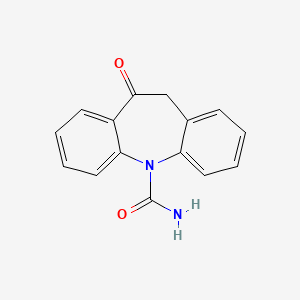
| Formula | C15H12N2O2 |
|---|---|
| Molecular weight | 252.27 g/mol |
| IUPAC name | 5-oxo-6H-benzo[b][1]benzazepine-11-carboxamide |
| CAS | 28721-07-5 |
| PubChem CID | 34312 |
| InChIKey | CTRLABGOLIVAIY-UHFFFAOYSA-N |
| logP | 2.64 (XLogP 1.7) |
| Polar surface area | 63.4 Ų |
| H-bond acceptors / donors | 2 / 1 |
| Drug-likeness (QED) | 0.78 |
| Lipinski violations | 0 |
SMILES
NC(=O)N1c2ccccc2CC(=O)c2ccccc21Biology & Pharmacokinetics
Pharmacokinetics
| BBB penetrant | Yes |
|---|
Enzyme interactions
| Enzyme | Role | Detail |
|---|---|---|
| CYP1A2 | Inhibitor | — |
| CYP1A2 | Substrate | — |
| CYP2C19 | Inhibitor | — |
| CYP2C9 | Inhibitor | — |
Transporters
BCRP (Inhibitor)BSEP (Inhibitor)BSEP (Inhibitor)MRP1 (Inhibitor)MRP2 (Inhibitor)MRP3 (Inhibitor)MRP4 (Inhibitor)OATP1B1 (Inhibitor)OATP1B1 (Inhibitor)OATP1B3 (Inhibitor)OATP1B3 (Inhibitor)P-gp (Inhibitor)MDR1 (Substrate)P-gp (Substrate)
Drug–drug interactions (100+, DDInter)
| Interacting drug | Severity | Management |
|---|---|---|
| Ethinylestradiol | major | |
| Hydrocodone | major | |
| Methylene blue | major | |
| Procarbazine | major | |
| Abemaciclib | moderate | |
| Acalabrutinib | moderate | |
| Activated charcoal | moderate | |
| Albendazole | moderate | |
| Alimemazine | moderate | |
| Alpelisib | moderate | |
| Apixaban | moderate | |
| Apremilast | moderate | |
| Aprepitant | moderate | |
| Artemether | moderate | |
| Astemizole | moderate | |
| Axitinib | moderate | |
| Azatadine | moderate | |
| Azelastine (nasal) | moderate | |
| Betamethasone | moderate | |
| Betrixaban | moderate | |
| Bosutinib | moderate | |
| Brigatinib | moderate | |
| Brimonidine (ophthalmic) | moderate | |
| Brimonidine (topical) | moderate | |
| Brompheniramine | moderate | |
| Busulfan | moderate | |
| Cabazitaxel | moderate | |
| Cabozantinib | moderate | |
| Calcifediol | moderate | |
| Calcitriol | moderate | |
| Carbinoxamine | moderate | |
| Ceritinib | moderate | |
| Cetirizine | moderate | |
| Chloroquine | moderate | |
| Chlorphenesin | moderate | |
| Chlorpheniramine | moderate | |
| Chlorpropamide | moderate | |
| Cholecalciferol | moderate | |
| Cilostazol | moderate | |
| Cisapride | moderate |
Showing 40 of 100+.
Registered Products (4)
| Brand | Form / strength | Pack | Agent | Citizen (JOD) |
|---|---|---|---|---|
| Trileptal | Tablet 150 mg | 50 tab | The Jordan Drugstore Co | 8.440 |
| Trileptal | Tablet 300 mg | 50 tab | The Jordan Drugstore Co | 9.920 |
| Trileptal | Injection 60 mg/ml | 100 ml | The Jordan Drugstore Co | 13.360 |
| Trileptal | Tablet 600 mg | 50 tab | The Jordan Drugstore Co | 19.700 |