Simvastatin
Active form: Tenivastatin.
JFDA label: Simvatin tab
Mechanism of Action
Inhibitor of 3-hydroxy-3-methylglutaryl-coenzyme A reductase — HMG-CoA reductase inhibitor
| Target | Action | Gene / class |
|---|---|---|
| 3-hydroxy-3-methylglutaryl-coenzyme A reductase efficacy | INHIBITOR | HMGCR |
Indications
Approved
- Dysbetalipoproteinemia
- Heterozygous familial and nonfamilial hypercholesterolemia and mixed dyslipidemia
- Heterozygous familial hypercholesterolemia (HeFH) in adolescents
- Homozygous familial hypercholesterolemia
- Hyperlipidemias
- Hypertriglyceridemia
- Prevention of cardiovascular events
Off-label
- Cardiac risk reduction for noncardiac surgery (perioperative therapy)
- Noncardioembolic stroke/Transient ischemic attack (secondary prevention)
Contraindications
Source: Curated · Lexicomp
- Active liver disease or unexplained persistent elevations of serum transaminases Absolute
- Concomitant strong CYP3A4 inhibitors (e.g., itraconazole, ketoconazole, boceprevir, telaprevir, HIV protease inhibitors, erythromycin, clarithromycin, telithromycin) Absolute
- Hypersensitivity to simvastatin or any component of the formulation Absolute
- Pregnancy — contraindicated (FDA category X) Absolute
- active liver disease Absolute
- breastfeeding Absolute
- concomitant use of strong CYP3A4 inhibitors (eg, clarithromycin, erythromycin, itraconazole, ketoconazole, nefazodone, posaconazole, voriconazole, protease inhibitors [including boceprevir and telaprevir], telithromycin, cobicistat-containing products), cyclosporine, danazol, and gemfibrozil Absolute
- pregnancy or women who may become pregnant Absolute
- unexplained persistent elevations of serum transaminases Absolute
Adverse Reactions
Cardiac disorders (2)
Not Known Atrial fibrillation · edema
Nervous system disorders (2)
Not Known Headache · vertigo
Hepatobiliary disorders (2)
Uncommon Elevated liver enzymes
Not Known Increased transaminases
Renal and urinary disorders (1)
Not Known Cystitis (interstitial; Huang 2015)
Metabolism and nutrition disorders (1)
Uncommon New-onset diabetes mellitus
Gastrointestinal disorders (5)
Common Gastrointestinal upset
Not Known Abdominal pain · constipation · gastritis · nausea
Skin and subcutaneous tissue disorders (1)
Not Known Eczema
Musculoskeletal and connective tissue disorders (5)
Common Myalgia
Rare Myopathy
Very Rare Rhabdomyolysis
Not Known Increased CPK · myalgia
Respiratory, thoracic and mediastinal disorders (2)
Not Known bronchitis · Upper respiratory infections
Dosing
Source: Lexicomp
Warnings & Precautions
Source: Lexicomp
Diabetes mellitus
Increases in HbA1c and fasting blood glucose have been reported; however, the benefits of statin therapy far outweigh the risk of dysglycemia.
Hepatotoxicity
Persistent elevations in serum transaminases have been reported; upon dose reduction, drug interruption, or discontinuation, transaminase levels returned to or near pretreatment levels. Postmarketing reports of fatal and nonfatal hepatic failure have been reported and are rare. If serious hepatotoxicity with clinical symptoms and/or hyperbilirubinemia or jaundice occurs during treatment, interrupt therapy promptly. If an alternate etiology is not identified, do not restart simvastatin. Liver enzyme tests should be obtained at baseline and as clinically indicated. Ethanol may enhance the potential of adverse hepatic effects; instruct patients to avoid excessive ethanol consumption.
Myopathy/rhabdomyolysis
Rhabdomyolysis with or without acute renal failure secondary to myoglobinuria and/or myopathy has been reported; patients should be monitored closely. This risk is dose-related and is increased with high doses of simvastatin (80 mg). Concomitant use of strong CYP3A4 inhibitors (eg, clarithromycin, erythromycin, itraconazole, ketoconazole, nefazodone, posaconazole, voriconazole, protease inhibitors [including boceprevir and telaprevir], telithromycin, cobicistat-containing products), cyclosporine, danazol, and gemfibrozil is contraindicated due to increased risk of myopathy. Use with caution in patients with uncontrolled hypothyroidism, patients taking other drugs associated with myopathy (eg, colchicine), ≥65 years of age, and women; these patients are predisposed to myopathy. Immune-mediated necrotizing myopathy (IMNM) associated with HMG-CoA reductase inhibitors use has also been reported. Patients should be instructed to report unexplained muscle pain, tenderness, weakness, or brown urine, particularly if accompanied by malaise or fever. Discontinue therapy if markedly elevated CPK levels occur or myopathy is diagnosed/suspected. Disease-related concerns:
Hepatic impairment and/or ethanol use
Use with caution in patients who consume large amounts of ethanol or have a history of liver disease. Use is contraindicated with active liver disease and with unexplained transaminase elevations.
Renal impairment
Use with caution in patients with severe renal impairment (creatinine clearance not defined). Initial dosage adjustment necessary; monitor closely. Patients with renal impairment are predisposed to myopathy. Concurrent drug therapy issues:
Drug-drug interactions
Potentially significant interactions may exist, requiring dose or frequency adjustment, additional monitoring, and/or selection of alternative therapy. Consult drug interactions database for more detailed information. Dosage form specific issues:
Propylene glycol
Some dosage forms may contain propylene glycol; large amounts are potentially toxic and have been associated hyperosmolality, lactic acidosis, seizures and respiratory depression; use caution (AAP 1997; Zar 2007). See manufacturer's labeling. Special Populations:
Chinese patients
Increased risk for myopathy in Chinese patients; use with caution. Do not use high dose simvastatin (80 mg) if concurrently taking niacin ≥1 g/day.
Elderly
Use with caution in patients ≥65 years of age; these patients are predisposed to myopathy.
Surgical patients
The manufacturer recommends temporary discontinuation for elective major surgery, acute medical or surgical conditions, or in any patient experiencing an acute or serious condition predisposing to renal failure (eg, sepsis, hypotension, trauma, uncontrolled seizures; severe metabolic, endocrine, or electrolyte disorders, or uncontrolled epilepsy). Based on current research and clinical guidelines, HMG-CoA reductase inhibitors should be continued in the perioperative period. Postoperative discontinuation of statin therapy is associated with an increased risk of cardiac morbidity and mortality (ACC/AHA [Fleisher 2014]). Other warnings/precautions:
Appropriate use
Drug therapy should be only one component of multiple risk factor intervention in patients at significantly increased risk for atherosclerotic vascular disease due to hypercholesterolemia. In patients with CHD or multiple risk factors for CHD, initiate therapy simultaneously with diet.
Hyperlipidemia
Secondary causes of hyperlipidemia should be ruled out prior to therapy.
Pregnancy & Lactation
Pregnancy
Contraindicated
Discontinue on confirmation of pregnancy
Lactation
It is not known if simvastatin is present into breast milk. Due to the potential for serious adverse reactions in the breastfed infant, breastfeeding is contraindicated by the manufacturer.
Monitoring
| Clinical pearl | 2013 ACC/AHA Blood Cholesterol Guideline recommendations (Stone 2013): Lipid panel (total cholesterol, HDL, LDL, triglycerides): Baseline lipid panel; fasting lipid profile within 4 to 12 weeks after initiation or dose adjustment and every 3 to 12 months (as clinically indicated) thereafter. If 2 consecutive LDL levels are Hepatic transaminase levels: Baseline measurement of hepatic transaminase levels (ie, ALT); measure hepatic function if symptoms suggest hepatotoxicity (eg, unusual fatigue or weakness, loss of appetite, abdominal pain, dark-colored urine or yellowing of skin or sclera) during therapy. CPK: CPK should not be routinely measured. Baseline CPK measurement is reasonable for some individuals (eg, family history of statin intolerance or muscle disease, clinical presentation, concomitant drug therapy that may increase risk of myopathy). May measure CPK in any patient with symptoms suggestive of myopathy (pain, tenderness, stiffness, cramping, weakness, or generalized fatigue). Evaluate for new-onset diabetes mellitus during therapy; if diabetes develops, continue statin therapy and encourage adherence to a heart-healthy diet, physical activity, a healthy body weight, and tobacco cessation. If patient develops a confusional state or memory impairment, may evaluate patient for nonstatin causes (eg, exposure to other drugs), systemic and neuropsychiatric causes, and the possibility of adverse effects associated with statin therapy. Manufacturer's |
|---|
Chemistry & Properties
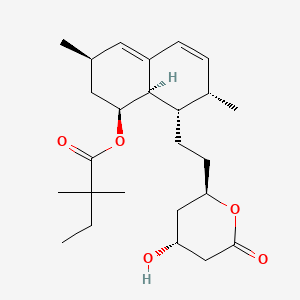
| Formula | C25H38O5 |
|---|---|
| Molecular weight | 418.57 g/mol |
| IUPAC name | [(1S,3R,7S,8S,8aR)-8-[2-[(2R,4R)-4-hydroxy-6-oxooxan-2-yl]ethyl]-3,7-dimethyl-1,2,3,7,8,8a-hexahydronaphthalen-1-yl] 2,2-dimethylbutanoate |
| CAS | 79902-63-9 |
| PubChem CID | 54454 |
| InChIKey | RYMZZMVNJRMUDD-HGQWONQESA-N |
| logP | 4.59 (XLogP 4.7) |
| Polar surface area | 72.83 Ų |
| H-bond acceptors / donors | 5 / 1 |
| Drug-likeness (QED) | 0.64 |
| Lipinski violations | 0 |
SMILES
CCC(C)(C)C(=O)O[C@H]1C[C@@H](C)C=C2C=C[C@H](C)[C@H](CC[C@@H]3C[C@@H](O)CC(=O)O3)[C@H]21Biology & Pharmacokinetics
Pharmacokinetics
| BBB penetrant | Yes (logBB -0.01) |
|---|
Enzyme interactions
| Enzyme | Role | Detail |
|---|---|---|
| CYP2B6 | Inhibitor | — |
| CYP2C8 | Inhibitor | IC₅₀ 3.7 µM |
| CYP3A4 | Inhibitor | — |
| CYP3A4 | Substrate | — |
Receptor binding (top 1)
| Target | Action | Affinity |
|---|---|---|
| hydroxymethylglutaryl-CoA reductase (HMGCR) | Inhibitor | pIC50 8.0 |
Transporters
ABCA1 (Inhibitor)ABCG1 (Inhibitor)ASBT (Inhibitor)BCRP (Inhibitor)BCRP (Inhibitor)BSEP (Inhibitor)BSEP (Inhibitor)MCT4 (Inhibitor)MDR1 (Inhibitor)MRP1 (Inhibitor)MRP2 (Inhibitor)MRP3 (Inhibitor)MRP4 (Inhibitor)NTCP (Inhibitor)OAT1 (Inhibitor)OAT3 (Inhibitor)OATP1A2 (Inhibitor)OATP1B1 (Inhibitor)OATP1B1 (Inhibitor)OATP1B3 (Inhibitor)OATP1B3 (Inhibitor)OATP2B1 (Inhibitor)OCT1 (Inhibitor)OCTN2 (Inhibitor)P-gp (Inhibitor)Transporter(unspecified) (Inhibitor)BCRP (Substrate)MDR1 (Substrate)OAT (Substrate)OATP1B1 (Substrate)OATP1B3 (Substrate)OATP2B1 (Substrate)P-gp (Substrate)
Drug–drug interactions (100+, DDInter)
| Interacting drug | Severity | Management |
|---|---|---|
| Amiodarone | major | |
| Amlodipine | major | |
| Amprenavir | major | |
| Atazanavir | major | |
| Bempedoic acid | major | |
| Boceprevir | major | |
| Ceritinib | major | |
| Clarithromycin | major | |
| Clofibrate | major | |
| Cobicistat | major | |
| Colchicine | major | |
| Conivaptan | major | |
| Cyclosporine | major | |
| Danazol | major | |
| Darunavir | major | |
| Delavirdine | major | |
| Diltiazem | major | |
| Dronedarone | major | |
| Erythromycin | major | |
| Fenofibrate | major | |
| Fluconazole | major | |
| Fosamprenavir | major | |
| Gemfibrozil | major | |
| Glecaprevir | major | |
| Grazoprevir | major | |
| Idelalisib | major | |
| Indinavir | major | |
| Itraconazole | major | |
| Ketoconazole | major | |
| Leflunomide | major | |
| Lenalidomide | major | |
| Letermovir | major | |
| Levamlodipine | major | |
| Lomitapide | major | |
| Lonafarnib | major | |
| Lumacaftor | major | |
| Mifepristone | major | |
| Mipomersen | major | |
| Nefazodone | major | |
| Nelfinavir | major |
Showing 40 of 100+.
Registered Products (19)
| Brand | Form / strength | Pack | Agent | Citizen (JOD) |
|---|---|---|---|---|
| Lipomid F.C Tablets | Film-Coated Tablet 10 mg | 10 tab pack varies | MIDDLE EAST PHARMA&CHEMICAL IND/JORDAN | 1.280 |
| Simvatin tab | Tablet 10 mg | 20 tab pack varies | Pharma International Company/ Jordan | 2.410 |
| Cholastin 10mg F.C.Tablet | Film-Coated Tablet 10 mg | 30 tab | UNITED PHARM.MFG.CO.LTD(UPM)/JORDAN | 3.620 |
| Lipomid F.C Tablets | Film-Coated Tablet 10 mg | 30 tab pack varies | MIDDLE EAST PHARMA&CHEMICAL IND/JORDAN | 3.620 |
| Simvatin tab | Tablet 10 mg | 30 tab pack varies | Pharma International Company/ Jordan | 3.620 |
| ZOCOR Tablets | Tablet 10 mg | 30 tab | Adatco Drug Store | 4.530 |
| Cholastin Tablets | Tablet 20 mg | 30 tab pack varies | UNITED PHARM.MFG.CO.LTD(UPM)/JORDAN | 5.390 |
| Lipomid F.C Tablets | Film-Coated Tablet 20 mg | 30 tab pack varies | MIDDLE EAST PHARMA&CHEMICAL IND/JORDAN | 5.390 |
| Simvatin tab | Tablet 20 mg | 30 tab pack varies | Pharma International Company/ Jordan | 5.390 |
| Cholastin | Tablet 40 mg | 30 tab | UNITED PHARM.MFG.CO.LTD(UPM)/JORDAN | 5.540 |
| Simvatin | Tablet 40 mg | 30 tab | Pharma International Company/ Jordan | 5.540 |
| ZOCOR Tablets | Tablet 20 mg | 30 tab | Adatco Drug Store | 5.990 |
| ZOCOR Tablets | Tablet 40 mg | 30 tab | Adatco Drug Store | 6.160 |
| Inegy Tablets | Tablet 20 mg, 10 mg | 28 tab | Adatco Drug Store | 16.650 |
| Inegy Tablets | Tablet 40 mg, 10 mg | 28 tab | Adatco Drug Store | 20.470 |
| Simvatin tab | Tablet 10 mg | 500 tab pack varies | Pharma International Company/ Jordan | 51.280 |
| Simvatin tab | Tablet 20 mg | 500 tab pack varies | Pharma International Company/ Jordan | 78.150 |
| Cholastin Tablets | Tablet 20 mg | 1000 tab pack varies | UNITED PHARM.MFG.CO.LTD(UPM)/JORDAN | 152.720 |
| Lipomid F.C Tablets | Film-Coated Tablet 20 mg | 1000 tab pack varies | MIDDLE EAST PHARMA&CHEMICAL IND/JORDAN | 152.720 |