Solriamfetol
JFDA label: Sunosi 150mg Film-coated tablet
Mechanism of Action
12.1 Mechanism of Action The mechanism of action of solriamfetol to improve wakefulness in patients with excessive daytime sleepiness associated with narcolepsy or obstructive sleep apnea is unclear. However, its efficacy could be mediated through its activity as a dopamine and norepinephrine reuptake inhibitor (DNRI).
Indications
Approved
- Attention Deficit Disorder with Hyperactivity — attention deficit hyperactivity disorder
Off-label
- Disorders of Excessive Somnolence
- Feeding and Eating Disorders
- Narcolepsy
- Sleep Apnea, Obstructive
Contraindications
Source: openFDA
- is contraindicated in patients receiving concomitant treatment with monoamine oxidase (MAO) inhibitors, or within 14 days following discontinuation of monoamine oxidase inhibitor, because of the risk of hypertensive reaction [see Drug Interactions ( 7.1 )] . Concurrent treatment with a monoamine oxidase inhibitor (MAOI) or use of an MAOI within the preceding 14 days. ( 4 ) Absolute
Adverse Reactions
Nervous system disorders (1)
Common Headache
Gastrointestinal disorders (2)
Common Decreased Appetite · Nausea
Psychiatric disorders (2)
Common And Anxiety 6 1 To Report Suspected Adverse Reactions · Insomnia
General disorders and administration site conditions (1)
Common Contact Axsome Therapeutics
Dosing
Source: openFDA
Warnings & Precautions
Source: openFDA
Warnings & Precautions
Blood Pressure and Heart Rate Increases : Measure heart rate and blood pressure prior to initiating and periodically throughout treatment. Control hypertension before and during therapy. Avoid use in patients with unstable cardiovascular disease, serious heart arrhythmias, or other serious heart problems. ( 5.1 ) Psychiatric Symptoms : Use caution in treating patients with a history of psychosis or bipolar disorders. Consider dose reduction or discontinuation of SUNOSI if psychiatric symptoms develop. ( 5.2 )
Blood Pressure and Heart Rate Increases SUNOSI increases systolic bloo
Blood Pressure and Heart Rate Increases SUNOSI increases systolic blood pressure, diastolic blood pressure, and heart rate in a dose-dependent fashion [see Adverse Reactions ( 6.1 )] . Epidemiological data show that chronic elevations in blood pressure increase the risk of major adverse cardiovascular events (MACE), including stroke, heart attack, and cardiovascular death. The magnitude of the increase in absolute risk is dependent on the increase in blood pressure and the underlying risk of MACE in the population being treated. Many patients with narcolepsy and OSA have multiple risk factors for MACE, including hypertension, diabetes, hyperlipidemia, and high body mass index (BMI). Assess blood pressure and control hypertension before initiating treatment with SUNOSI. Monitor blood pressure regularly during treatment and treat new-onset hypertension and exacerbations of pre-existing hypertension. Exercise caution when treating patients at higher risk of MACE, particularly patients with known cardiovascular and cerebrovascular disease, pre-existing hypertension, and patients with advanced age. Use caution with other drugs that increase blood pressure and heart rate [see Drug Interactions ( 7.2 )] . Periodically reassess the need for continued treatment with SUNOSI. If a patient experiences increases in blood pressure or heart rate that cannot be managed with dose reduction of SUNOSI or other appropriate medical intervention, consider discontinuation of SUNOSI. Patients with moderate or severe renal impairment may be at a higher risk of increases in blood pressure and heart rate because of the prolonged half-life of SUNOSI [see Dosage and Administration ( 2.5 ), Clinical Pharmacology ( 12.3 )] .
Psychiatric Symptoms Psychiatric adverse reactions have been observed
Psychiatric Symptoms Psychiatric adverse reactions have been observed in clinical trials with SUNOSI, including anxiety, insomnia, and irritability [see Adverse Reactions ( 6.1 )] . SUNOSI has not been evaluated in patients with psychosis or bipolar disorders. Exercise caution when treating patients with SUNOSI who have a history of psychosis or bipolar disorders. Patients with moderate or severe renal impairment may be at a higher risk of psychiatric symptoms because of the prolonged half-life of SUNOSI [see Dosage and Administration ( 2.5 ), Clinical Pharmacology ( 12.3 )] . Patients treated with SUNOSI should be observed for the possible emergence or exacerbation of psychiatric symptoms. If psychiatric symptoms develop in association with the administration of SUNOSI, consider dose reduction or discontinuation of SUNOSI.
Pregnancy & Lactation
Lactation
However, amounts in breastmilk appear to be low and would not be expected to cause any adverse
Chemistry & Properties
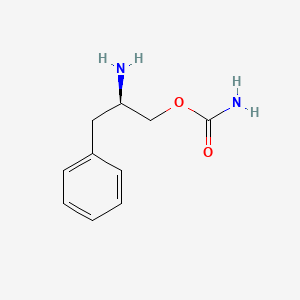
| Formula | C10H14N2O2 |
|---|---|
| Molecular weight | 194.23 g/mol |
| IUPAC name | [(2R)-2-amino-3-phenylpropyl] carbamate |
| CAS | 178429-62-4 |
| PubChem CID | 10130337 |
| InChIKey | UCTRAOBQFUDCSR-SECBINFHSA-N |
| logP | 0.65 (XLogP 0.6) |
| Polar surface area | 78.34 Ų |
| H-bond acceptors / donors | 3 / 2 |
| Drug-likeness (QED) | 0.74 |
| Lipinski violations | 0 |
SMILES
NC(=O)OC[C@H](N)Cc1ccccc1Biology & Pharmacokinetics
Pharmacokinetics predicted
| Bioavailability | 10.0% |
|---|---|
| Half-life | 1.917 h |
| Volume of distribution | 1.107 L/kg |
| Protein binding | 20.5% |
| BBB penetrant | Yes |
Enzyme interactions
| Enzyme | Role | Detail |
|---|---|---|
| CYP2C19 | Substrate | — |
| CYP2D6 | Inhibitor | — |
| CYP2D6 | Substrate | — |
| CYP3A4 | Substrate | — |
Receptor binding (top 3)
| Target | Action | Affinity |
|---|---|---|
| DAT (SLC6A3) | Inhibitor | pIC50 5.5 |
| NET (SLC6A2) | Inhibitor | pKi 5.4 |
| NET (SLC6A2) | Inhibitor | pIC50 5.4 |
Transporters
BCRP (Inhibitor)BSEP (Inhibitor)MDR1 (Inhibitor)MRP1 (Inhibitor)OAT1 (Inhibitor)OAT3 (Inhibitor)OATP1B1 (Inhibitor)OATP1B1 (Inhibitor)OATP1B3 (Inhibitor)OATP1B3 (Inhibitor)OCT1 (Inhibitor)OCT2 (Inhibitor)OCTN1 (Inhibitor)P-gp (Inhibitor)MATE1 (Substrate)MATE2 (Substrate)OAT3 (Substrate)OATP1B1 (Substrate)OCT2 (Substrate)OCTN2 (Substrate)P-gp (Substrate)Transporter(unspecified) (Substrate)
Drug–drug interactions (33, DDInter)
| Interacting drug | Severity | Management |
|---|---|---|
| Methylene blue | major | |
| Ozanimod | major | |
| Procarbazine | major | |
| Ephedrine | moderate | |
| Ephedrine (nasal) | moderate | |
| Epinephrine | moderate | |
| Epinephrine (ophthalmic) | moderate | |
| Epinephrine (topical) | moderate | |
| Formoterol | moderate | |
| Indacaterol | moderate | |
| Isometheptene | moderate | |
| Isoprenaline | moderate | |
| Mazindol | moderate | |
| Naphazoline (nasal) | moderate | |
| Naphazoline (ophthalmic) | moderate | |
| Olodaterol | moderate | |
| Orciprenaline | moderate | |
| Oxymetazoline (nasal) | moderate | |
| Oxymetazoline (ophthalmic) | moderate | |
| Oxymetazoline (topical) | moderate | |
| Phenylephrine | moderate | |
| Phenylephrine (nasal) | moderate | |
| Phenylephrine (ophthalmic) | moderate | |
| Phenylephrine (topical) | moderate | |
| Pirbuterol | moderate | |
| Pseudoephedrine | moderate | |
| Salbutamol | moderate | |
| Salmeterol | moderate | |
| Terbutaline | moderate | |
| Tetryzoline (nasal) | moderate | |
| Tetryzoline (ophthalmic) | moderate | |
| Vilanterol | moderate | |
| Xylometazoline (nasal) | moderate |
Registered Products (2)
| Brand | Form / strength | Pack | Agent | Citizen (JOD) |
|---|---|---|---|---|
| Sunosi 150mg Film-coated tablet | Film-Coated Tablet Solriamfetol 150 mg | 28 tab | Shawi & Rushedat Drug Store | — |
| Sunosi 75mg Film-coated tablet | Film-Coated Tablet Solriamfetol 75 mg | 28 tab | Shawi & Rushedat Drug Store | — |