Lactulose
JFDA label: Ramlac syrup
Mechanism of Action
— Colonic bacteria substrate
Indications
Approved
- Constipation (Constulose, Kristalose)
- Portal systemic encephalopathy (Enulose, Generlac)
Off-label
- Subclinical (minimal) hepatic encephalopathy
Contraindications
Source: Lexicomp
- Patients requiring a low galactose diet Absolute
Adverse Reactions
Metabolism and nutrition disorders (3)
Not Known Dehydration · hypernatremia · hypokalemia
Gastrointestinal disorders (8)
Not Known Abdominal cramps · abdominal distention · abdominal distress · diarrhea (excessive dose) · eructation · flatulence · nausea · vomiting
Dosing
Source: Lexicomp
Warnings & Precautions
Source: Lexicomp
Electrolyte imbalance
Monitor periodically for electrolyte imbalance when lactulose is used >6 months or in patients predisposed to electrolyte abnormalities (eg, elderly, debilitated patients). Hepatic disease may predispose patients to electrolyte imbalance. Infants receiving lactulose may develop hyponatremia and dehydration. Disease-related concerns:
Diabetes
Use with caution in patients with diabetes mellitus; solution contains galactose and lactose. Other warnings/precautions:
Electrocautery procedures
During proctoscopy or colonoscopy procedures involving electrocautery, a theoretical risk of reaction between H2 gas accumulation and electrical spark may exist; thorough bowel cleansing with a nonfermentable solution is recommended.
Pregnancy & Lactation
Pregnancy
Adverse events have not been observed in animal reproduction studies. Lactulose is poorly absorbed following oral administration. Use of dietary fiber or bulk-forming laxatives along with increased fluid intake is generally considered first line therapy for treating constipation in pregnant women. Short-term use of lactulose is also considered to be safe/low risk when therapy is needed; however, side effects may limit its use (Cullen, 2007; Mahadevan, 2006; Prather, 2004; Wald, 2003).
Lactation
It is not known if lactulose is excreted in breast milk; however, lactulose is poorly absorbed following oral administration. The manufacturer recommends that caution be exercised when administering lactulose to nursing women.
Monitoring
| Clinical pearl | Blood pressure, standing/supine; serum electrolytes, serum ammonia; bowel movement patterns, fluid status |
|---|
Chemistry & Properties
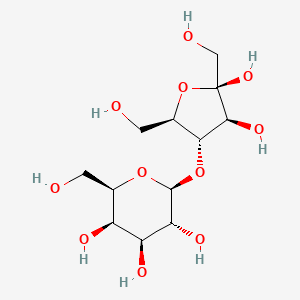
| Formula | C12H22O11 |
|---|---|
| Molecular weight | 342.3 g/mol |
| IUPAC name | (2S,3R,4S,5R,6R)-2-[(2R,3S,4S,5R)-4,5-dihydroxy-2,5-bis(hydroxymethyl)oxolan-3-yl]oxy-6-(hydroxymethyl)oxane-3,4,5-triol |
| CAS | 4618-18-2 |
| PubChem CID | 11333 |
| InChIKey | JCQLYHFGKNRPGE-FCVZTGTOSA-N |
| logP | -5.4 (XLogP -4.3) |
| Polar surface area | 189.53 Ų |
| H-bond acceptors / donors | 11 / 8 |
| Drug-likeness (QED) | 0.24 |
| Lipinski violations | 2 |
SMILES
OC[C@H]1O[C@@H](O[C@@H]2[C@@H](CO)O[C@](O)(CO)[C@H]2O)[C@H](O)[C@@H](O)[C@H]1OBiology & Pharmacokinetics
Pharmacokinetics predicted
| Bioavailability | 70.0% |
|---|---|
| Half-life | 2.406 h |
| Volume of distribution | 0.33 L/kg |
| Protein binding | 27.3% |
| BBB penetrant | No |
Enzyme interactions
| Enzyme | Role | Detail |
|---|---|---|
| CYP2C8 | Inhibitor | — |
Transporters
BCRP (Inhibitor)BSEP (Inhibitor)MRP1 (Inhibitor)OATP1B1 (Inhibitor)OATP1B1 (Inhibitor)OATP1B3 (Inhibitor)OATP1B3 (Inhibitor)P-gp (Inhibitor)P-gp (Substrate)
Drug–drug interactions (100+, DDInter)
| Interacting drug | Severity | Management |
|---|---|---|
| Abarelix | moderate | |
| Abiraterone | moderate | |
| Acetazolamide | moderate | |
| Alfuzosin | moderate | |
| Alimemazine | moderate | |
| Amiloride | moderate | |
| Amiodarone | moderate | |
| Amisulpride | moderate | |
| Anagrelide | moderate | |
| Apalutamide | moderate | |
| Apomorphine | moderate | |
| Arsenic trioxide | moderate | |
| Asenapine | moderate | |
| Astemizole | moderate | |
| Atomoxetine | moderate | |
| Azithromycin | moderate | |
| Bedaquiline | moderate | |
| Bendroflumethiazide | moderate | |
| Benzthiazide | moderate | |
| Bepridil | moderate | |
| Betamethasone | moderate | |
| Bicalutamide | moderate | |
| Bisacodyl | moderate | |
| Bosutinib | moderate | |
| Bumetanide | moderate | |
| Buprenorphine | moderate | |
| Cabozantinib | moderate | |
| Castor oil | moderate | |
| Ceritinib | moderate | |
| Chlorothiazide | moderate | |
| Chlorpromazine | moderate | |
| Chlorthalidone | moderate | |
| Cilostazol | moderate | |
| Ciprofloxacin | moderate | |
| Cisapride | moderate | |
| Citalopram | moderate | |
| Clarithromycin | moderate | |
| Clofazimine | moderate | |
| Clozapine | moderate | |
| Corticotropin | moderate |
Showing 40 of 100+.
Registered Products (10)
| Brand | Form / strength | Pack | Agent | Citizen (JOD) |
|---|---|---|---|---|
| Ramlac syrup | Syrup 67 g/100 ml | 100 ml pack varies | AL-RAM PHARMA.INDUS.CO.LTD/JORDAN | 1.000 |
| Lactulax Syrub | Suspension 3.33 g/5 ml | 100 ml pack varies | Al-Gadeed Pharmaceutical Industries/JORDAN | 1.140 |
| Ramlac syrup | Syrup 67 g/100 ml | 150 ml pack varies | AL-RAM PHARMA.INDUS.CO.LTD/JORDAN | 1.710 |
| Ramlac syrup | Syrup 67 g/100 ml | 200 ml pack varies | AL-RAM PHARMA.INDUS.CO.LTD/JORDAN | 1.860 |
| Lactulax Syrub | Suspension 3.33 g/5 ml | 200 ml pack varies | Al-Gadeed Pharmaceutical Industries/JORDAN | 2.170 |
| Laxodad Syrup | Syrup 10 g/15 ml | 200 ml | Dar Al Dawa Development and Investment Co Ltd/Jordan | 2.170 |
| Ezilax Syrup | Syrup 10 g/15 ml | 300 ml | Sukhtian Group | 2.740 |
| Ramlac syrup | Syrup 67 g/100 ml | 300 ml pack varies | AL-RAM PHARMA.INDUS.CO.LTD/JORDAN | 2.740 |
| Duphalac Oral Solution | Solution 667 g/L | 20 sachet pack varies | Abu Sheikha Drug Store | 3.500 |
| Duphalac Oral Solution | Solution 667 g/L | 300 ml pack varies | Abu Sheikha Drug Store | 4.200 |