Valproic Acid
JFDA label: Convulex Cap
- hepatotoxicity — ChEMBL drug_warning (Black Box Warning) | United States
- teratogenicity — ChEMBL drug_warning (Black Box Warning) | United States
- gastrointestinal toxicity — ChEMBL drug_warning (Black Box Warning) | United States
- LIFE THREATENING ADVERSE REACTIONS WARNING: LIFE THREATENING ADVERSE REACTIONS See full prescribing information for complete boxed warning. Hepatotoxicity, including fatalities, usually during the fir
Mechanism of Action
Inhibitor of Succinate-semialdehyde dehydrogenase, mitochondrial — Succinate semialdehyde dehydrogenase inhibitor
| Target | Action | Gene / class |
|---|---|---|
| Succinate-semialdehyde dehydrogenase, mitochondrial efficacy | INHIBITOR | ALDH5A1 |
Indications
Approved
- Bipolar Disorder — bipolar disorder
- Epilepsy — epilepsy
- Epilepsy, Absence — Generalized non-motor (absence) seizure
- Epilepsy, Complex Partial — complex partial epilepsy
- Mitochondrial Diseases — mitochondrial disease
- Seizures — Seizure
Off-label
- Alcoholism
- Alopecia
- Alzheimer Disease
- Anxiety
- Autistic Disorder
- Brain Neoplasms
- Breast Neoplasms
- Carcinoma, Squamous Cell
- Dementia
- Depressive Disorder
- Ependymoma
- Glioblastoma
- Glioma
- HIV Infections
- Head and Neck Neoplasms
- Leukemia
- Leukemia, Lymphocytic, Chronic, B-Cell
- Leukemia, Myelogenous, Chronic, BCR-ABL Positive
- Leukemia, Myeloid, Acute
- Lymphoma
- Migraine Disorders
- Muscular Atrophy, Spinal
- Myelodysplastic Syndromes
- Neuralgia
- Pancreatic Neoplasms
- Paraparesis, Tropical Spastic
- Prostatic Neoplasms, Castration-Resistant
- Psychomotor Agitation
- Retinitis Pigmentosa
- Schizophrenia
- Small Cell Lung Carcinoma
- Status Epilepticus
- Supranuclear Palsy, Progressive
- Thyroid Neoplasms
- Uveal Melanoma
Contraindications
Source: Curated · openFDA
- Hepatic disease or significant hepatic dysfunction Absolute
- Pregnancy — neural tube defects (FDA category D; high teratogenic risk) Absolute
- Urea cycle disorders Absolute
- Valproic acid capsules should not be administered to patients with hepatic disease or significant hepatic dysfunction [see Warnings and Precautions (5.1) ] . Valproic acid capsules are contraindicated in patients known to have mitochondrial disorders caused by mutations in mitochondrial DNA polymerase γ (POLG; e.g., Alpers-Huttenlocher Syndrome) and children under two years of age who are suspected of having a POLG-related disorder [see Warnings and Precautions (5.1) ] . Valproic acid capsules are contraindicated in patients with known hypersensitivity to the drug [see Warnings and Precautions (5.12) ] . Valproic acid capsules are contraindicated in patients with known urea cycle disorders [see Warnings and Precautions (5.6) ] . For use in prophylaxis of migraine headaches: Valproic acid capsules are contraindicated in women who are pregnant and in women of childbearing potential who are not using effective contraception [see Warnings and Precautions (5.2 , 5.3 , 5.4) and Use in Specific Populations (8.1) ] . Hepatic disease or significant hepatic dysfunction ( 4 , 5.1 ) Known mitochondrial disorders caused by mutations in mitochondrial DNA polymerase γ (POLG) ( 4 , 5.1 ) Suspected POLG-related disorder in children under two years of age ( 4 , 5.1 ) Known hypersensitivity to the drug ( 4 , 5.12 ) Urea cycle disorders ( 4 , 5.6 ) Prophylaxis of migraine headaches: Pregnant women, women of childbearing potential not using effective contraception ( 4 , 8.1 ) Absolute
Adverse Reactions
Cardiac disorders (1)
Rare Bradycardia
Vascular disorders (1)
Common Ecchymosis
Nervous system disorders (8)
Very Common Dizziness · Headache · Somnolence · Tremor
Common Amnesia · Ataxia · Nystagmus · Paraesthesia
Blood and lymphatic system disorders (7)
Very Common Thrombocytopenia
Rare Agranulocytosis · Anaemia · Aplastic anaemia · Eosinophilia · Leukopenia · Pancytopenia
Immune system disorders (2)
Rare Anaphylactic shock · Hypersensitivity
Endocrine disorders (2)
Very Common Endocrine disorder
Rare Inappropriate antidiuretic hormone secretion
Metabolism and nutrition disorders (1)
Rare Hyponatraemia
Gastrointestinal disorders (9)
Very Common Abdominal pain · Constipation · Decreased appetite · Diarrhoea · Dyspepsia · Gastrointestinal pain · Nausea · Vomiting
Common Increased appetite
Skin and subcutaneous tissue disorders (7)
Very Common Alopecia
Common Dermatitis · Rash
Rare Erythema multiforme · Photosensitivity reaction · Stevens-Johnson syndrome · Toxic epidermal necrolysis
Musculoskeletal and connective tissue disorders (6)
Common Back pain · Muscle twitching
Rare Bone pain · Fracture · Multiple fractures · Osteoporosis
Psychiatric disorders (7)
Very Common Insomnia · Sleep disorder
Common Depression · Mood swings
Rare Aggression · Agitation · Emotional distress
Eye disorders (2)
Very Common Diplopia · Vision blurred
Ear and labyrinth disorders (3)
Common Tinnitus
Rare Deafness · Hearing impaired
Reproductive system and breast disorders (3)
Rare Amenorrhoea · Breast enlargement · Galactorrhoea
Infections and infestations (7)
Very Common Infection · Influenza · Influenza like illness
Common Bronchitis · Pharyngitis · Rhinitis
Rare Urinary tract infection
Investigations (4)
Very Common Body temperature increased
Common Thinking abnormal · Weight decreased · Weight increased
General disorders and administration site conditions (29)
Very Common Amblyopia · Asthenia · Coagulopathy · Fatigue · Metabolic disorder · Neonatal disorder · Nervousness · Pain · Tension
Common Affect lability · Mental disability · Oedema peripheral
Uncommon Drug interaction
Rare Autism · Autism spectrum disorder · Cutaneous vasculitis · Developmental delay · Enuresis · Folate deficiency · Hostility · Hyperkinesia · Hypofibrinogenaemia · Lymphocytosis · Menstruation irregular · Osteopenia · Polycystic ovaries · Porphyria acute · Psychotic disorder · Swelling
Respiratory, thoracic and mediastinal disorders (1)
Common Dyspnoea
Injury, poisoning and procedural complications (1)
Very Common Injury
Dosing
Source: openFDA
Warnings & Precautions
Source: openFDA
Boxed Warning
LIFE THREATENING ADVERSE REACTIONS WARNING: LIFE THREATENING ADVERSE REACTIONS See full prescribing information for complete boxed warning. Hepatotoxicity, including fatalities, usually during the first 6 months of treatment. Children under the age of two years and patients with mitochondrial disorders are at higher risk. Monitor patients closely, and perform serum liver testing prior to therapy and at frequent intervals thereafter ( 5.1 ) Fetal Risk, particularly neural tube defects, other major malformations, and decreased IQ ( 5.2 , 5.3 , 5.4 ) Pancreatitis, including fatal hemorrhagic cases ( 5.5 ) Hepatotoxicity General Population: Hepatic failure resulting in fatalities has occurred in patients receiving valproate and its derivatives. These incidents usually have occurred during the first six months of treatment. Serious or fatal hepatotoxicity may be preceded by non-specific symptoms such as malaise, weakness, lethargy, facial edema, anorexia, and vomiting. In patients with epilepsy, a loss of seizure control may also occur. Patients should be monitored closely for appearance of these symptoms. Serum liver tests should be performed prior to therapy and at frequent intervals thereafter, especially during the first six months [see Warnings and Precautions (5.1) ] . Children under the age of two years are at a considerably increased risk of developing fatal hepatotoxicity, especially those on multiple anticonvulsants, those with congenital metabolic disorders, those with severe seizure disorders accompanied by mental retardation, and those with organic brain disease. When valproic acid products are used in this patient group, they should be used with extreme caution and as a sole agent. The benefits of therapy should be weighed against the risks. The incidence of fatal hepatotoxicity decreases considerably in progressively older patient groups. Patients with Mitochondrial Disease: There is an increased risk of valproate-induced acute liver failure and resultant deaths in patients with hereditary neurometabolic syndromes caused by DNA mutations of the mitochondrial DNA Polymerase γ (POLG) gene (e.g. Alpers-Huttenlocher Syndrome). Valproic acid is contraindicated in patients known to have mitochondrial disorders caused by POLG mutations and children under two years of age who are clinically suspected of having a mitochondrial disorder [see Contraindications (4) ] . In patients over two years of age who are clinically suspected of having a hereditary mito
Warnings & Precautions
Hepatotoxicity; evaluate high risk populations and monitor serum liver tests ( 5.1 ) Birth defects, decreased IQ, and neurodevelopmental disorders following in utero exposure; should not be used to treat women with epilepsy or bipolar disorder who are pregnant or who plan to become pregnant or to treat a woman of childbearing potential unless other medications have failed to provide adequate symptom control or are otherwise unacceptable ( 5.2 , 5.3 , 5.4 ) Pancreatitis; valproic acid capsules should ordinarily be discontinued ( 5.5 ) Suicidal behavior or ideation; Antiepileptic drugs, including valproic acid capsules, increase the risk of suicidal thoughts or behavior ( 5.7 ) Bleeding and other hematopoietic disorders; monitor platelet counts and coagulation tests ( 5.8 ) Hyperammonemia and hyperammonemic encephalopathy; measure ammonia level if unexplained lethargy and vomiting or changes in mental status, and also with concomitant topiramate use; consider discontinuation of valproate therapy ( 5.6 , 5.9 , 5.10 ) Hypothermia; Hypothermia has been reported during valproate therapy with or without associated hyperammonemia. This adverse reaction can also occur in patients using concomitant topiramate ( 5.11 ) Drug Reaction with Eosinophilia and Systemic Symptoms (DRESS)/Multiorgan hypersensitivity reaction; discontinue valproic acid capsules ( 5.12 ) Somnolence in the elderly can occur. Valproic acid capsules dosage should be increased slowly and with regular monitoring for fluid and nutritional intake ( 5.14 )
Hepatotoxicity General Information on Hepatotoxicity Hepatic failure r
Hepatotoxicity General Information on Hepatotoxicity Hepatic failure resulting in fatalities has occurred in patients receiving valproate. These incidents usually have occurred during the first six months of treatment. Serious or fatal hepatotoxicity may be preceded by non-specific symptoms such as malaise, weakness, lethargy, facial edema, anorexia, and vomiting. In patients with epilepsy, a loss of seizure control may also occur. Patients should be monitored closely for appearance of these symptoms. Serum liver tests should be performed prior to therapy and at frequent intervals thereafter, especially during the first six months of valproate therapy. However, healthcare providers should not rely totally on serum biochemistry since these tests may not be abnormal in all instances, but should also consider the results of careful interim medical history and physical examination. Caution should be observed when administering valproate products to patients with a prior history of hepatic disease. Patients on multiple anticonvulsants, children, those with congenital metabolic disorders, those with severe seizure disorders accompanied by mental retardation, and those with organic brain disease may be at particular risk. See below, " Patients with Known or Suspected Mitochondrial Disease. " Experience has indicated that children under the age of two years are at a considerably increased risk of developing fatal hepatotoxicity, especially those with the aforementioned conditions. When valproic acid capsules products are used in this patient group, they should be used with extreme caution and as a sole agent. The benefits of therapy should be weighed against the risks. In progressively older patient groups experience in epilepsy has indicated that the incidence of fatal hepatotoxicity decreases considerably. Patients with Known or Suspected Mitochondrial Disease Valproic acid capsules are contraindicated in patients known to have mitochondrial disorders caused by POLG mutations and children under two years of age who are clinically suspected of having a mitochondrial disorder [see Contraindications (4) ] . Valproate-induced acute liver failure and liver-related deaths have been reported in patients with hereditary neurometabolic syndromes caused by mutations in the gene for mitochondrial DNA polymerase γ (POLG) (e.g., Alpers-Huttenlocher Syndrome) at a higher rate than those without these syndromes. Most of the reported cases of liver failure in patients with thes
Structural Birth Defects Valproate can cause fetal harm when administe
Structural Birth Defects Valproate can cause fetal harm when administered to a pregnant woman. Pregnancy registry data show that maternal valproate use can cause neural tube defects and other structural abnormalities (e.g., craniofacial defects, cardiovascular malformations, hypospadias, limb malformations). The rate of congenital malformations among babies born to mothers using valproate is about four times higher than the rate among babies born to epileptic mothers using other anti-seizure monotherapies. Evidence suggests that folic acid supplementation prior to conception and during the first trimester of pregnancy decreases the risk for congenital neural tube defects in the general population [see Use in Specific Populations (8.1) ] .
Decreased IQ Following in utero Exposure Valproate can cause decreased
Decreased IQ Following in utero Exposure Valproate can cause decreased IQ scores following in utero exposure. Published epidemiological studies have indicated that children exposed to valproate in utero have lower cognitive test scores than children exposed in utero to either another antiepileptic drug or to no antiepileptic drugs. The largest of these studies 1 is a prospective cohort study conducted in the United States and United Kingdom that found that children with prenatal exposure to valproate (n=62) had lower IQ scores at age 6 (97 [95% C.I. 94 to 101]) than children with prenatal exposure to the other antiepileptic drug monotherapy treatments evaluated: lamotrigine (108 [95% C.I. 105 to 110]), carbamazepine (105 [95% C.I. 102 to 108]), and phenytoin (108 [95% C.I. 104 to 112]). It is not known when during pregnancy cognitive effects in valproate-exposed children occur. Because the women in this study were exposed to antiepileptic drugs throughout pregnancy, whether the risk for decreased IQ was related to a particular time period during pregnancy could not be assessed. Although all of the available studies have methodological limitations, the weight of the evidence supports the conclusion that valproate exposure in utero can cause decreased IQ in children. In animal studies, offspring with prenatal exposure to valproate had malformations similar to those seen in humans and demonstrated neurobehavioral deficits [see Use in Specific Populations (8.1) ] .
Use in Women of Childbearing Potential Because of the risk to the fetu
Use in Women of Childbearing Potential Because of the risk to the fetus of decreased IQ, neurodevelopmental disorders, and major congenital malformations (including neural tube defects), which may occur very early in pregnancy, valproate should not be administered to a woman of childbearing potential unless other medications have failed to provide adequate symptom control or are otherwise unacceptable. This is especially important when valproate use is considered for a condition not usually associated with permanent injury or death such as prophylaxis of migraine headaches [see Contraindications (4) ] . Women should use effective contraception while using valproate. Women of childbearing potential should be counseled regularly regarding the relative risks and benefits of valproate use during pregnancy. This is especially important for women planning a pregnancy and for girls at the onset of puberty; alternative therapeutic options should be considered for these patients [see Boxed Warning and Use in Specific Populations (8.1) ] . To prevent major seizures, valproate should not be discontinued abruptly, as this can precipitate status epilepticus with resulting maternal and fetal hypoxia and threat to life. Evidence suggests that folic acid supplementation prior to conception and during the first trimester of pregnancy decreases the risk for congenital neural tube defects in the general population. It is not known whether the risk of neural tube defects or decreased IQ in the offspring of women receiving valproate is reduced by folic acid supplementation. Dietary folic acid supplementation both prior to conception and during pregnancy should be routinely recommended for patients using valproate.
Pancreatitis Cases of life-threatening pancreatitis have been reported
Pancreatitis Cases of life-threatening pancreatitis have been reported in both children and adults receiving valproate. Some of the cases have been described as hemorrhagic with rapid progression from initial symptoms to death. Some cases have occurred shortly after initial use as well as after several years of use. The rate based upon the reported cases exceeds that expected in the general population and there have been cases in which pancreatitis recurred after rechallenge with valproate. In clinical trials, there were 2 cases of pancreatitis without alternative etiology in 2,416 patients, representing 1,044 patient-years experience. Patients and guardians should be warned that abdominal pain, nausea, vomiting, and/or anorexia can be symptoms of pancreatitis that require prompt medical evaluation. If pancreatitis is diagnosed, valproic acid should ordinarily be discontinued. Alternative treatment for the underlying medical condition should be initiated as clinically indicated [see Boxed Warning ] .
Urea Cycle Disorders Valproic acid is contraindicated in patients with
Urea Cycle Disorders Valproic acid is contraindicated in patients with known urea cycle disorders (UCD). Hyperammonemic encephalopathy, sometimes fatal, has been reported following initiation of valproate therapy in patients with urea cycle disorders, a group of uncommon genetic abnormalities, particularly ornithine transcarbamylase deficiency. Prior to the initiation of valproate therapy, evaluation for UCD should be considered in the following patients: 1) those with a history of unexplained encephalopathy or coma, encephalopathy associated with a protein load, pregnancy-related or postpartum encephalopathy, unexplained mental retardation, or history of elevated plasma ammonia or glutamine; 2) those with cyclical vomiting and lethargy, episodic extreme irritability, ataxia, low BUN, or protein avoidance; 3) those with a family history of UCD or a family history of unexplained infant deaths (particularly males); 4) those with other signs or symptoms of UCD. Patients who develop symptoms of unexplained hyperammonemic encephalopathy while receiving valproate therapy should receive prompt treatment (including discontinuation of valproate therapy) and be evaluated for underlying urea cycle disorders [see Contraindications (4) and Warnings and Precautions (5.10) ] .
Suicidal Behavior and Ideation Antiepileptic drugs (AEDs), including v
Suicidal Behavior and Ideation Antiepileptic drugs (AEDs), including valproic acid capsules, increase the risk of suicidal thoughts or behavior in patients taking these drugs for any indication. Patients treated with any AED for any indication should be monitored for the emergence or worsening of depression, suicidal thoughts or behavior, and/or any unusual changes in mood or behavior. Pooled analyses of 199 placebo-controlled clinical trials (mono- and adjunctive therapy) of 11 different AEDs showed that patients randomized to one of the AEDs had approximately twice the risk (adjusted Relative Risk 1.8, 95% CI:1.2, 2.7) of suicidal thinking or behavior compared to patients randomized to placebo. In these trials, which had a median treatment duration of 12 weeks, the estimated incidence rate of suicidal behavior or ideation among 27,863 AED-treated patients was 0.43%, compared to 0.24% among 16,029 placebo-treated patients, representing an increase of approximately one case of suicidal thinking or behavior for every 530 patients treated. There were four suicides in drug-treated patients in the trials and none in placebo-treated patients, but the number is too small to allow any conclusion about drug effect on suicide. The increased risk of suicidal thoughts or behavior with AEDs was observed as early as one week after starting drug treatment with AEDs and persisted for the duration of treatment assessed. Because most trials included in the analysis did not extend beyond 24 weeks, the risk of suicidal thoughts or behavior beyond 24 weeks could not be assessed. The risk of suicidal thoughts or behavior was generally consistent among drugs in the data analyzed. The finding of increased risk with AEDs of varying mechanisms of action and across a range of indications suggests that the risk applies to all AEDs used for any indication. The risk did not vary substantially by age (5 to 100 years) in the clinical trials analyzed. Table 2 shows absolute and relative risk by indication for all evaluated AEDs. Table 2. Risk by Indication for Antiepileptic Drugs in the Pooled Analysis Indication Placebo Patients with Events Per 1,000 Patients Drug Patients with Events Per 1,000 Patients Relative Risk: Incidence of Events in Drug Patients/Incidence in Placebo Patients Risk Difference: Additional Drug Patients with Events Per 1,000 Patients Epilepsy 1.0 3.4 3.5
Psychiatric 5.7 8.5 1.5
Psychiatric 5.7 8.5 1.5
Other 1.0 1.8 1.9
Other 1.0 1.8 1.9
Total 2.4 4.3 1.8
Total 2.4 4.3 1.8
The relative risk for suicidal thoughts or behavior was higher in clin
The relative risk for suicidal thoughts or behavior was higher in clinical trials for epilepsy than in clinical trials for psychiatric or other conditions, but the absolute risk differences were similar for the epilepsy and psychiatric indications. Anyone considering prescribing valproic acid capsules or any other AED must balance the risk of suicidal thoughts or behavior with the risk of untreated illness. Epilepsy and many other illnesses for which AEDs are prescribed are themselves associated with morbidity and mortality and an increased risk of suicidal thoughts and behavior. Should suicidal thoughts and behavior emerge during treatment, the prescriber needs to consider whether the emergence of these symptoms in any given patient may be related to the illness being treated.
Bleeding and Other Hematopoietic Disorders Valproate is associated wit
Bleeding and Other Hematopoietic Disorders Valproate is associated with dose-related thrombocytopenia. In a clinical trial of divalproex sodium as monotherapy in patients with epilepsy, 34/126 patients (27%) receiving approximately 50 mg/kg/day on average, had at least one value of platelets ≤ 75 × 10 9 /L. Approximately half of these patients had treatment discontinued, with return of platelet counts to normal. In the remaining patients, platelet counts normalized with continued treatment. In this study, the probability of thrombocytopenia appeared to increase significantly at total valproate concentrations of ≥ 110 mcg/mL (females) or ≥ 135 mcg/mL (males). The therapeutic benefit which may accompany the higher doses should therefore be weighed against the possibility of a greater incidence of adverse effects. Valproate use has also been associated with decreases in other cell lines and myelodysplasia. Because of reports of cytopenias, inhibition of the secondary phase of platelet aggregation, and abnormal coagulation parameters, (e.g., low fibrinogen, coagulation factor deficiencies, acquired von Willebrand's disease), measurements of complete blood counts and coagulation tests are recommended before initiating therapy and at periodic intervals. It is recommended that patients receiving valproic acid capsules be monitored for blood counts and coagulation parameters prior to planned surgery and during pregnancy [see Use in Specific Populations (8.1) ] . Evidence of hemorrhage, bruising, or a disorder of hemostasis/coagulation is an indication for reduction of the dosage or withdrawal of therapy.
Hyperammonemia Hyperammonemia has been reported in association with va
Hyperammonemia Hyperammonemia has been reported in association with valproate therapy and may be present despite normal liver function tests. In patients who develop unexplained lethargy and vomiting or changes in mental status, hyperammonemic encephalopathy should be considered and an ammonia level should be measured. Hyperammonemia should also be considered in patients who present with hypothermia [see Warnings and Precautions (5.11) ] . If ammonia is increased, valproate therapy should be discontinued. Appropriate interventions for treatment of hyperammonemia should be initiated, and such patients should undergo investigation for underlying urea cycle disorders [see Contraindications (4) and Warnings and Precautions (5.6 , 5.10) ] . Asymptomatic elevations of ammonia are more common and when present, require close monitoring of plasma ammonia levels. If the elevation persists, discontinuation of valproate therapy should be considered.
Hyperammonemia and Encephalopathy Associated with Concomitant Topirama
Hyperammonemia and Encephalopathy Associated with Concomitant Topiramate Use Concomitant administration of topiramate and valproate has been associated with hyperammonemia with or without encephalopathy in patients who have tolerated either drug alone. Clinical symptoms of hyperammonemic encephalopathy often include acute alterations in level of consciousness and/or cognitive function with lethargy or vomiting. Hypothermia can also be a manifestation of hyperammonemia [see Warnings and Precautions (5.11) ] . In most cases, symptoms and signs abated with discontinuation of either drug. This adverse reaction is not due to a pharmacokinetic interaction. Patients with inborn errors of metabolism or reduced hepatic mitochondrial activity may be at an increased risk for hyperammonemia with or without encephalopathy. Although not studied, an interaction of topiramate and valproate may exacerbate existing defects or unmask deficiencies in susceptible persons. In patients who develop unexplained lethargy, vomiting, or changes in mental status, hyperammonemic encephalopathy should be considered and an ammonia level should be measured [see Contraindications (4) and Warnings and Precautions (5.6 , 5.9) ] .
Hypothermia Hypothermia, defined as an unintentional drop in body core
Hypothermia Hypothermia, defined as an unintentional drop in body core temperature to <35°C (95°F), has been reported in association with valproate therapy both in conjunction with and in the absence of hyperammonemia. This adverse reaction can also occur in patients using concomitant topiramate with valproate after starting topiramate treatment or after increasing the daily dose of topiramate [see Drug Interactions (7.3) ] . Consideration should be given to stopping valproate in patients who develop hypothermia, which may be manifested by a variety of clinical abnormalities including lethargy, confusion, coma, and significant alterations in other major organ systems such as the cardiovascular and respiratory systems. Clinical management and assessment should include examination of blood ammonia levels.
Drug Reaction with Eosinophilia and Systemic Symptoms (DRESS)/Multiorg
Drug Reaction with Eosinophilia and Systemic Symptoms (DRESS)/Multiorgan Hypersensitivity Reactions Drug Reaction with Eosinophilia and Systemic Symptoms (DRESS), also known as Multiorgan Hypersensitivity, has been reported in patients taking valproate. DRESS may be fatal or life-threatening. DRESS typically, although not exclusively, presents with fever, rash, lymphadenopathy, and/or facial swelling, in association with other organ system involvement, such as hepatitis, nephritis, hematological abnormalities, myocarditis, or myositis sometimes resembling an acute viral infection. Eosinophilia is often present. Because this disorder is variable in its expression, other organ systems not noted here may be involved. It is important to note that early manifestations of hypersensitivity, such as fever or lymphadenopathy, may be present even though rash is not evident. If such signs or symptoms are present, the patient should be evaluated immediately. Valproate should be discontinued and not be resumed if an alternative etiology for the signs or symptoms cannot be established.
Interaction with Carbapenem Antibiotics Carbapenem antibiotics (for ex
Interaction with Carbapenem Antibiotics Carbapenem antibiotics (for example, ertapenem, imipenem, meropenem; this is not a complete list) may reduce serum valproate concentrations to subtherapeutic levels, resulting in loss of seizure control. Serum valproate concentrations should be monitored frequently after initiating carbapenem therapy. Alternative antibacterial or anticonvulsant therapy should be considered if serum valproate concentrations drop significantly or seizure control deteriorates [see Drug Interactions (7.1) ] .
Somnolence in the Elderly In a double-blind, multicenter trial of valp
Somnolence in the Elderly In a double-blind, multicenter trial of valproate in elderly patients with dementia (mean age = 83 years), doses were increased by 125 mg/day to a target dose of 20 mg/kg/day. A significantly higher proportion of valproate patients had somnolence compared to placebo, and although not statistically significant, there was a higher proportion of patients with dehydration. Discontinuations for somnolence were also significantly higher than with placebo. In some patients with somnolence (approximately one-half), there was associated reduced nutritional intake and weight loss. There was a trend for the patients who experienced these events to have a lower baseline albumin concentration, lower valproate clearance, and a higher BUN. In elderly patients, dosage should be increased more slowly and with regular monitoring for fluid and nutritional intake, dehydration, somnolence, and other adverse reactions. Dose reductions or discontinuation of valproate should be considered in patients with decreased food or fluid intake and in patients with excessive somnolence [see Dosage and Administration (2.2) ] .
Monitoring
Monitoring: Drug Plasma Concentration Since valproate may interact with concurrently administered drugs which are capable of enzyme induction, periodic plasma concentration determinations of valproate and concomitant drugs are recommended during the early course of therapy [see Drug Interactions (7) ] .
Effect on Ketone and Thyroid Function Tests Valproate is partially eli
Effect on Ketone and Thyroid Function Tests Valproate is partially eliminated in the urine as a keto-metabolite which may lead to a false interpretation of the urine ketone test. There have been reports of altered thyroid function tests associated with valproate. The clinical significance of these is unknown.
Effect on HIV and CMV Viruses Replication There are in vitro studies t
Effect on HIV and CMV Viruses Replication There are in vitro studies that suggest valproate stimulates the replication of the HIV and CMV viruses under certain experimental conditions. The clinical consequence, if any, is not known. Additionally, the relevance of these in vitro findings is uncertain for patients receiving maximally suppressive antiretroviral therapy. Nevertheless, these data should be borne in mind when interpreting the results from regular monitoring of the viral load in HIV infected patients receiving valproate or when following CMV infected patients clinically.
Pregnancy & Lactation
Pregnancy
Avoid
Highest teratogenic risk of all antiepileptics. Use only if essential and no alternative; lowest effective dose + folic acid 5 mg/day. Mandatory PREVENT programme in EU. Monitor with anomaly scan + fetal echo
Lactation
Monitor the infant for jaundice an
LactMed: monitor the infant.
Chemistry & Properties
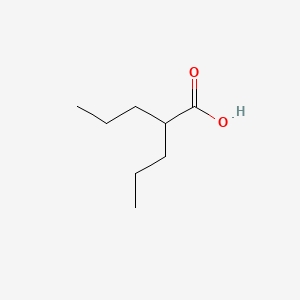
| Formula | C8H16O2 |
|---|---|
| Molecular weight | 144.21 g/mol |
| IUPAC name | 2-propylpentanoic acid |
| CAS | 99-66-1 |
| PubChem CID | 3121 |
| InChIKey | NIJJYAXOARWZEE-UHFFFAOYSA-N |
| logP | 2.29 (XLogP 2.8) |
| Polar surface area | 37.3 Ų |
| H-bond acceptors / donors | 1 / 1 |
| Drug-likeness (QED) | 0.64 |
| Lipinski violations | 0 |
SMILES
CCCC(CCC)C(=O)OBiology & Pharmacokinetics
Pharmacokinetics
| BBB penetrant | Yes (logBB -0.2) |
|---|
Enzyme interactions
| Enzyme | Role | Detail |
|---|---|---|
| CYP2A6 | Substrate | — |
| CYP2B6 | Substrate | — |
| CYP2C19 | Substrate | — |
| CYP2C9 | Substrate | — |
| P35503 | Substrate | — |
| UGT1A10 | Substrate | — |
| UGT1A4 | Substrate | — |
| UGT1A6 | Substrate | — |
| UGT1A8 | Substrate | — |
| UGT1A9 | Substrate | — |
| UGT2B7 | Substrate | — |
Transporters
BCRP (Inhibitor)BCRP (Inhibitor)BSEP (Inhibitor)BSEP (Inhibitor)MCT1 (Inhibitor)MCT4 (Inhibitor)MDR1 (Inhibitor)MRP1 (Inhibitor)MRP2 (Inhibitor)OAT1 (Inhibitor)OAT2 (Inhibitor)OAT3 (Inhibitor)OATP1B1 (Inhibitor)OATP1B1 (Inhibitor)OATP1B3 (Inhibitor)OATP1B3 (Inhibitor)OATP2B1 (Inhibitor)OCT1 (Inhibitor)OCTN2 (Inhibitor)P-gp (Inhibitor)BCRP (Substrate)MATE2 (Substrate)MCT1 (Substrate)MCT6 (Substrate)MDR1 (Substrate)MRP1 (Substrate)MRP2 (Substrate)OAT2 (Substrate)OAT3 (Substrate)OCTN2 (Substrate)P-gp (Substrate)
Drug–drug interactions (100+, DDInter)
| Interacting drug | Severity | Management |
|---|---|---|
| Bexarotene | major | |
| Glycerol phenylbutyrate | major | |
| Leflunomide | major | |
| Phenylbutyric acid | major | |
| Teriflunomide | major | |
| Vorinostat | major | |
| Acetylsalicylic acid | moderate | |
| Activated charcoal | moderate | |
| Alimemazine | moderate | |
| Alpelisib | moderate | |
| Apalutamide | moderate | |
| Artesunate | moderate | |
| Asparaginase Escherichia coli | moderate | |
| Azatadine | moderate | |
| Azelastine (nasal) | moderate | |
| Binimetinib | moderate | |
| Brentuximab vedotin | moderate | |
| Brimonidine (ophthalmic) | moderate | |
| Brimonidine (topical) | moderate | |
| Brompheniramine | moderate | |
| Bupropion | moderate | |
| Carbinoxamine | moderate | |
| Celecoxib | moderate | |
| Ceritinib | moderate | |
| Cetirizine | moderate | |
| Chlorcyclizine | moderate | |
| Chloroquine | moderate | |
| Chlorphenesin | moderate | |
| Chlorpheniramine | moderate | |
| Cisplatin | moderate | |
| Clarithromycin | moderate | |
| Clemastine | moderate | |
| Clofarabine | moderate | |
| Clofedanol | moderate | |
| Codeine | moderate | |
| Cyclizine | moderate | |
| Cyproheptadine | moderate | |
| Dexbrompheniramine | moderate | |
| Dextromethorphan | moderate | |
| Dicoumarol | moderate |
Showing 40 of 100+.
Registered Products (12)
| Brand | Form / strength | Pack | Agent | Citizen (JOD) |
|---|---|---|---|---|
| Pravia 200 CR | Tablet 58 mg, 133.2 mg | 30 tab | UNITED PHARM.MFG.CO.LTD(UPM)/JORDAN | 2.880 |
| Pravia 300 CR | Tablet 87.0 mg, 199.8 mg | 30 tab | UNITED PHARM.MFG.CO.LTD(UPM)/JORDAN | 3.500 |
| Cronoval XR | Tablet 145 mg, 333 mg | 30 tab | JORDAN SWEDEN MEDICAL&STERILE.CO(JOSWE)/JORDAN | 4.160 |
| Pravia 500 CR | Tablet 145 mg, 333 mg | 30 tab | UNITED PHARM.MFG.CO.LTD(UPM)/JORDAN | 4.160 |
| Vilapro Chrono | Tablet 145 mg, 333 mg | 30 tab | Dar Al Dawa Development and Investment Co Ltd/Jordan | 4.160 |
| Convulex Cap | Capsule 150 mg | 60 S.G Caps pack varies | Kurdi Drug Store | 4.680 |
| Convulex Cap | Capsule 150 mg | 100 S.G Caps pack varies | Kurdi Drug Store | 7.790 |
| Convulex Cap | Capsule 300 mg | 60 S.G Caps pack varies | Kurdi Drug Store | 7.980 |
| Convulex Cap | Capsule 200 mg | 100 cap | Kurdi Drug Store | 10.510 |
| Convulex Cap | Capsule 500 mg | 60 S.G Caps pack varies | Kurdi Drug Store | 11.810 |
| Convulex Cap | Capsule 300 mg | 100 S.G Caps pack varies | Kurdi Drug Store | 13.310 |
| Convulex Cap | Capsule 500 mg | 100 S.G Caps pack varies | Kurdi Drug Store | 19.690 |