Duloxetine
JFDA label: Solix 60mg Hard Gelatin Capsules
- Suicidal thoughts and behavior:
Mechanism of Action
Duloxetine is a potent inhibitor of neuronal serotonin and norepinephrine reuptake and a weak inhibitor of dopamine reuptake. Duloxetine has no significant activity for muscarinic cholinergic, H1-histaminergic, or alpha2-adrenergic receptors. Duloxetine does not possess MAO-inhibitory activity.
Indications
Approved
- Chronic musculoskeletal pain
- Diabetic peripheral neuropathic pain
- Fibromyalgia (except Irenka)
- Generalized anxiety disorder
- Major depressive disorder
Off-label
- Stress urinary incontinence (women)
Contraindications
Source: Lexicomp
- Additional contraindications (not in US labeling): Hypersensitivity to duloxetine or any component of the formulation Absolute
- Use of monoamine oxidase (MAO) inhibitors intended to treat psychiatric disorders (concurrently or within 14 days of discontinuing the MAO inhibitor) Absolute
- hepatic impairment Absolute
- initiation of MAO inhibitor intended to treat psychiatric disorders within 5 days of discontinuing duloxetine Absolute
- initiation of duloxetine in a patient receiving linezolid or intravenous methylene blue Absolute
- severe renal impairment (eg, CrCl Absolute
Adverse Reactions
Cardiac disorders (3)
Common Flushing · increased blood pressure · palpitations
Vascular disorders (1)
Uncommon Elevated blood pressure / heart rate
Nervous system disorders (19)
Very Common drowsiness · fatigue · Headache
Common abnormal dreams · agitation · anorgasmia · anxiety · chills · delayed ejaculation · Discontinuation syndrome · dizziness · hypoesthesia · Insomnia · lethargy · paresthesia · rigors · sleep disorder · vertigo · yawning
Hepatobiliary disorders (2)
Common Increased serum ALT
Rare Hepatotoxicity (rare)
Renal and urinary disorders (3)
Common ejaculatory disorder · Erectile dysfunction · urinary frequency
Metabolism and nutrition disorders (5)
Very Common Weight loss
Common Decreased libido · hot flash · orgasm abnormal · weight gain
Gastrointestinal disorders (13)
Very Common abdominal pain · Nausea · Nausea · xerostomia
Common Constipation · Constipation · decreased appetite · diarrhea · Dry mouth · dysgeusia · dyspepsia · flatulence · vomiting
Skin and subcutaneous tissue disorders (3)
Common Diaphoresis · Hyperhidrosis · pruritus
Musculoskeletal and connective tissue disorders (3)
Very Common Weakness
Common musculoskeletal pain · Tremor
Psychiatric disorders (1)
Common Insomnia
Eye disorders (1)
Common Blurred vision
Reproductive system and breast disorders (1)
Common Sexual dysfunction
Respiratory, thoracic and mediastinal disorders (2)
Common cough · Oropharyngeal pain
Dosing
Source: Lexicomp
Warnings & Precautions
Source: Lexicomp
Suicidal thinking/behavior
Antidepressants increase the risk of suicidal thinking and behavior in children, adolescents, and young adults (18 to 24 years of age) with major depressive disorder (MDD) and other psychiatric disorders; consider risk prior to prescribing. Short-term studies did not show an increased risk in patients >24 years of age and showed a decreased risk in patients ≥65 years. Closely monitor for clinical worsening, suicidality, or unusual changes in behavior, particularly during the initial 1 to 2 months of therapy or during periods of dosage adjustments (increases or decreases); the patient's family or caregiver should be instructed to closely observe the patient and communicate condition with healthcare provider. A medication guide concerning the use of antidepressants in children and teenagers should be dispensed with each prescription.
Bleeding risk
May impair platelet aggregation resulting in increased risk of bleeding events, particularly if used concomitantly with aspirin or NSAIDs due to ulcerogenic potential. Bleeding related to SNRI use has been reported to range from relatively minor bruising and epistaxis to life-threatening hemorrhage.
CNS depression
Has a low potential to impair cognitive or motor performance; caution operating hazardous machinery or driving.
Dermatologic
Severe skin reactions (including Stevens-Johnson syndrome and erythema multiforme) have been reported; discontinue immediately if blisters, peeling rash, mucosal erosions, or any other signs of hypersensitivity reactions are suspected.
Fractures
Bone fractures have been associated with antidepressant treatment. Consider the possibility of a fragility fracture if an antidepressant-treated patient presents with unexplained bone pain, point tenderness, swelling, or bruising (Rabenda 2013; Rizzoli 2012).
Hepatotoxicity
Avoid use in patients with substantial ethanol intake, evidence of liver disease or hepatic impairment. Rare cases of hepatic failure (including fatalities) have been reported with use. Hepatitis with abdominal pain, hepatomegaly, elevated transaminase levels >20 times the upper limit of normal (ULN) with and without jaundice have all been observed. Discontinue therapy with the presentation of jaundice or other signs of hepatic dysfunction and do not reinitiate therapy unless another source or cause is identified.
Hyperglycemia
Modest increases in serum glucose and hemoglobin A1c (HbA1c) levels have been observed in some diabetic patients receiving duloxetine for diabetic peripheral neuropathic pain (DPNP).
Ocular effects
May cause mild pupillary dilation which in susceptible individuals can lead to an episode of narrow-angle glaucoma. Consider evaluating patients who have not had an iridectomy for narrow-angle glaucoma risk factors.
Orthostatic hypotension/syncope
May cause orthostatic hypotension/syncope, especially within the first week of therapy and after dose increases. Carefully monitor blood pressure with initiation of therapy, dose increases (especially in patients receiving >60 mg/day), or when using concomitant vasodilators or CYP1A2 inhibitors. Consider dose reduction or discontinuation of duloxetine if orthostatic hypotension or syncope occurs.
Serotonin syndrome (SS) reactions
Potentially life-threatening serotonin syndrome (SS) has occurred with serotonergic agents (eg, SSRIs, SNRIs), particularly when used in combination with other serotonergic agents (eg, triptans, tricyclic antidepressants, fentanyl, lithium, tramadol, tryptophan, buspirone, and St John's wort) or drugs that impair serotonin metabolism (eg, MAO inhibitors, specifically linezolid, methylene blue, and others used for psychiatric disorders). Monitor patients closely for signs/symptoms of SS which may include mental status changes (eg, agitation, hallucinations, delirium), seizures, autonomic instability (eg, tachycardia, dizziness, diaphoresis), neuromuscular symptoms (eg, tremor, rigidity, myoclonus), or gastrointestinal symptoms (eg, nausea, vomiting, diarrhea). Discontinue treatment (and any concomitant serotonergic agents) immediately if signs/symptoms arise.
Sexual dysfunction
May cause or exacerbate sexual dysfunction.
SIADH and hyponatremia
SSRIs and SNRIs have been associated with the development of SIADH; hyponatremia has been reported rarely (including severe cases with serum sodium • Urinary hesitancy: May cause increased urinary resistance; advise patient to report symptoms of urinary hesitation/difficulty. Disease-related concerns:
Gastroparesis
Use caution in patients with impaired gastric motility (eg, some diabetics); may affect stability of the capsule's enteric coating.
Hepatic impairment
Avoid use in patients with chronic liver disease or cirrhosis.
Hypertension
Use caution in patients with hypertension. Although no statistically significant differences in the frequency of sustained elevations of blood pressure were observed in clinical trials when compared with placebo, modest increases in blood pressure have been reported with use. Additionally, rare cases of hypertensive crisis have been reported; blood pressure should be evaluated prior to initiating therapy and periodically thereafter; consider dose reduction or gradual discontinuation of therapy in individuals with sustained hypertension during therapy.
Mania/hypomania
May precipitate a shift to mania or hypomania in patients with bipolar disorder. Monotherapy in patients with bipolar disorder should be avoided. Patients presenting with depressive symptoms should be screened for bipolar disorder. Duloxetine is not FDA approved for the treatment of bipolar depression.
Renal impairment
Use with caution; clearance is decreased and plasma concentrations are increased; avoid use in patients with CrCl • Seizure disorders: Use caution in patients with a previous seizure disorder or condition predisposing to seizures such as brain damage or alcoholism (Montgomery 2005). Concurrent drug therapy issues:
Drug-drug interactions
Potentially significant interactions may exist, requiring dose or frequency adjustment, additional monitoring, and/or selection of alternative therapy. Consult drug interactions database for more detailed information. Special populations:
Fall risk
Falls with serious consequences including bone fractures and hospitalization have been reported in patients receiving therapeutic doses of duloxetine. The risk of falling appears related to the degree of orthostatic decrease in blood pressure. Risks may also be greater in elderly patients, patients taking concomitant medications that induce orthostatic hypotension or are potent CYP1A2 inhibitors, and in patients taking doses >60 mg/day. Consider dose reduction or discontinuation of duloxetine if falls occur.
Sucrose intolerance
Some formulations may contain sucrose; patients with fructose intolerance, glucose-galactose malabsorption, or sucrase-isomaltase deficiency should avoid use. Other warnings/precautions:
Discontinuation syndrome
Abrupt discontinuation or interruption of antidepressant therapy has been associated with a discontinuation syndrome. Symptoms arising may vary with antidepressant however commonly include nausea, vomiting, diarrhea, headaches, lightheadedness, dizziness, diminished appetite, sweating, chills, tremors, paresthesias, fatigue, somnolence, and sleep disturbances (eg, vivid dreams, insomnia). Less common symptoms include electric shock-like sensations, cardiac arrhythmias (more common with tricyclic antidepressants), myalgias, parkinsonism, arthralgias, and balance difficulties. Psychological symptoms may also emerge such as agitation, anxiety, akathisia, panic attacks, irritability, aggressiveness, worsening of mood, dysphoria, mood lability, hyperactivity, mania/hypomania, depersonalization, decreased concentration, slowed thinking, confusion, and memory or concentration difficulties. Greater risks for developing a discontinuation syndrome have been associated with antidepressants with shorter half-lives, longer durations of treatment, and abrupt discontinuation. For antidepressants of short or intermediate half-lives, symptoms may emerge within 2 to 5 days after treatment discontinuation and last 7 to 14 days (APA 2010; Fava 2006; Haddad 2001; Shelton 2001; Warner 2006).
Pregnancy & Lactation
Pregnancy
Caution
Insufficient data to fully assess safety. Prefer sertraline if possible
Lactation
Duloxetine is present in breast milk. The relative infant dose (RID) of duloxetine is 2.3% when calculated using the highest breast milk concentration located and compared to a weight-adjusted maternal dose of 60 mg/day. In general, breastfeeding is considered acceptable when the RID is The RID of duloxetine was calculated using a milk concentration of ~120 mcg/L, providing an estimated daily infant dose via breast milk of 0.02 mg/kg/day. This milk concentration was obtained following matern
LactMed: monitor the infant.
Monitoring
| Clinical pearl | Blood pressure should be checked prior to initiating therapy and then regularly monitored, especially in patients with a high baseline blood pressure; mental status for depression, suicidal ideation (especially at the beginning of therapy or when doses are increased or decreased), anxiety, social functioning, mania, panic attacks or other unusual changes in behavior; glucose levels and HbA1c levels in diabetic patients, creatinine, BUN, transaminases |
|---|
Chemistry & Properties
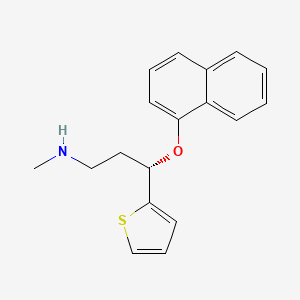
| Formula | C18H19NOS |
|---|---|
| Molecular weight | 297.42 g/mol |
| IUPAC name | (3S)-N-methyl-3-naphthalen-1-yloxy-3-thiophen-2-ylpropan-1-amine |
| CAS | 116539-59-4 |
| PubChem CID | 60835 |
| InChIKey | ZEUITGRIYCTCEM-KRWDZBQOSA-N |
| logP | 4.63 (XLogP 4.3) |
| Polar surface area | 21.26 Ų |
| H-bond acceptors / donors | 3 / 1 |
| Drug-likeness (QED) | 0.72 |
| Lipinski violations | 0 |
SMILES
CNCC[C@H](Oc1cccc2ccccc12)c1cccs1Biology & Pharmacokinetics
Pharmacokinetics
| BBB penetrant | Yes |
|---|
Enzyme interactions
| Enzyme | Role | Detail |
|---|---|---|
| CYP1A2 | Inhibitor | IC₅₀ 5.300000000000001 µM |
| CYP1A2 | Substrate | — |
| CYP2B6 | Inhibitor | — |
| CYP2B6 | Substrate | — |
| CYP2C19 | Inhibitor | IC₅₀ 4.1 µM |
| CYP2C19 | Substrate | — |
| CYP2C8 | Inhibitor | — |
| CYP2C9 | Inhibitor | IC₅₀ 29.04995697070818 µM |
| CYP2C9 | Substrate | — |
| CYP2D6 | Inhibitor | IC₅₀ 1.4986290312192203 µM |
| CYP2D6 | Substrate | — |
| CYP3A4 | Inhibitor | IC₅₀ 0.44 µM |
Receptor binding (top 28)
| Target | Action | Affinity |
|---|---|---|
| 5-HT Transporter (SLC6A4) | Binding | pKi 8.8 |
| NRI | Binding | pKi 8.5 |
| SERT (SLC6A4) | Inhibitor | pKi 8.3 |
| NET (SLC6A2) | Inhibitor | pKi 8.2 |
| Norepinephrine transporter (SLC6A2) | Binding | pKi 7.9 |
| Dopamine Transporter (SLC6A3) | Binding | pKi 6.5 |
| 5-HT6 receptor (HTR6) | Antagonist | pKi 6.4 |
| 5-HT6 (HTR6) | Binding | pKi 6.4 |
| 5-HT2A receptor (HTR2A) | Antagonist | pKi 6.3 |
| 5-HT2A (HTR2A) | Binding | pKi 6.3 |
| 5-HT2C (HTR2C) | Binding | pKi 6.0 |
| 5-HT2C receptor (HTR2C) | Antagonist | pKi 6.0 |
| adrenergic Alpha2A (ADRA2A) | Binding | pKi 6.0 |
| Cholinergic, muscarinic M1 (CHRM1) | Binding | pKi 6.0 |
| Cholinergic, muscarinic M2 (CHRM2) | Binding | pKi 6.0 |
Transporters
BCRP (Inhibitor)BSEP (Inhibitor)BSEP (Inhibitor)MDR1 (Inhibitor)MRP1 (Inhibitor)MRP2 (Inhibitor)MRP3 (Inhibitor)MRP4 (Inhibitor)OATP1B1 (Inhibitor)OATP1B3 (Inhibitor)OCTN2 (Inhibitor)P-gp (Inhibitor)MDR1 (Substrate)P-gp (Substrate)
Drug–drug interactions (100+, DDInter)
| Interacting drug | Severity | Management |
|---|---|---|
| Bupropion | major | |
| Dexfenfluramine | major | |
| Dextromethorphan | major | |
| Diethylpropion | major | |
| Dolasetron | major | |
| Doxepin | major | |
| Doxepin (topical) | major | |
| Eliglustat | major | |
| Fenfluramine | major | |
| Granisetron | major | |
| Iobenguane (I-131) | major | |
| Iohexol | major | |
| Iopamidol | major | |
| Leflunomide | major | |
| Lorcaserin | major | |
| Mazindol | major | |
| Methylene blue | major | |
| Ondansetron | major | |
| Ozanimod | major | |
| Palonosetron | major | |
| Panobinostat | major | |
| Phentermine | major | |
| Phenylpropanolamine | major | |
| Procarbazine | major | |
| Sibutramine | major | |
| Tamoxifen | major | |
| Teriflunomide | major | |
| Abciximab | moderate | |
| Abiraterone | moderate | |
| Acalabrutinib | moderate | |
| Acetylsalicylic acid | moderate | |
| Aldesleukin | moderate | |
| Alimemazine | moderate | |
| Alteplase | moderate | |
| Anagrelide | moderate | |
| Anistreplase | moderate | |
| Antithrombin III human | moderate | |
| Apixaban | moderate | |
| Argatroban | moderate | |
| Asparaginase Escherichia coli | moderate |
Showing 40 of 100+.
Registered Products (6)
| Brand | Form / strength | Pack | Agent | Citizen (JOD) |
|---|---|---|---|---|
| Duloxan | Capsule (as Hydrochloride) 30 mg | 30 cap | SANA PHARMACEUTICAL INDUSTRY/JORDAN | 10.430 |
| Solix | Capsule 33.68 mg | 30 cap | UNITED PHARM.MFG.CO.LTD(UPM)/JORDAN | 11.850 |
| Duloxan | Capsule (as Hydrochloride) 60 mg | 30 cap | SANA PHARMACEUTICAL INDUSTRY/JORDAN | 17.100 |
| Solix 60mg Hard Gelatin Capsules | Capsule 60 mg | 30 cap | UNITED PHARM.MFG.CO.LTD(UPM)/JORDAN | 18.170 |
| Daltix | Capsule 30 mg | 30 cap | Hikma Pharmaceuticals Co.Ltd/Jordan | 18.700 |
| Daltix | Tablet 60 mg | 30 tab | Hikma Pharmaceuticals Co.Ltd/Jordan | 30.650 |