Fentanyl
JFDA label: Fentanyl Solution For Injection
- Life-threatening respiratory depression:
- Addiction, abuse, and misuse:
- Accidental exposure:
- Cytochrome P450 3A4 Interaction:
- Neonatal opioid withdrawal syndrome:
- Risks from concomitant use with benzodiazepines or other CNS depressants:
- Risk of medication errors (buccal, intranasal, lozenge, sublingual):
- REMS program:
- Exposure to heat (Duragesic only):
Mechanism of Action
Agonist of Mu-type opioid receptor — Mu opioid receptor agonist
| Target | Action | Gene / class |
|---|---|---|
| Mu-type opioid receptor efficacy | AGONIST | OPRM1 |
Indications
Approved
- Injection
- Transdermal device (eg, Ionsys)
- Transdermal patch (eg, Duragesic)
Contraindications
Source: Lexicomp
- Additional contraindication (not in US labeling): Injection: Septicemia Absolute
- Hypersensitivity (eg, anaphylaxis, hypersensitivity) to fentanyl or any component of the formulation. Additional contraindications for transdermal device (Ionsys): Significant respiratory depression Absolute
- acute alcoholism, delirium tremens, and convulsive disorders Absolute
- acute or postoperative pain (including headache, migraine, or dental pain) Absolute
- acute or severe bronchial asthma in an unmonitored setting or in the absence of resuscitative equipment Absolute
- acute or severe bronchial asthma, chronic obstructive airway, status asthmaticus Absolute
- acute pain management in the emergency room Absolute
- acute pain management other than breakthrough or postoperative pain (including headache or migraine, dental pain or emergency room use) Absolute
- acute respiratory depression Absolute
- breastfeeding women Absolute
- concurrent use of MAO inhibitors or within 14 days of therapy Absolute
- concurrent use or use within 14 days of a monoamine oxidase (MAO) inhibitor Absolute
- concurrent use or use within 14 days of an MAO inhibitor Documentation of allergenic cross-reactivity for opioids is limited. However, because of similarities in chemical structure and/or pharmacologic actions, the possibility of cross-sensitivity cannot be ruled out with certainty Absolute
- cor pulmonale Absolute
- disturbances in blood morphology and/or anticoagulant therapy or other concomitant drug therapy or medical conditions which could contraindicate the technique of epidural administration Sublingual tablets (Abstral): Severe bronchial asthma, chronic obstructive airway, or status asthmaticus Absolute
- during labor and delivery Absolute
- gastrointestinal obstruction, including paralytic ileus (known or suspected) Absolute
- hypercapnia Absolute
- hypersensitivity to cetylpyridinium chloride (eg, Cepacol). Additional contraindications for transdermal patch (Duragesic): Significant respiratory depression Absolute
- known or suspected mechanical GI obstruction (eg, bowel obstruction or strictures) or any diseases/conditions that affect bowel transit (eg, ileus of any type) Absolute
- known or suspected mechanical GI obstruction (eg, bowel obstruction, strictures) or any diseases/conditions that affect bowel transit (eg, ileus of any type) Absolute
- local infection at proposed injection site Absolute
- mild pain that can be managed with other pain medications Absolute
- opioid-nontolerant patients (including patients on intermittent or as needed opioid dosing). Transdermal patch: Hypersensitivity to other opioids Absolute
- patients requiring short-term therapy, management of acute or intermittent pain, postoperative or mild pain Absolute
- patients who are not opioid tolerant Absolute
- patients who are not opioid tolerant. Additional contraindications for transmucosal buccal tablets (Fentora), buccal films (Onsolis), lozenges (Actiq), sublingual tablets (Abstral), sublingual spray (Subsys), intranasal (Lazanda): Significant respiratory depression (Actiq, Fentora only) Absolute
- perioperative pain Absolute
- severe CNS depression, increased cerebrospinal or intracranial pressure and head injury Absolute
- severe hemorrhage or shock Absolute
- suspected surgical abdomen (eg, acute appendicitis or pancreatitis) Absolute
- suspected surgical abdomen (eg, acute appendicitis, pancreatitis) Absolute
- women who are nursing, pregnant, or during labor and delivery Transmucosal buccal tablets (Fentora): Hypersensitivity to other opioids Absolute
Adverse Reactions
Cardiac disorders (17)
Common Atrial fibrillation · bigeminy · cardiac arrhythmia · chest pain · deep vein thrombosis · edema · hypertension · hypotension · myocardial infarction · orthostatic hypotension · palpitations · peripheral edema · pulmonary embolism (nasal spray) · sinus tachycardia · syncope · tachycardia · vasodilatation
Nervous system disorders (40)
Very Common Confusion · dizziness · drowsiness · fatigue · headache · sedation · Somnolence
Common Abnormal dreams · abnormal gait · abnormality in thinking · agitation · altered sense of smell · amnesia · anxiety · ataxia · chills · depression · disorientation · dysphoria · euphoria · hallucination · hypertonia · hypoesthesia · hypothermia · insomnia · irritability · lack of concentration · lethargy · malaise · mental status changes · migraine · nervousness · neuropathy · paranoia · paresthesia · restlessness · speech disturbance · stupor · vertigo · withdrawal syndrome
Hepatobiliary disorders (4)
Common Ascites · increased serum alkaline phosphatase · increased serum AST · jaundice
Renal and urinary disorders (11)
Common difficulty in micturition · dysuria · erectile dysfunction · mastalgia · Renal failure · urinary incontinence · Urinary retention · urinary tract infection · urinary urgency · vaginal hemorrhage · vaginitis
Blood and lymphatic system disorders (6)
Common Anemia · bruise · leukopenia · lymphadenopathy · neutropenia · thrombocytopenia
Immune system disorders (1)
Common Hypersensitivity reaction
Metabolism and nutrition disorders (10)
Very Common Dehydration
Common Hot flash · hypercalcemia · hyperglycemia · hypoalbuminemia · hypocalcemia · hypokalemia · hypomagnesemia · hyponatremia · weight loss
Gastrointestinal disorders (30)
Very Common Constipation · Constipation · Nausea · nausea · vomiting
Common Abdominal distention · abdominal pain · anorexia · decreased appetite · diarrhea · dysgeusia · dyspepsia · dysphagia (buccal tablet/film/sublingual spray) · flatulence · gastritis · gastroenteritis · gastroesophageal reflux disease · gastrointestinal hemorrhage · gastrointestinal ulcer (gingival, lip, mouth; transmucosal use/nasal spray) · gingival pain (buccal tablet) · gingivitis (lozenge) · glossitis (lozenge) · hematemesis · intestinal obstruction · periodontal abscess (lozenge/buccal tablet) · rectal pain · stomatitis (lozenge/buccal tablet/sublingual tablet/sublingual spray) · tongue disease (sublingual tablet) · Vomiting · xerostomia
Skin and subcutaneous tissue disorders (16)
Common Alopecia · cellulitis · decubitus ulcer · diaphoresis · erythema · exfoliation of skin (application site, transdermal device) · hyperhidrosis · local papules (application site, transdermal device) · night sweats · pallor · papule · Pruritus · pruritus · pustules (application site, transdermal device) · skin rash · vesicobullous rash (application site, transdermal device)
Musculoskeletal and connective tissue disorders (7)
Very Common Weakness
Common Arthralgia · back pain · leg cramps · limb pain · myalgia · tremor
Psychiatric disorders (1)
Very Common Physical dependence
Eye disorders (7)
Common Blepharoptosis · blurred vision · diplopia · dry eye syndrome · strabismus · swelling of eye · visual disturbance
Infections and infestations (1)
Common Abscess
General disorders and administration site conditions (12)
Very Common Application site erythema (transdermal device)
Common Application site burning (transdermal device) · application site discharge (transdermal device) · application site edema (transdermal device) · application site irritation · application site itching (transdermal device) · application site pain · application site rash (transdermal device) · Application site reactions (transdermal) · application site vesicles (transdermal device) · Fever · wound healing impairment
Respiratory, thoracic and mediastinal disorders (27)
Very Common Dyspnea
Common Apnea · asthma · atelectasis · bronchitis · cough · dyspnea (exertional) · epistaxis · flu-like symptoms · hemoptysis · hyperventilation · hypoventilation · hypoxia · laryngitis · nasal congestion (nasal spray) · nasal discomfort (nasal spray) · nasopharyngitis · pharyngitis · pharyngolaryngeal pain · pneumonia · postnasal drip (nasal spray) · Respiratory depression (dose-dependent) · rhinitis · rhinorrhea (nasal spray) · sinusitis · upper respiratory tract infection · wheezing
Injury, poisoning and procedural complications (1)
Rare Overdose / death (misuse, accidental child exposure)
Dosing
Source: Lexicomp
Warnings & Precautions
Source: Lexicomp
CNS depression
May cause CNS depression, which may impair physical or mental abilities; patients must be cautioned about performing tasks which require mental alertness (eg, operating machinery or driving).
Hypotension
May cause severe hypotension (including orthostatic hypotension and syncope); use with caution in patients with hypovolemia, cardiovascular disease (including acute MI), or drugs which may exaggerate hypotensive effects (including phenothiazines or general anesthetics). Monitor for symptoms of hypotension following initiation or dose titration. Avoid use in patients with circulatory shock.
Respiratory depression
Serious, life-threatening, or fatal respiratory depression may occur, including following use in opioid non-tolerant patients and improper dosing. Monitor closely for respiratory depression, especially during initiation or dose escalation. Abstral, Actiq, Duragesic, Fentora, Lazanda, Onsolis, or Subsys should only be prescribed for opioid-tolerant patients. Risk of respiratory depression usually occurs after administration of initial dose in nontolerant patients or when given with other drugs that depress respiratory function. Carbon dioxide retention from opioid-induced respiratory depression can exacerbate the sedating effects of opioids.
Serotonin syndrome
May occur with concomitant use of serotonergic agents (eg, SSRIs, SNRIs, triptans, TCAs), lithium, St John’s wort, agents that impair metabolism of serotonin (eg, MAO inhibitors), or agents that impair metabolism of tramadol (eg, CYP2D6 and 3A4 inhibitors). Monitor patients for symptoms of serotonin syndrome such as mental status changes (eg, agitation, hallucinations, coma); autonomic instability (eg, tachycardia, labile blood pressure, hyperthermia); neuromuscular changes (eg, hyperreflexia, incoordination); and/or GI symptoms (eg, nausea, vomiting, diarrhea). Disease-related concerns:
Abdominal conditions
May obscure diagnosis or clinical course of patients with acute abdominal conditions.
Adrenocortical insufficiency
Use with caution in patients with adrenal insufficiency, including Addison's disease. Long-term opioid use may cause secondary hypogonadism, which may lead to sexual dysfunction, infertility, mood disorders, and osteoporosis (Brennan, 2013).
Allergic rhinitis
Intranasal: Allergic rhinitis is not expected to alter fentanyl absorption following nasal administration; however, use of nasal decongestants (eg, oxymetazoline) during episodes of rhinitis may result in lower peak concentrations and delayed Tmax, therefore, titration of intranasal fentanyl is not recommended during use of nasal decongestants.
Biliary tract impairment
Use with caution in patients with biliary tract dysfunction, including acute pancreatitis; may cause constriction of sphincter of Oddi.
Bradycardia
Use with caution in patients with bradycardia or bradyarrhythmias (may produce further bradycardia).
CNS depression/coma
Avoid use in patients with impaired consciousness or coma as these patients are susceptible to intracranial effects of CO2 retention.
Delirium tremens
Use with caution in patients with delirium tremens.
Head trauma
Use with extreme caution in patients with head injury, intracranial lesions, or elevated intracranial pressure; exaggerated elevation of ICP may occur.
Hepatic impairment
Use with caution in patients with hepatic impairment. Avoid transdermal (patch) in patients with severe hepatic impairment.
Mental health conditions
Use opioids with caution for chronic pain in patients with mental health conditions (eg, depression, anxiety disorders, post-traumatic stress disorder) due to increased risk for opioid use disorder and overdose; more frequent monitoring is recommended (Dowell [CDC 2016]).
Obesity
Use with caution in patients who are morbidly obese.
Oral mucositis
Sublingual spray (Subsys): Cancer patients with oral mucositis experienced increased fentanyl exposure following sublingual spray administration; avoid use in patients with grade 2 or higher mucositis; use with caution in patients with grade 1 mucositis, and closely monitor for respiratory and CNS depression.
Prostatic hyperplasia/urinary stricture
Use with caution in patients with prostatic hyperplasia and/or urinary stricture.
Psychosis
Use with caution in patients with toxic psychosis.
Renal impairment
Use with caution in patients with renal impairment. Avoid transdermal (patch) in patients with severe renal impairment.
Respiratory disease
Use with caution and monitor for respiratory depression in patients with significant chronic obstructive pulmonary disease or cor pulmonale, and those with a substantially decreased respiratory reserve, hypoxia, hypercapnia, or preexisting respiratory depression, particularly when initiating and titrating therapy; critical respiratory depression may occur, even at therapeutic dosages. Consider the use of alternative nonopioid analgesics in these patients.
Seizures
Use with caution in patients with a history of seizure disorders; may cause or exacerbate seizures.
Sleep-disordered breathing
Use opioids with caution for chronic pain and titrate dosage cautiously in patients with risk factors for sleep-disordered breathing, including HF and obesity. Avoid opioids in patients with moderate to severe sleep-disordered breathing (Dowell [CDC 2016]).
Thyroid dysfunction
Use with caution in patients with thyroid dysfunction. Concurrent drug therapy issues:
Benzodiazepines or other CNS depressants
Concomitant use of opioids with benzodiazepines or other CNS depressants, including alcohol, may result in profound sedation, respiratory depression, coma, and death. Reserve concomitant prescribing of oxycodone/acetaminophen and benzodiazepines or other CNS depressants for use in patients for whom alternative treatment options are inadequate. Limit dosage and durations to the minimum required and follow patients for signs and symptoms of respiratory depression and sedation.
CYP3A4 interactions
The concomitant use of fentanyl with all cytochrome P450 3A4 inhibitors may result in an increase in fentanyl plasma concentrations, which could increase or prolong adverse reactions and may cause potentially fatal respiratory depression. In addition, discontinuation of a concomitantly used cytochrome P450 3A4 inducer may result in an increase in fentanyl plasma concentration. Monitor patients receiving fentanyl and any CYP3A4 inhibitor or inducer.
Drug-drug interactions
Potentially significant interactions may exist, requiring dose or frequency adjustment, additional monitoring, and/or selection of alternative therapy. Consult drug interactions database for more detailed information. Special populations:
Cachectic or debilitated patients
Use with caution in cachectic or debilitated patients; there is a greater potential for critical respiratory depression, even at therapeutic dosages. Consider the use of alternative nonopioid analgesics in these patients.
Elderly
Use with caution in the elderly; may be more sensitive to adverse effects. Decrease initial dose. Use opioids for chronic pain with caution in this age group; monitor closely due to an increased potential for risks, including certain risks such as falls/fracture, cognitive impairment, and constipation. Clearance may also be reduced in older adults (with or without renal impairment) resulting in a narrow therapeutic window and increasing the risk for respiratory depression or overdose (Dowell [CDC 2016]). Consider the use of alternative nonopioid analgesics in these patients.
Neonates
Neonatal withdrawal syndrome: [US Boxed Warning]: Prolonged use of opioids during pregnancy can cause neonatal withdrawal syndrome in the newborn which may be life-threatening if not recognized and treated according to protocols developed by neonatology experts. If opioid use is required for a prolonged period in a pregnant woman, advise the patient of the risk of neonatal opioid withdrawal syndrome and ensure that appropriate treatment will be available. Signs and symptoms include irritability, hyperactivity and abnormal sleep pattern, high pitched cry, tremor, vomiting, diarrhea and failure to gain weight. Onset, duration and severity depend on the drug used, duration of use, maternal dose, and rate of drug elimination by the newborn.
Pediatric
Buccal film, buccal tablet, intranasal, sublingual tablet, sublingual spray, and lozenge: [US Boxed Warning]: Preparations contain an amount of medication that can be fatal to children. Keep all used and unused products out of the reach of children at all times and discard products properly. Patients and caregivers should be counseled on the dangers to children including the risk of exposure to partially-consumed products. Dosage form specific issues:
Injection
IV: Inject slowly over 1 to 2 minutes; rapid IV infusion may result in skeletal muscle and chest wall rigidity, impaired ventilation, or respiratory distress/arrest; nondepolarizing skeletal muscle relaxant may be required.
Transdermal iontophoretic system (Ionsys)
- [US Boxed Warning]: Available only through a restricted program under a Risk Evaluation and Mitigation Strategy (REMS) called the Ionsys REMS Program. Healthcare facilities that dispense Ionsys must be certified in this program and comply with the REMS requirements. - [US Boxed Warning]: For use only in patients in the hospital. Discontinue treatment before patients leave the hospital. Only the patient should activate Ionsys dosing. Accidental exposure to an intact Ionsys device or to the hydrogel component, especially by children, can result in a fatal overdose of fentanyl. Following accidental contact with the device or its components, immediately rinse the affected area thoroughly with water. Do not use soap, alcohol, or other solvent because they may enhance the drug’s ability to penetrate the skin; monitor for signs of respiratory or CNS depression. If the device is not handled correctly using gloves, healthcare professionals are at risk of accidental exposure to a fatal overdose of fentanyl. - Ionsys device is considered magnetic resonance unsafe. The device contains metal parts and must be removed and properly disposed of before an MRI procedure to avoid injury to the patient and damage to device. It is unknown if exposure to an MRI procedure increases release of fentanyl from the device. Monitor any patients wearing the device with inadvertent exposure to an MRI for signs of CNS and respiratory depression. - Use of Ionsys device during cardioversion, defibrillation,
Transdermal patch
- [US Boxed Warning]: Transdermal patch is contraindicated for use as an as-needed analgesic, in acute or postoperative pain, or in patients who are opioid nontolerant. Monitor closely for respiratory depression during use, particularly during initiation of therapy or after dose increases. Should only be prescribed by health care professionals who are knowledgeable in the use of potent opioids in the management of chronic pain. - [US Boxed Warning]: Exposure of application site and surrounding area to direct external heat sources (eg, heating pads, electric blankets, heat or tanning lamps, sunbathing, hot baths, hot tubs, heated water beds, saunas) may increase fentanyl absorption and has resulted in fatalities. Warn patients to avoid exposing the application site and surrounding area to direct external heat sources. Serum fentanyl concentrations may increase by approximately one-third for patients with a body temperature of 40°C (104°F) secondary to a temperature-dependent increase in fentanyl release from the patch and increased skin permeability. - [US Boxed Warning]: Deaths due to a fatal overdose of fentanyl have occurred when children and adults were accidentally exposed to fentanyl transdermal patch. Strict adherence to recommended handling and disposal instructions is necessary to prevent accidental exposures. Avoid unclothed/unwashed application site exposure, inadvertent person-to-person patch transfer (eg, while hugging), incidental exposure (eg, sharing same bed,
Abuse/misuse/diversion
Use exposes patients and other users to the risks of opioid addiction, abuse, and misuse, which can lead to overdose and death. Assess each patient’s risk prior to prescribing fentanyl and monitor all patients regularly for the development of these behaviors and conditions. Use with caution in patients with a history of drug abuse or acute alcoholism; potential for drug dependency exists. Other factors associated with increased risk include younger age and psychotropic medication use. Consider offering naloxone prescriptions in patients with factors associated with an increased risk for overdose, such as history of overdose or substance use disorder, higher opioid dosages (≥50 morphine milligram equivalents/day orally), and concomitant benzodiazepine use (Dowell [CDC 2016]).
Accidental exposure
Accidental ingestion of even one dose, especially by children, can result in a fatal overdose of fentanyl. Fentanyl must be kept out of reach of children.
Appropriate use
Chronic pain (outside of end-of-life or palliative care, active cancer treatment, sickle cell disease, or medication-assisted treatment for opioid use disorder) in outpatient setting in adults: Opioids should not be used as first-line therapy for chronic pain management (pain >3-month duration or beyond time of normal tissue healing) due to limited short-term benefits, undetermined long-term benefits, and association with serious risks (eg, overdose, MI, auto accidents, risk of developing opioid use disorder). Preferred management includes nonpharmacologic therapy and nonopioid therapy (eg. NSAIDs, acetaminophen, certain anticonvulsants and antidepressants). If opioid therapy is initiated, it should be combined with nonpharmacologic and non-opioid therapy, as appropriate. Prior to initiation, known risks of opioid therapy should be discussed and realistic treatment goals for pain/function should be established, including consideration for discontinuation if benefits do not outweigh risks. Therapy should be continued only if clinically meaningful improvement in pain/function outweighs risks. Therapy should be initiated at the lowest effective dosage using immediate-release opioids (instead of extended-release/long-acting opioids). Risk associated with use increases with higher opioid dosages. Risks and benefits should be re-evaluated when increasing dosage to ≥50 morphine milligram equivalents (MME)/day orally; dosages ≥90 MME/day orally should be avoided unless carefully just
Optimal regimen
An opioid-containing analgesic regimen should be tailored to each patient's needs and based upon the type of pain being treated (acute versus chronic), the route of administration, degree of tolerance for opioids (naive versus chronic user), age, weight, and medical condition. The optimal analgesic dose varies widely among patients; doses should be titrated to pain relief/prevention.
Surgery
Opioids decrease bowel motility; monitor for decreased bowel motility in postop patients receiving opioids. Use with caution in the perioperative setting; individualize treatment when transitioning from parenteral to oral analgesics.
Withdrawal
Concurrent use of mixed agonist/antagonist analgesics (eg, pentazocine, nalbuphine, butorphanol) or partial agonist (eg, buprenorphine) analgesics may precipitate withdrawal symptoms and/or reduced analgesic efficacy in patients following prolonged therapy with mu opioid agonists. Abrupt discontinuation following prolonged use may also lead to withdrawal symptoms. Taper dose gradually when discontinuing.
Pregnancy & Lactation
Pregnancy
Adverse events have been observed in some animal reproduction studies. Fentanyl crosses the placenta. Fentanyl injection may be used for the management of pain during labor (ACOG 2002). When used for pain relief during labor, opioids may temporarily affect the heart rate of the fetus (ACOG 2002). Transient muscular rigidity has been observed in the neonate with fentanyl; symptoms of respiratory or neurological depression were not different than those observed in infants of untreated mothers. [US Boxed Warning]: Prolonged use of opioids during pregnancy can cause neonatal withdrawal syndrome, which may be life-threatening if not recognized and treated according to protocols developed by neonatology experts. If opioid use is required for a prolonged period in a pregnant woman, advise the patient of the risk of neonatal opioid withdrawal syndrome and ensure that appropriate treatment will be available. If chronic opioid exposure occurs in pregnancy, adverse events in the newborn (in
Lactation
Fentanyl is present in low concentrations in breast milk and breastfeeding is not recommended by most manufacturers. Parenteral opioids used during labor have the potential to interfere with a newborn's natural reflex to breastfeed within the first few hours after birth. When needed, a short-acting opioid, such as fentanyl, is preferred for women who will be breastfeeding (Montgomery 2012). Breastfeeding is considered acceptable following single doses to the mother; however, limited informat
Monitoring
| Clinical pearl | Pain relief; respiratory and mental status, blood pressure, heart rate; signs of misuse, abuse, or addiction; signs or symptoms of hypogonadism or hypoadrenalism (Brennan 2013) Transdermal patch: Monitor for 24 hours after application of first dose Alternate recommendations: Chronic pain (long-term therapy outside of end-of-life or palliative care, active cancer treatment, sickle cell disease, or medication-assisted treatment for opioid use disorder): Evaluate benefits/risks of opioid therapy within 1 to 4 weeks of treatment initiation and with dose increases. Re-evaluate benefits/risks every 3 months during therapy or more frequently in patients at increased risk of overdose or opioid use disorder. Urine drug testing is recommended prior to initiation and re-checking should be considered at least yearly (includes controlled prescription medications and illicit drugs of abuse). State prescription drug monitoring program (PDMP) data should be reviewed by clinicians prior to initiation and periodically during therapy (frequency ranging from every prescription to every 3 months) (Dowell [CDC 2016]). |
|---|
Chemistry & Properties
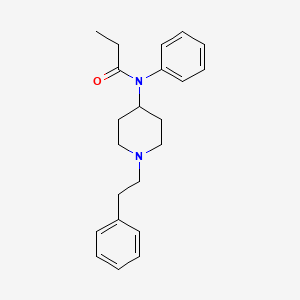
| Formula | C22H28N2O |
|---|---|
| Molecular weight | 336.48 g/mol |
| IUPAC name | N-phenyl-N-[1-(2-phenylethyl)piperidin-4-yl]propanamide |
| CAS | 437-38-7 |
| PubChem CID | 3345 |
| InChIKey | PJMPHNIQZUBGLI-UHFFFAOYSA-N |
| logP | 4.14 (XLogP 4.0) |
| Polar surface area | 23.55 Ų |
| H-bond acceptors / donors | 2 / 0 |
| Drug-likeness (QED) | 0.79 |
| Lipinski violations | 0 |
SMILES
CCC(=O)N(c1ccccc1)C1CCN(CCc2ccccc2)CC1Biology & Pharmacokinetics
Pharmacokinetics
| BBB penetrant | Yes (logBB 0.6) |
|---|
Enzyme interactions
| Enzyme | Role | Detail |
|---|---|---|
| CYP1A2 | Substrate | — |
| CYP2C19 | Substrate | — |
| CYP2D6 | Inhibitor | — |
| CYP3A4 | Substrate | — |
Receptor binding (top 6)
| Target | Action | Affinity |
|---|---|---|
| μ receptor (OPRM1) | Agonist | pKi 9.2 |
| OPIATE Mu (OPRM1) | Binding | pKi 9.1 |
| κ receptor (OPRK1) | Agonist | pKi 7.1 |
| OPIATE Kappa (OPRK1) | Binding | pKi 6.8 |
| δ receptor (OPRD1) | Agonist | pKi 6.8 |
| OPIATE Delta (OPRD1) | Binding | pKi 6.4 |
Transporters
BCRP (Inhibitor)BSEP (Inhibitor)MDR1 (Inhibitor)MRP1 (Inhibitor)OATP1B1 (Inhibitor)OATP1B1 (Inhibitor)OATP1B3 (Inhibitor)OATP1B3 (Inhibitor)OATP2B1 (Inhibitor)OCT1 (Inhibitor)P-gp (Inhibitor)OATP1B1 (Substrate)OCT1 (Substrate)OCT3 (Substrate)P-gp (Substrate)
Drug–drug interactions (100+, DDInter)
| Interacting drug | Severity | Management |
|---|---|---|
| Alvimopan | major | |
| Aminoglutethimide | major | |
| Apalutamide | major | |
| Aprepitant | major | |
| Bupropion | major | |
| Ceritinib | major | |
| Chlorphenesin | major | |
| Clarithromycin | major | |
| Clotrimazole | major | |
| Cobicistat | major | |
| Codeine | major | |
| Crizotinib | major | |
| Dabrafenib | major | |
| Dasatinib | major | |
| Dexamethasone | major | |
| Dexfenfluramine | major | |
| Dolasetron | major | |
| Doxepin | major | |
| Doxepin (topical) | major | |
| Elagolix | major | |
| Enzalutamide | major | |
| Erythromycin | major | |
| Fedratinib | major | |
| Fenfluramine | major | |
| Fluconazole | major | |
| Granisetron | major | |
| Hydrocodone | major | |
| Idelalisib | major | |
| Imatinib | major | |
| Iohexol | major | |
| Iopamidol | major | |
| Ivosidenib | major | |
| Ketoconazole | major | |
| Lapatinib | major | |
| Lorcaserin | major | |
| Lorlatinib | major | |
| Lumacaftor | major | |
| Methylene blue | major | |
| Mitotane | major | |
| Morphine | major |
Showing 40 of 100+.
Registered Products (15)
| Brand | Form / strength | Pack | Agent | Citizen (JOD) |
|---|---|---|---|---|
| Fentadur Transdermal Patches, 25 mcg/h | Patch Fentanyl 2.75 mg | (5 UNT) | Almutanabbe Drug Store | 11.450 |
| Durogesic (25mcg/hr) TD Patches | Patch 4.2 mg | 5 | Telegraph Drug Store | 14.210 |
| Fentadur Transdermal Patches, 50 mcg/h | Patch Fentanyl 5.5 mg | (5 UNT) | Almutanabbe Drug Store | 18.320 |
| Fentadur Transdermal Patches, | Patch Fentanyl 8.25 mg | (5 UNT) | Almutanabbe Drug Store | 25.760 |
| Durogesic (50 mcg/hr) TD Patches | Patch 8.4 mg | 5 | Telegraph Drug Store | 27.450 |
| Fentadur Transdermal Patches, 100mcg/h | Patch Fentanyl 11 mg | (5 UNT) | Almutanabbe Drug Store | 32.060 |
| Durogesic (100mcg/hr) TD Patches | Patch 16.8 mg | 5 | Telegraph Drug Store | 47.590 |
| Fent | Injection Fentanyl 50 mcg/1 ml | 2 ml | AL Rahma Drug Store | — |
| Fentanilo basi | Ampoule 0.05 mg/1 ml | 10 amp | Ibn Rushd Drug Store | — |
| Fentanyl kalceks 0.05mg /ml solution for injection (10ML) | Injection Fentanyl 0.05 mg/1 ml | 10 amp pack varies | Alshefra Dru Store company | — |
| Fentanyl kalceks 0.05mg /ml solution for injection (2ML) | Injection Fentanyl 0.05 mg/1 ml | 10 amp pack varies | Alshefra Dru Store company | — |
| Fentanyl Hameln 50mcg/ml | Ampoule 50 mcg/ml | 10 amp pack varies | Abu Sharef Medical Stores | — |
| Fentanyl Hameln 50mcg/ml | Ampoule 50 mcg/ml | 10 amp pack varies | Abu Sharef Medical Stores | — |
| Fentanyl Solution For Injection | Injection 500 mcg/10 ml | 10 amp | AL Razi Drug Store | — |
| Fentanyl Solution For Injection | Injection 50 mcg/ml | 10 amp | AL Razi Drug Store | — |