Progesterone
JFDA label: Cyclogest Pessaries
- Cardiovascular disorders (capsule):
- Probable dementia (capsule):
- Breast cancer (capsule):
- Risks versus benefits (capsule):
Mechanism of Action
Agonist of Progesterone receptor — Progesterone receptor agonist
| Target | Action | Gene / class |
|---|---|---|
| Progesterone receptor efficacy | AGONIST | PGR |
Indications
Approved
- IM
- Intravaginal gel
- Oral
- Vaginal insert
Off-label
- Reduce the risk of recurrent spontaneous preterm birth
Contraindications
Source: Lexicomp
- Additional contraindications (not in the US labeling): Capsules: Hypersensitivity to soya Absolute
- Oral: Hypersensitivity to progesterone or any component of the formulation, including peanuts/peanut oil Absolute
- active deep vein thrombosis, pulmonary embolism, or history of these conditions Absolute
- active or history of arterial or venous thromboembolism or severe thrombophlebitis Absolute
- active or history of arterial thromboembolic disease (eg, stroke, MI) Absolute
- active or history of thrombophlebitis, thromboembolic disorders, or cerebral apoplexy Absolute
- active thrombophlebitis or thromboembolic disorders, or a history of hormone-associated thrombophlebitis or thromboembolic disorders. Vaginal insert: Hypersensitivity to progesterone or any component of the formulation Absolute
- breast cancer (known, suspected, or history of) Absolute
- classical migraine Absolute
- endometrial hyperplasia Absolute
- hepatic disease Absolute
- hepatic impairment or disease Absolute
- known missed abortion or ectopic pregnancy Absolute
- known or suspected malignancy of the breast or genital organs Absolute
- missed abortion Absolute
- missed abortion. Intravaginal gel: Hypersensitivity to progesterone or any component of the formulation, including palm oil Absolute
- partial or complete loss of vision due to ophthalmic vascular disease Intravaginal gel: Acute porphyria, cerebral apoplexy Vaginal insert/tablet: Porphyria Absolute
- pregnancy. IM: Hypersensitivity to progesterone or any component of the formulation, including sesame oil/seeds Absolute
- undiagnosed abnormal genital bleeding Absolute
- undiagnosed vaginal bleeding Absolute
- undiagnosed vaginal bleeding Documentation of allergenic cross-reactivity for progestins is limited. However, because of similarities in chemical structure and/or pharmacologic actions, the possibility of cross-sensitivity cannot be ruled out with certainty Absolute
Adverse Reactions
Cardiac disorders (5)
Common Chest pain
Not Known Cerebral thrombosis · edema · pulmonary embolism · retinal thrombosis
Nervous system disorders (11)
Very Common dizziness · Headache · nervousness
Common Anxiety · fatigue · irritability · Pain
Not Known Cerebral edema · depression · drowsiness · insomnia
Hepatobiliary disorders (1)
Not Known Cholestatic jaundice
Renal and urinary disorders (15)
Very Common Breast hypertrophy · nocturia · perineal pain · Urination disorder
Common dyspareunia · genital candidiasis · urinary tract infection · Uterine spasm · Vaginal discharge · vaginal hemorrhage
Not Known Breakthrough bleeding · breast tenderness · cervical erosion · change in cervical secretions · spotting
Blood and lymphatic system disorders (1)
Common Malignant neoplasm of breast
Immune system disorders (1)
Not Known Anaphylactoid reaction
Metabolism and nutrition disorders (8)
Very Common Decreased libido · mastalgia
Common Ovarian hyperstimulation syndrome
Not Known Amenorrhea · change in menstrual flow · galactorrhea · weight gain · weight loss
Gastrointestinal disorders (9)
Very Common abdominal cramps · Abdominal pain · bloating · Constipation
Common abdominal distention · cholecystectomy · diarrhea · vomiting
Not Known Nausea
Skin and subcutaneous tissue disorders (7)
Common Genital pruritus
Not Known Acne vulgaris · alopecia · hirsutism · pruritus · skin rash · urticaria
Musculoskeletal and connective tissue disorders (2)
Very Common Arthralgia · musculoskeletal pain
Eye disorders (1)
Not Known Optic neuritis
Infections and infestations (1)
Very Common Viral infection
General disorders and administration site conditions (4)
Not Known Erythema at injection site · Fever · irritation at injection site · pain at injection site
Dosing
Source: Lexicomp
Warnings & Precautions
Source: Lexicomp
Breast cancer
In the Women's Health Initiative (WHI) studies, an increased risk of invasive breast cancer was observed in women ≥65 years with daily conjugated estrogens combined with medroxyprogesterone. This risk may be associated with duration of use and declines once combined therapy is discontinued (Chlebowski 2009). The risk of invasive breast cancer was decreased in postmenopausal women with a hysterectomy using CE only, regardless of weight. However, the risk was not significantly decreased in women at high risk for breast cancer (family history of breast cancer, personal history of benign breast disease) (Anderson 2012). An increase in abnormal mammogram findings has also been reported with estrogen in combination with progestin therapy. Use is contraindicated in patients with known or suspected breast cancer.
CNS depression
May cause CNS depression, which may impair physical or mental abilities; patients must be cautioned about performing tasks that require mental alertness (eg, operating machinery, driving).
Dementia
Progestin plus estrogens should not be used for the prevention of dementia. In the Women's Health Initiative Memory Study (WHIMS), an increased risk of developing probable dementia was observed in women ≥65 years with daily conjugated estrogens combined with medroxyprogesterone.
Endometrial cancer
Progesterone is used to reduce the risk of endometrial hyperplasia in nonhysterectomized postmenopausal women receiving conjugated estrogens. The use of unopposed estrogen in women with an intact uterus is associated with an increased risk of endometrial cancer. The addition of a progestin to estrogen therapy may decrease the risk of endometrial hyperplasia, a precursor to endometrial cancer. Adequate diagnostic measures, including endometrial sampling if indicated, should be performed to rule out malignancy in postmenopausal women with undiagnosed abnormal persistent or recurring vaginal bleeding. Estrogens may exacerbate endometriosis. Malignant transformation of residual endometrial implants has been reported posthysterectomy with unopposed estrogen therapy. Consider adding a progestin in women with residual endometriosis posthysterectomy.
Fluid retention
May cause fluid retention; use with caution in patients with diseases which may be exacerbated by fluid retention, including asthma, cardiac impairment, epilepsy, migraine, and diabetes.
Ovarian cancer
Progesterone plus estrogen therapy may increase the risk of ovarian cancer; however, the absolute risk to an individual woman is small. Although results from various studies are not consistent, risk does not appear to be significantly associated with the duration of therapy. In one study, the risk decreased after 2 years following discontinuation of therapy (Mørch 2009). Although the risk of ovarian cancer is rare, women who are at an increased risk (eg, family history) should be counseled about the association (NAMS 2012).
Retinal vascular thrombosis
Discontinue pending examination in cases of sudden partial or complete vision loss, sudden onset of proptosis, diplopia, or migraine; discontinue permanently if papilledema or retinal vascular lesions are observed on examination. Disease-related concerns:
Cardiovascular disease
Progestin plus estrogen should not be used for the prevention of cardiovascular disease. In the WHI studies, an increased risk of DVT, PE, stroke, and myocardial infarction was observed in women ≥65 years with daily conjugated estrogens combined with medroxyprogesterone. Additional risk factors include diabetes mellitus, hypercholesterolemia, hypertension, SLE, obesity, tobacco use, and/or history of venous thromboembolism (VTE). Risk factors should be managed appropriately; discontinue use if adverse cardiovascular events occur or are suspected.
Depression
Use with caution in patients with a history of depression.
Diabetes
Use with caution in patients with diabetes; decreased glucose tolerance may occur.
Hepatic impairment
Use is contraindicated in hepatic impairment or disease.
Renal impairment
Use with caution in patients with renal impairment; progestins may cause fluid retention. Concurrent drug therapy issues:
Drug-drug interactions
Potentially significant interactions may exist, requiring dose or frequency adjustment, additional monitoring, and/or selection of alternative therapy. Consult drug interactions database for more detailed information. Special populations:
Pediatric
Not for use prior to menarche.
Surgical patients
Whenever possible, progestins in combination with estrogens should be discontinued at least 4 to 6 weeks prior to elective surgery associated with an increased risk of thromboembolism or during periods of prolonged immobilization. Dosage form specific issues:
Benzyl alcohol and derivatives
Some dosage forms may contain benzyl alcohol; large amounts of benzyl alcohol (≥99 mg/kg/day) have been associated with a potentially fatal toxicity ("gasping syndrome") in neonates; the "gasping syndrome" consists of metabolic acidosis, respiratory distress, gasping respirations, CNS dysfunction (including convulsions, intracranial hemorrhage), hypotension, and cardiovascular collapse (AAP ["Inactive" 1997]; CDC 1982); some data suggests that benzoate displaces bilirubin from protein binding sites (Ahlfors 2001); avoid or use dosage forms containing benzyl alcohol with caution in neonates. See manufacturer's labeling.
Palm oil
Some products may contain palm oil.
Peanut oil
Some products may contain peanut oil.
Sesame oil
Some products may contain sesame oil. Other warnings/precautions:
Risks vs benefits
Oral: [US Boxed Warning]: Progestin with estrogens should be prescribed at the lowest effective doses and for the shortest duration consistent with treatment goals and risks for the individual woman. Before prescribing estrogen therapy to postmenopausal women, the risks and benefits must be weighed for each patient. Women should be informed of these risks and benefits, as well as possible effects of progestin when added to estrogen therapy. Patients should be reevaluated as clinically appropriate to determine if treatment is still necessary. Available data related to treatment risks are from WHI studies, which evaluated oral conjugated estrogens with medroxyprogesterone relative to placebo in postmenopausal women. Other combinations and dosage forms of estrogens and progestins were not studied. Outcomes reported from clinical trials using conjugated estrogens with medroxyprogesterone should be assumed to be similar for other doses and other dosage forms of estrogens and progestins until comparable data becomes available.
Pregnancy & Lactation
Pregnancy
The oral capsules are contraindicated for use during pregnancy. Adverse events have not been observed following oral administration in animal reproduction studies. Adverse events following maternal use in pregnancy (eg, hypospadias, congenital heart disease, cleft lip/palate) have been noted in postmarketing data; however, a causal relationship has not been clearly established. Use of vaginal progesterone may be considered to decrease the risk of recurrent spontaneous preterm birth in women with a singleton pregnancy and prior spontaneous preterm singleton birth (therapy may begin at 16 to 24 weeks, regardless of cervical length). It may also be used to prevent spontaneous preterm birth in women with a singleton pregnancy who have a cervix
Lactation
Progesterone is excreted in breast milk. The manufacturer recommends that caution be used if progesterone is administered to a nursing woman.
Monitoring
| Clinical pearl | Routine physical examination that includes blood pressure and Papanicolaou smear, breast exam, mammogram. Adequate diagnostic measures, including endometrial sampling, if indicated, should be performed to rule out malignancy in all cases of undiagnosed abnormal vaginal bleeding. Signs and symptoms of thromboembolic disorders, vision changes |
|---|
Chemistry & Properties
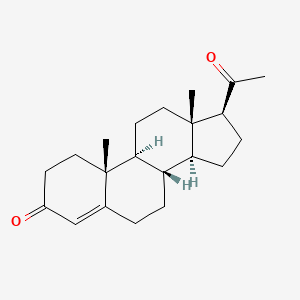
| Formula | C21H30O2 |
|---|---|
| Molecular weight | 314.47 g/mol |
| IUPAC name | (8S,9S,10R,13S,14S,17S)-17-acetyl-10,13-dimethyl-1,2,6,7,8,9,11,12,14,15,16,17-dodecahydrocyclopenta[a]phenanthren-3-one |
| CAS | 57-83-0 |
| PubChem CID | 5994 |
| InChIKey | RJKFOVLPORLFTN-LEKSSAKUSA-N |
| logP | 4.72 (XLogP 3.9) |
| Polar surface area | 34.14 Ų |
| H-bond acceptors / donors | 2 / 0 |
| Drug-likeness (QED) | 0.70 |
| Lipinski violations | 0 |
SMILES
CC(=O)[C@H]1CC[C@H]2[C@@H]3CCC4=CC(=O)CC[C@]4(C)[C@H]3CC[C@]12CBiology & Pharmacokinetics
Pharmacokinetics
| BBB penetrant | Yes (logBB -0.1) |
|---|
Enzyme interactions
| Enzyme | Role | Detail |
|---|---|---|
| CYP1A2 | Substrate | — |
| CYP2B6 | Inhibitor | — |
| CYP2C19 | Inhibitor | — |
| CYP2C19 | Substrate | — |
| CYP2C8 | Inhibitor | — |
| CYP2C9 | Inhibitor | Ki 5.499999999999997 µM |
| CYP2D6 | Substrate | — |
| CYP3A4 | Substrate | — |
Receptor binding (top 7)
| Target | Action | Affinity |
|---|---|---|
| Mineralocorticoid receptor (NR3C2) | Antagonist | pIC50 11.0 |
| Progesterone receptor (PGR) | Agonist | pEC50 8.8 |
| Progesterone receptor (PGR) | Agonist | pKi 8.5 |
| CatSper2 (CATSPER2) | Activator | pEC50 8.1 |
| CatSper3 (CATSPER3) | Activator | pEC50 8.1 |
| CatSper4 (CATSPER4) | Activator | pEC50 8.1 |
| TRPC5 (TRPC5) | Channel blocker | pIC50 5.3 |
Transporters
BCRP (Inhibitor)BCRP (Inhibitor)BSEP (Inhibitor)BSEP (Inhibitor)MATE2 (Inhibitor)MDR1 (Inhibitor)MRP (Inhibitor)MRP1 (Inhibitor)MRP2 (Inhibitor)MRP4 (Inhibitor)NTCP (Inhibitor)OAT1 (Inhibitor)OATP1B1 (Inhibitor)OATP1B1 (Inhibitor)OATP1B3 (Inhibitor)OATP1B3 (Inhibitor)OATP2B1 (Inhibitor)OCT(unspecified) (Inhibitor)OCT1 (Inhibitor)OCT2 (Inhibitor)OCT3 (Inhibitor)OCTN2 (Inhibitor)P-gp (Inhibitor)BCRP (Substrate)MDR1 (Substrate)MRP1 (Substrate)OATP2B1 (Substrate)P-gp (Substrate)
Drug–drug interactions (93, DDInter)
| Interacting drug | Severity | Management |
|---|---|---|
| Edoxaban | major | |
| Venetoclax | major | |
| Acarbose | moderate | |
| Acetohexamide | moderate | |
| Albiglutide | moderate | |
| Alogliptin | moderate | |
| Aminoglutethimide | moderate | |
| Apalutamide | moderate | |
| Apixaban | moderate | |
| Aprepitant | moderate | |
| Bexarotene | moderate | |
| Binimetinib | moderate | |
| Brentuximab vedotin | moderate | |
| Brigatinib | moderate | |
| Canagliflozin | moderate | |
| Chlorpropamide | moderate | |
| Clarithromycin | moderate | |
| Clotrimazole | moderate | |
| Cyclosporine | moderate | |
| Dabrafenib | moderate | |
| Dapagliflozin | moderate | |
| Dasatinib | moderate | |
| Daunorubicin | moderate | |
| Daunorubicin (liposomal) | moderate | |
| Deferasirox | moderate | |
| Doxorubicin | moderate | |
| Doxorubicin (liposomal) | moderate | |
| Dulaglutide | moderate | |
| Elagolix | moderate | |
| Empagliflozin | moderate | |
| Enzalutamide | moderate | |
| Ertugliflozin | moderate | |
| Erythromycin | moderate | |
| Exenatide | moderate | |
| Fedratinib | moderate | |
| Fluconazole | moderate | |
| Fostamatinib | moderate | |
| Glimepiride | moderate | |
| Glipizide | moderate | |
| Glyburide | moderate |
Showing 40 of 93.
Registered Products (12)
| Brand | Form / strength | Pack | Agent | Citizen (JOD) |
|---|---|---|---|---|
| Utrocare | Capsule 100 mg | 30 cap | Al-motakadema pharmaceutical Ltd/Jordan | 3.510 |
| Utrocare | Capsule 200 mg | 15 cap | Al-motakadema pharmaceutical Ltd/Jordan | 3.930 |
| Utrogestan | Tablet 100 mg | 30 tab | Abu Sharef Medical Stores | 4.870 |
| Utrogestan | Tablet 200 mg | 15 tab | Abu Sharef Medical Stores | 5.450 |
| Progesta Pessaries | Vaginal 400 mg | 10 Pessaries pack varies | JORDAN RIVER PHARMA.IND(JORIVER)/JORDAN | 7.450 |
| Progesta Pessaries | Pessary 400 mg | 15 pack varies | JORDAN RIVER PHARMA.IND(JORIVER)/JORDAN | 11.170 |
| Gestophil | Suppository 400 mg | 15 supp | PHILADELPHIA PHAEMACEUTICALS.COMP/JORDAN | 11.360 |
| Cyclogest Pessaries | Pessary 400 mg | 15 | Beta Drug Store | 13.640 |
| Progesta Pessaries | Vaginal 400 mg | 30 Pessaries pack varies | JORDAN RIVER PHARMA.IND(JORIVER)/JORDAN | 21.220 |
| Endometrin | Tablet 100 mg | 21 Vaginal Tab + 1 Vaginal App | Petra Drug Store | 21.370 |
| Crinone 8% Progesterone Vaginal Gel , VAGINAL GEL | Gel 8 %WW | 15 Single use Prefilled applicators | THE ARAB DRUG STORE P.S.C | 38.890 |
| Prolutex | Vial 25 mg | 7 vial | Kindi Drug Store | 41.380 |