Propofol
JFDA label: Recofol Inj
Mechanism of Action
Positive Allosteric Modulator of GABA-A receptor; anion channel — GABA-A receptor; anion channel positive allosteric modulator
| Target | Action | Gene / class |
|---|---|---|
| GABA-A receptor; anion channel efficacy | POSITIVE ALLOSTERIC MODULATOR |
Indications
Off-label
- Postoperative nausea and vomiting (PONV), rescue therapy
- Status epilepticus, refractory
Contraindications
Source: Lexicomp
- Additional contraindication (not in US labeling): Hypersensitivity to lipid emulsions Absolute
- Asserhoj 2016 Absolute
- Dziedzic 2016 Absolute
- Hypersensitivity to propofol or any component of the formulation Absolute
- Murphy 2011) Absolute
- hypersensitivity to eggs, egg products, soybeans, or soy products Absolute
- sedation of children ≤18 years of age receiving intensive care Absolute
- when general anesthesia or sedation is contraindicated. Note: Although the manufacturer’s labeling lists egg allergy as a contraindication, available studies (mostly retrospective) have suggested that propofol may be used safely in certain egg-allergic patients without a history of anaphylaxis related to egg ingestion (AAAI [Lieberman 2015] Absolute
Adverse Reactions
Cardiac disorders (6)
Very Common Hypotension
Common bradycardia · cardiac arrhythmia · Hypertension · low cardiac output · tachycardia
Nervous system disorders (1)
Very Common Involuntary body movements
Metabolism and nutrition disorders (2)
Common Hypertriglyceridemia · respiratory acidosis
Skin and subcutaneous tissue disorders (2)
Common pruritus · Skin rash
General disorders and administration site conditions (2)
Very Common Burning sensation at injection site · pain at injection site
Respiratory, thoracic and mediastinal disorders (1)
Very Common Apnea
Dosing
Source: Lexicomp
Warnings & Precautions
Source: Lexicomp
Anaphylaxis/hypersensitivity reactions
May rarely cause hypersensitivity, anaphylaxis, anaphylactoid reactions, angioedema, bronchospasm, and erythema; medications for the treatment of hypersensitivity reactions should be available for immediate use. Use with caution in patients with history of hypersensitivity/anaphylactic reaction to peanuts; a low risk of crossreactivity between soy and peanuts may exist. According to the manufacturer, use is contraindicated in patients who are hypersensitive to eggs, egg products, soybeans, or soy products. However, available studies (mostly retrospective) have suggested that propofol may be used safely in certain egg-allergic patients without a history of anaphylaxis related to egg ingestion (AAAI [Lieberman 2015]; Asserhoj 2016; Dziedzic 2016; Murphy 2011).
ECG effects
In most cases, propofol does not significantly affect the QT interval (Staikou 2014). However, prolongation of the QT interval, usually within normal limits, has occurred in case reports and small prospective studies and may be dose dependent (Hume-Smith 2008; Kim 2008; McConachie 1989; Saarnivaara 1990; Saarnivaara 1993; Sakabe 2002). Shortening of the QT interval has also occurred (Erdil 2009; Tanskanen 2002).
Hypertriglyceridemia
Because propofol is formulated within a 10% fat emulsion, hypertriglyceridemia is an expected side effect. Patients who develop hypertriglyceridemia (eg, >500 mg/dL) are at risk of developing pancreatitis. Serum triglyceride levels should be obtained prior to initiation of therapy and every 3 to 7 days thereafter. Monitoring of serum triglycerides should especially be considered with therapy >48 hours with doses exceeding 50 mcg/kg/minute (Devlin 2005). An alternative sedative agent should be employed if significant hypertriglyceridemia occurs. Use with caution in patients with preexisting hyperlipidemia as evidenced by increased serum triglyceride levels or serum turbidity.
Hypotension
The major cardiovascular effect of propofol is hypotension especially if patient is hypovolemic or if bolus dosing is used. Hypotension may be substantial with a reduction in mean arterial pressure occasionally exceeding 30%. Use with caution in patients who are hemodynamically unstable, hypovolemic, or have abnormally low vascular tone (eg, sepsis).
Injection-site reaction
Transient local pain may occur during IV injection; lidocaine 1% solution may be administered prior to administration or may be added to propofol immediately prior to administration to reduce pain associated with injection (see Administration).
Myoclonus
Perioperative myoclonus (eg, convulsions and opisthotonos) has occurred with administration.
Propofol-related infusion syndrome (PRIS)
PRIS is a serious side effect with a high mortality rate (up to 33%) characterized by dysrhythmia (eg, bradycardia or tachycardia), heart failure, hyperkalemia, lipemia, metabolic acidosis, and/or rhabdomyolysis or myoglobinuria with subsequent renal failure. Risk factors include poor oxygen delivery, sepsis, serious cerebral injury, and the administration of high doses of propofol (usually doses >83 mcg/kg/minute or >5 mg/kg/hour for >48 hours), but has also been reported following large dose, short-term infusions during surgical anesthesia. PRIS has also been reported with lower-dose infusions (Chukwuemeka 2006; Merz 2006). The onset of the syndrome is rapid, occurring within 4 days of initiation. The mechanism of the syndrome has yet to be determined. Alternate sedative therapy should be considered for patients with escalating doses of vasopressors or inotropes, when cardiac failure occurs during high-dose propofol infusion, when metabolic acidosis is observed, or in whom lengthy and/or high-dose sedation is needed (Barr 2013; Corbett 2008). Disease-related concerns:
Cardiovascular disease
Use with caution in patients with severe cardiac disease (ejection fraction • Increased intracranial pressure: Use with caution in patients with increased intracranial pressure or impaired cerebral circulation; substantial decreases in mean arterial pressure and subsequent decreases in cerebral perfusion pressure may occur; consider continuous infusion or administer as a slow bolus.
Infection risk
Propofol vials and prefilled syringes have the potential to support the growth of various microorganisms despite product additives intended to suppress microbial growth. To limit the potential for contamination, strictly adhere to recommendations in product labeling for handling and administering propofol.
Pancreatitis
Use with caution in patients with preexisting pancreatitis; use of propofol may exacerbate this condition.
Respiratory disease
Use with caution in patients with respiratory disease.
Seizure disorder
Use with caution in patients with a history of epilepsy or seizures; seizure may occur during recovery phase. Concurrent drug therapy issues:
Opioids
Concomitant use may lead to increased sedative or anesthetic effects of propofol, more pronounced decreases in systolic, diastolic, and mean arterial pressures and cardiac output; lower doses of propofol may be needed. In addition, fentanyl may cause serious bradycardia when used with propofol in pediatric patients. Alfentanil use with propofol has precipitated seizure activity in patients without any history of epilepsy. Special populations:
ASA-PS (American Society of Anesthesiologists - Physical Status) 3/4 patients
Use a lower induction dose, a slower maintenance rate of administration, and avoid rapidly delivered boluses in ASA-PS 3/4 patients to reduce the incidence of unwanted cardiorespiratory depressive events.
Debilitated patients
Use a lower induction dose, a slower maintenance rate of administration, and avoid rapidly delivered boluses in debilitated patients to reduce the incidence of unwanted cardiorespiratory depressive events.
Elderly
Use a lower induction dose, a slower maintenance rate of administration, and avoid rapidly delivered boluses in elderly patients to reduce the incidence of unwanted cardiorespiratory depressive events.
Pediatric neurotoxicity
In pediatric and neonatal patients Dosage form specific issues:
Benzyl alcohol and derivatives
Some dosage forms may contain benzyl alcohol; large amounts of benzyl alcohol (≥99 mg/kg/day) have been associated with a potentially fatal toxicity (“gasping syndrome”) in neonates; the “gasping syndrome” consists of metabolic acidosis, respiratory distress, gasping respirations, CNS dysfunction (including convulsions, intracranial hemorrhage), hypotension, and cardiovascular collapse (AAP ["Inactive" 1997]; CDC 1982); some data suggests that benzoate displaces bilirubin from protein binding sites (Ahlfors 2001); avoid or use dosage forms containing benzyl alcohol with caution in neonates. See manufacturer's labeling.
Edetate disodium
Some formulations contain edetate disodium which may lead to decreased zinc levels in patients with prolonged therapy (>5 days) or a predisposition to zinc deficiency (eg, burns, diarrhea, or sepsis). A holiday from propofol infusion should take place after 5 days of therapy to allow for evaluation and necessary replacement of zinc.
Sulfites
Some formulations may contain sulfites. Other warnings/precautions:
Abrupt discontinuation
Avoid abrupt discontinuation prior to weaning or daily wake up assessments. Abrupt discontinuation can result in rapid awakening, anxiety, agitation, and resistance to mechanical ventilation; wean the infusion rate so the patient awakens slowly. Discontinue opioids and paralytic agents prior to weaning. Long-term infusions can result in some tolerance; taper propofol infusions to prevent withdrawal.
Analgesic supplementation
Propofol lacks analgesic properties; pain management requires specific use of analgesic agents, at effective dosages, propofol must be titrated separately from the analgesic agent.
Experienced personnel
Use requires careful patient monitoring, should only be used by experienced personnel who are not actively engaged in the procedure or surgery. If used in a nonintubated and/or nonmechanically ventilated patient, qualified personnel and appropriate equipment for rapid institution of respiratory and/or cardiovascular support must be immediately available. Use to induce moderate (conscious) sedation in patients warrants monitoring equivalent to that seen with deep anesthesia. Consult local regulations and individual institutional policies and procedures.
Pregnancy & Lactation
Pregnancy
Propofol crosses the placenta and may be associated with neonatal CNS and respiratory depression. Propofol is not recommended by the manufacturer for obstetrics, including cesarean section deliveries. Based on animal data, repeated or prolonged use of general anesthetic and sedation medications that block N-methyl-D-aspartate (NMDA) receptors and/or potentiate gamma-aminobutyric acid (GABA) activity may affect brain development. Human fetuses may be most vulnerable during the third trimester. Until additional information is available, the benefits and risks of maternal treatment with propofol during pregnancy should be evaluated, especially for procedures lasting more than 3 hours. The ACOG recommends that pregnant women should not be denied medically indicated surgery or procedures, regardless of trimester. If the procedure is elective, it should be delayed until after delivery (ACOG 2011).
Lactation
Propofol is present in breast milk. Breastfeeding is not recommended by the manufacturer. A green discoloration to the breast milk was noted in a woman following administration of propofol during surgery for removal of an ectopic pregnancy. Although other medications were also administered, propofol was detected in the milk and assumed to be the cause; resolution of this effect occurred within 48 hours after surgery (Birkholz 2009).
Monitoring
| Clinical pearl | Cardiac monitor, blood pressure, oxygen saturation (during monitored anesthesia care sedation), arterial blood gas (with prolonged infusions). With prolonged infusions (eg, ICU sedation), monitor for signs and symptoms of propofol-related infusion syndrome (PRIS): Metabolic acidosis, hyperkalemia, rhabdomyolysis or elevated CPK, hepatomegaly, and progression of cardiac and renal failure. ICU sedation: Assess and adjust sedation according to scoring system (Richmond Agitation-Sedation Scale [RASS] or Sedation-Agitation Scale [SAS]) (SCCM [Barr 2013]); assess CNS function daily. Serum triglyceride levels should be obtained prior to initiation of therapy and every 3-7 days thereafter, especially if receiving for >48 hours with doses exceeding 50 mcg/kg/minute (Devlin, 2005); use intravenous port opposite propofol infusion or temporarily suspend infusion and flush port prior to blood draw. Diprivan: Monitor zinc levels in patients predisposed to deficiency (burns, diarrhea, major sepsis) or after 5 days of treatment. |
|---|
Chemistry & Properties
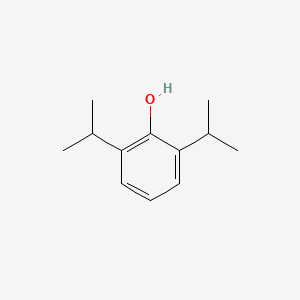
| Formula | C12H18O |
|---|---|
| Molecular weight | 178.27 g/mol |
| IUPAC name | 2,6-di(propan-2-yl)phenol |
| CAS | 2078-54-8 |
| PubChem CID | 4943 |
| InChIKey | OLBCVFGFOZPWHH-UHFFFAOYSA-N |
| logP | 3.64 (XLogP 3.8) |
| Polar surface area | 20.23 Ų |
| H-bond acceptors / donors | 1 / 1 |
| Drug-likeness (QED) | 0.73 |
| Lipinski violations | 0 |
SMILES
CC(C)c1cccc(C(C)C)c1OBiology & Pharmacokinetics
Pharmacokinetics
| BBB penetrant | Yes (logBB 0.7) |
|---|
Enzyme interactions
| Enzyme | Role | Detail |
|---|---|---|
| CYP1A2 | Inhibitor | — |
| CYP1A2 | Substrate | — |
| CYP2B6 | Inhibitor | — |
| CYP2B6 | Substrate | — |
| CYP2C19 | Substrate | — |
| CYP2C8 | Inhibitor | — |
| CYP2C9 | Substrate | — |
| CYP2D6 | Substrate | — |
| CYP3A4 | Substrate | — |
Transporters
BCRP (Inhibitor)BSEP (Inhibitor)MRP1 (Inhibitor)OATP1B1 (Inhibitor)OATP1B3 (Inhibitor)OCT1 (Inhibitor)P-gp (Inhibitor)P-gp (Substrate)
Drug–drug interactions (100+, DDInter)
| Interacting drug | Severity | Management |
|---|---|---|
| Ozanimod | major | |
| Papaverine | major | |
| Abarelix | moderate | |
| Abiraterone | moderate | |
| Alimemazine | moderate | |
| Alpelisib | moderate | |
| Anagrelide | moderate | |
| Apalutamide | moderate | |
| Arsenic trioxide | moderate | |
| Astemizole | moderate | |
| Bicalutamide | moderate | |
| Bisacodyl | moderate | |
| Bosutinib | moderate | |
| Brimonidine (ophthalmic) | moderate | |
| Brimonidine (topical) | moderate | |
| Cabozantinib | moderate | |
| Castor oil | moderate | |
| Ceritinib | moderate | |
| Cetirizine | moderate | |
| Chloroquine | moderate | |
| Cilostazol | moderate | |
| Cisapride | moderate | |
| Clarithromycin | moderate | |
| Codeine | moderate | |
| Crizotinib | moderate | |
| Dabrafenib | moderate | |
| Dasatinib | moderate | |
| Daunorubicin | moderate | |
| Daunorubicin (liposomal) | moderate | |
| Degarelix | moderate | |
| Dolasetron | moderate | |
| Doxepin | moderate | |
| Doxepin (topical) | moderate | |
| Doxorubicin | moderate | |
| Doxorubicin (liposomal) | moderate | |
| Encorafenib | moderate | |
| Entrectinib | moderate | |
| Enzalutamide | moderate | |
| Epirubicin | moderate | |
| Eribulin | moderate |
Showing 40 of 100+.
Registered Products (12)
| Brand | Form / strength | Pack | Agent | Citizen (JOD) |
|---|---|---|---|---|
| Diprivan | Ampoule 1 % w/v | 20 ml | Shawi & Rushedat Drug Store | — |
| Dormifor 1% IV Emulsion | Emulsion 1 % | 5 vial | Adonis Drug Store | — |
| Propofol Inj | Powder for Injection 1 % | 5 amp | Sun Set Drug Store | — |
| Provive Emulsion for IV Injection | Powder for Injection 1 % | 20 ml pack varies | Khoury Drug Store | — |
| Provive Emulsion for IV Injection | Powder for Injection 1 % | 5 vial pack varies | Khoury Drug Store | — |
| Provive Emulsion for IV Injection | Powder for Injection 1 % | 10 vial pack varies | Khoury Drug Store | — |
| Recofol 2% Emulsion For Infusion | Infusion 20 mg/ml | 50 ml pack varies | The Jordan Drugstore Co | — |
| Recofol 2% Emulsion for infusion | Infusion 20 mg/ml | 10 ml pack varies | The Jordan Drugstore Co | — |
| Recofol Inj | Injection 10 mg/ml | 100 ml pack varies | The Jordan Drugstore Co | — |
| Recofol Inj | Injection 10 mg/ml | 20 ml pack varies | The Jordan Drugstore Co | — |
| Recofol Inj | Injection 10 mg/ml | 50 ml pack varies | The Jordan Drugstore Co | — |
| propofol 1% MCT/LCT Fresenius emulsion for injection or infusion | Infusion 10.0 mg/1 ml | 5 amp | Sun Set Drug Store | — |