Zoledronic Acid
JFDA label: Zoledronic Acid Hikma
Mechanism of Action
Inhibitor of Farnesyl pyrophosphate synthase — Farnesyl diphosphate synthase inhibitor
| Target | Action | Gene / class |
|---|---|---|
| Farnesyl pyrophosphate synthase efficacy | INHIBITOR | FDPS |
Indications
Approved
- Bone metastases from solid tumors (Zometa)
- Glucocorticoid-induced osteoporosis (Reclast, Aclasta [Canadian product])
- Hypercalcemia of malignancy (Zometa)
- Multiple myeloma (Zometa)
- Osteoporosis in men (Reclast, Aclasta [Canadian product])
- Paget disease of bone (Reclast, Aclasta [Canadian product])
- Postmenopausal osteoporosis (Reclast, Aclasta [Canadian product])
Off-label
- Bone loss associated with androgen deprivation therapy in prostate cancer (prevention)
- Bone loss associated with aromatase inhibitor therapy in women with breast cancer (prevention)
- Postrenal transplant bone loss (prevention)
Contraindications
Source: Lexicomp
- All indications: Hypersensitivity to zoledronic acid or other bisphosphonates, or any component of the formulation Absolute
- Hypersensitivity to zoledronic acid or any component of the formulation Absolute
- hypocalcemia (Reclast only) Absolute
- pregnancy, breast-feeding Nononcology uses: Additional contraindications: Use in patients with CrCl Documentation of allergenic cross-reactivity for bisphosphonates is limited. However, because of similarities in chemical structure and/or pharmacologic actions, the possibility of cross-sensitivity cannot be ruled out with certainty Absolute
- uncorrected hypocalcemia at the time of infusion Absolute
Adverse Reactions
Cardiac disorders (7)
Very Common Hypertension · hypotension · Lower extremity edema
Common atrial fibrillation · Chest pain · palpitations · peripheral edema
Nervous system disorders (18)
Very Common agitation · anxiety · chills · confusion · depression · dizziness · Fatigue · flank pain · headache · hypoesthesia · insomnia · Pain · rigors
Common hyperthermia · lethargy · malaise · Somnolence · vertigo
Renal and urinary disorders (3)
Very Common Renal insufficiency · Urinary tract infection
Common Increased serum creatinine
Blood and lymphatic system disorders (7)
Very Common Anemia · neutropenia · progression of cancer
Common Change in serum protein · Granulocytopenia · pancytopenia · thrombocytopenia
Immune system disorders (1)
Very Common Infusion-related reaction
Metabolism and nutrition disorders (6)
Very Common Dehydration · hypokalemia · hypomagnesemia · hypophosphatemia
Common hypermagnesemia · Hypocalcemia
Gastrointestinal disorders (16)
Very Common abdominal distension · abdominal pain · anorexia · constipation · decreased appetite · diarrhea · Nausea · upper abdominal pain · vomiting · weight loss
Common abdominal discomfort · Dyspepsia · dysphagia · mucositis · sore throat · stomatitis
Skin and subcutaneous tissue disorders (4)
Very Common Alopecia · dermatitis
Common hyperhidrosis · Skin rash
Musculoskeletal and connective tissue disorders (17)
Very Common arthralgia · back pain · limb pain · musculoskeletal pain · myalgia · Ostealgia · osteoarthritis · paresthesia · skeletal pain · weakness
Common arthritis · jaw pain · joint swelling · muscle spasm · neck pain · shoulder pain · stiffness
Eye disorders (1)
Common Eye pain
Infections and infestations (2)
Very Common Candidiasis
Common Infection
General disorders and administration site conditions (1)
Very Common Fever
Respiratory, thoracic and mediastinal disorders (4)
Very Common cough · Dyspnea · Flu-like symptoms
Common Upper respiratory tract infection
Dosing
Source: Lexicomp
Warnings & Precautions
Source: Lexicomp
Bone fractures
Atypical femur fractures (AFF) have been reported in patients receiving bisphosphonates. The fractures include subtrochanteric femur (bone just below the hip joint) and diaphyseal femur (long segment of the thigh bone). Some patients experience prodromal pain weeks or months before the fracture occurs. It is unclear if bisphosphonate therapy is the cause for these fractures; atypical femur fractures have also been reported in patients not taking bisphosphonates, and in patients receiving glucocorticoids. Patients receiving long-term (>3 to 5 years) bisphosphonate therapy may be at an increased risk (Adler 2016; NOF [Cosman 2014]); however, benefits of therapy (when used for osteoporosis) generally outweigh absolute risk of AFF within the first 5 years of treatment (Adler 2016). Patients presenting with thigh or groin pain with a history of receiving bisphosphonates should be evaluated for femur fracture. Consider interrupting bisphosphonate therapy in patients who develop a femoral shaft fracture; assess for fracture in the contralateral limb.
Hypersensitivity reactions
Rare cases of urticaria and angioedema and very rare cases of anaphylactic reactions/shock have been reported.
Hypocalcemia
Hypocalcemia (including severe and life-threatening cases) has been reported with use; patients with Paget disease may be at significant risk for hypocalcemia after treatment with zoledronic acid (because pretreatment rate of bone turnover may be elevated); severe and life-threatening hypocalcemia has also been reported with oncology-related uses. Measure serum calcium prior to treatment initiation. Correct preexisting hypocalcemia before initiation of therapy in patients with Paget disease, osteoporosis, or oncology indications. Use with caution with other medications known to cause hypocalcemia (severe hypocalcemia may develop). Ensure adequate calcium and vitamin D supplementation during therapy. Use caution in patients with disturbances of calcium and mineral metabolism (eg, hypoparathyroidism, thyroid/parathyroid surgery, malabsorption syndromes, excision of small intestine). QTc prolongation, cardiac arrhythmias, and neurologic events (eg, tetany, tonic-clonic seizures, numbness) secondary to severe hypocalcemia have been reported 1 day to several months after initiation of therapy.
Musculoskeletal pain
Infrequently, severe (and occasionally debilitating) bone, joint, and/or muscle pain have been reported during bisphosphonate treatment. The onset of pain ranged from a single day to several months. Consider discontinuing therapy in patients who experience severe symptoms; symptoms usually resolve upon discontinuation. Some patients experienced recurrence when rechallenged with same drug or another bisphosphonate; avoid use in patients with a history of these symptoms in association with bisphosphonate therapy.
Ocular infection
Conjunctivitis, uveitis, episcleritis, iritis, scleritis, and orbital inflammation have been reported (infrequently) with use; further ophthalmic evaluation (and possibly therapy discontinuation) may be necessary in patients with complicated infection.
Osteonecrosis of the jaw
Osteonecrosis of the jaw (ONJ), also referred to as medication-related osteonecrosis of the jaw (MRONJ), has been reported in patients receiving bisphosphonates. Known risk factors for MRONJ include invasive dental procedures (eg, tooth extraction, dental implants, bony surgery), cancer diagnosis, concomitant therapy (eg, chemotherapy, corticosteroids, angiogenesis inhibitors), poor oral hygiene, ill-fitting dentures, and comorbid disorders (anemia, coagulopathy, infection, preexisting dental disease). Risk may increase with duration of bisphosphonate use and/or may be reported at a greater frequency based on tumor type (eg, advanced breast cancer or multiple myeloma). According to a position paper by the American Association of Maxillofacial Surgeons (AAOMS), MRONJ has been associated with bisphosphonates and other antiresorptive agents (denosumab), and antiangiogenic agents (eg, bevacizumab, sunitinib) used for the treatment of osteoporosis or malignancy; risk is significantly higher in cancer patients receiving antiresorptive therapy compared to patients receiving osteoporosis treatment (regardless of medication used or dosing schedule). MRONJ risk is also increased with monthly IV antiresorptive therapy compared to the minimal risk associated with oral bisphosphonate use, although risk appears to increase with oral bisphosphonates when duration of therapy exceeds 4 years. The manufacturer’s labeling states that there are no data to suggest whether discontinuing bisphospho
Aspirin-sensitive asthma
Use with caution in patients with aspirin-sensitive asthma; may cause bronchoconstriction.
Breast cancer (metastatic)
The American Society of Clinical Oncology (ASCO) updated guidelines on the role of bone-modifying agents (BMAs) in the prevention and treatment of skeletal-related events for metastatic breast cancer patients (Van Poznak, 2011). The guidelines recommend initiating a BMA (denosumab, pamidronate, zoledronic acid) in patients with metastatic breast cancer to the bone. There is currently no literature indicating the superiority of one particular BMA. Optimal duration is not yet defined; however, the guidelines recommend continuing therapy until substantial decline in patient’s performance status. The ASCO guidelines are in alignment with prescribing information for dosing, renal dose adjustments, infusion times, prevention and management of osteonecrosis of the jaw, and monitoring of laboratory parameter recommendations. BMAs are not the first-line therapy for pain. BMAs are to be used as adjunctive therapy for cancer-related bone pain associated with bone metastasis, demonstrating a modest pain control benefit. BMAs should be used in conjunction with agents such as NSAIDS, opioid and nonopioid analgesics, corticosteroids, radiation/surgery, and interventional procedures.
Multiple myeloma
The American Society of Clinical Oncology (ASCO) has published guidelines on bisphosphonate use for prevention and treatment of bone disease in multiple myeloma (Kyle, 2007). Bisphosphonate (pamidronate or zoledronic acid) use is recommended in multiple myeloma patients with lytic bone destruction or compression spine fracture from osteopenia. Bisphosphonates may also be considered in patients with pain secondary to osteolytic disease, adjunct therapy to stabilize fractures or impending fractures, and for multiple myeloma patients with osteopenia but no radiographic evidence of lytic bone disease. Bisphosphonates are not recommended in patients with solitary plasmacytoma, smoldering (asymptomatic) or indolent myeloma, or monoclonal gammopathy of undetermined significance. The guidelines recommend monthly treatment for a period of 2 years. At that time, consider discontinuing in responsive and stable patients, and reinitiate if a new-onset skeletal-related event occurs. The ASCO guidelines are in alignment with prescribing information for dosing, renal dose adjustments, infusion times, prevention and management of osteonecrosis of the jaw, and monitoring of laboratory parameter recommendations. According to the guidelines, in patients with a serum creatinine >3 mg/dL or CrCl 500 mg/24 hours, withhold the dose until level returns to baseline, then recheck every 3 to 4 weeks. Upon reinitiation, the guidelines recommend considering increasing the zoledronic acid infusion time to
Renal impairment
Use with caution in mild to moderate renal impairment. Single and multiple infusions in patients with both normal and impaired renal function have been associated with renal deterioration, resulting in renal failure and dialysis (rare). Preexisting renal compromise, severe dehydration, and concurrent use with diuretics or other nephrotoxic drugs may increase the risk for renal impairment. Adequate hydration is required during treatment (urine output ~2 L/day); avoid overhydration, especially in patients with heart failure. Nononcology indications: Use is contraindicated in patients with CrCl 5 mg and do not infuse over less than 15 minutes. Patients with underlying moderate to severe renal impairment, increased age, concurrent use of nephrotoxic or diuretic medications, or severe dehydration prior to or after zoledronic acid administration may have an increased risk of acute renal impairment or renal failure. Others with increased risk include patients with renal impairment or dehydration secondary to fever, sepsis, gastrointestinal losses, or diuretic use. If history or physical exam suggests dehydration, treatment should not be given until the patient is normovolemic. Obtain serum creatinine and calculate creatinine clearance (using actual body weight) with the Cockcroft-Gault formula prior to each administration. Transient increases in serum creatinine may be more pronounced in patients with impaired renal function; monitoring creatinine clearance in at-risk patients takin
Elderly
Because decreased renal function occurs more commonly in elderly patients, take special care to monitor renal function. Other warnings/precautions:
Duplicate therapy
Do not administer Zometa and Reclast (Aclasta [Canadian product]) to the same patient for different indications.
Pregnancy & Lactation
Pregnancy
Adverse events were observed in animal reproduction studies. It is not known if bisphosphonates cross the placenta, but fetal exposure is expected (Djokanovic, 2008; Stathopoulos, 2011). Bisphosphonates are incorporated into the bone matrix and gradually released over time. The amount available in the systemic circulation varies by dose and duration of therapy. Theoretically, there may be a risk of fetal harm when pregnancy follows the completion of therapy; however, available data have not shown that exposure to bisphosphonates during pregnancy significantly increases the risk of adverse fetal events (Djokanovic, 2008; Levy, 2009; Stathopoulos, 2011). Until additional data is available, most sources recommend discontinuing bisphosphonate therapy in women of reproductive potential as early as possible prior to a planned pregnancy; use in premenopausal women should be reserved for special circumstances when rapid bone loss is occurring (Bhalla, 2010; Pereira, 2012; Stathopoulos, 2011).
Lactation
It is not known if zoledronic acid is excreted into breast milk. Due to the potential for serious adverse reactions in the nursing infant, the manufacturer recommends a decision be made to discontinue nursing or to discontinue the drug, taking into account the importance of treatment to the mother.
Monitoring
| Clinical pearl | Prior to initiation of therapy, dental exam and preventive dentistry for patients at risk for osteonecrosis, including all cancer patients Nononcology uses: Serum creatinine prior to each dose, especially in patients with risk factors, calculate creatinine clearance before each treatment (consider interim monitoring in patients at risk for acute renal failure), evaluate fluid status and adequately hydrate patients prior to and following administration. Osteoporosis: Bone mineral density (BMD) should be evaluated 1 to 2 years after initiating therapy and every 1 to 2 years (or less frequently if stable) thereafter (AACE/ACE [Camacho 2016]; NOF [Cosman 2014]); in patients with combined zoledronic acid and glucocorticoid treatment, evaluate BMD at initiation of glucocorticoid therapy and after 6 to 12 months, then every 2 to 3 years if patient continues to have significant osteoporosis risk factors (ACR [Buckley 2017]); serum calcium and 25(OH)D; annual measurements of height and weight, assessment of chronic back pain; serum calcium and 25(OH)D; phosphorus and magnesium; may consider monitoring biochemical markers of bone turnover Paget disease: Alkaline phosphatase at 6 to 12 weeks for initial response to treatment (when bone turnover will have shown a substantial decline) and potentially at 6 months (maximal suppression of high bone turnover); following treatment completion, monitor at ~1- to 2-year intervals (Singer, 2014); monitoring more specific biochemical markers |
|---|
Chemistry & Properties
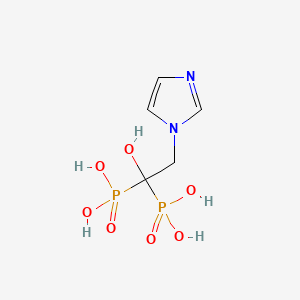
| Formula | C5H12N2O8P2 |
|---|---|
| Molecular weight | 290.11 g/mol |
| IUPAC name | (1-hydroxy-2-imidazol-1-yl-1-phosphonoethyl)phosphonic acid |
| CAS | 118072-93-8 |
| PubChem CID | 68740 |
| InChIKey | FUXFIVRTGHOMSO-UHFFFAOYSA-N |
| logP | -1.12 (XLogP -4.3) |
| Polar surface area | 153.11 Ų |
| H-bond acceptors / donors | 5 / 5 |
| Drug-likeness (QED) | 0.43 |
| Lipinski violations | 0 |
SMILES
O.O=P(O)(O)C(O)(Cn1ccnc1)P(=O)(O)OBiology & Pharmacokinetics
Pharmacokinetics
| BBB penetrant | No |
|---|
Receptor binding (top 2)
| Target | Action | Affinity |
|---|---|---|
| farnesyl diphosphate synthase (FDPS) | Inhibitor | pIC50 8.4 |
| farnesyl diphosphate synthase (FDPS) | Inhibitor | pKi 7.1 |
Transporters
BCRP (Inhibitor)BSEP (Inhibitor)BSEP (Inhibitor)MRP1 (Inhibitor)MRP2 (Inhibitor)MRP3 (Inhibitor)OATP1B1 (Inhibitor)OATP1B3 (Inhibitor)P-gp (Inhibitor)P-gp (Substrate)
Drug–drug interactions (52, DDInter)
| Interacting drug | Severity | Management |
|---|---|---|
| Deferasirox | major | |
| Diatrizoate | major | |
| Etelcalcetide | major | |
| Iodipamide | major | |
| Iodixanol | major | |
| Iohexol | major | |
| Iopamidol | major | |
| Iopromide | major | |
| Iothalamic acid | major | |
| Ioversol | major | |
| Ioxilan | major | |
| Sirolimus | major | |
| Tacrolimus | major | |
| Acetylsalicylic acid | moderate | |
| Alpelisib | moderate | |
| Amikacin | moderate | |
| Amikacin (liposome) | moderate | |
| Amphotericin B | moderate | |
| Amphotericin B (cholesteryl sulfate) | moderate | |
| Amphotericin B (lipid complex) | moderate | |
| Amphotericin B (liposomal) | moderate | |
| Bacitracin | moderate | |
| Balsalazide | moderate | |
| Bevacizumab | moderate | |
| Celecoxib | moderate | |
| Cisplatin | moderate | |
| Clofarabine | moderate | |
| Cyclosporine | moderate | |
| Diclofenac | moderate | |
| Exenatide | moderate | |
| Flucytosine | moderate | |
| Flurbiprofen | moderate | |
| Gentamicin | moderate | |
| Ibuprofen | moderate | |
| Iobenguane (I-131) | moderate | |
| Kanamycin | moderate | |
| Lenvatinib | moderate | |
| Mesalazine | moderate | |
| Methotrexate | moderate | |
| Neomycin | moderate |
Showing 40 of 52.
Registered Products (11)
| Brand | Form / strength | Pack | Agent | Citizen (JOD) |
|---|---|---|---|---|
| Aclasta | Solution 5 mg/100 ml | 100 ml | Nabulsi Drug Store | — |
| Xolarex 5mg/100ml Solution For Inj | Injection 0.05 mg/1 ml | 100 ml | MS PHARMA/JORDAN | — |
| ZOLEDRONIC ACID MYLAN | Vial 4 mg/5 ml | 1 vial | ORIENT DRUG STORE CO | — |
| Zoledra | Vial 4 mg | 1 vial | Professional Drug Store | — |
| Zoledronic Acid Accord | Vial 4 mg/5 ml | 1 vial | Beta Drug Store | — |
| Zoledronic Acid Hikma | Vial (as monohydrate) 4 mg | 1 vial | Hikma Pharmaceuticals Co.Ltd/Jordan | — |
| Zoledronic Acid Hikma 4mg/5ml Concentrate solution for IV infusion | Infusion (as monohydrate) 4 mg/5 ml | 1 vial | Hikma Pharmaceuticals Co.Ltd/Jordan | — |
| Zoledronic acid Fresenius Kabi | Vial 4 mg/5 ml | 1 vial | Sun Set Drug Store | — |
| Zometa Vial | Vial 4 mg/5 ml | 1 vial | The Jordan Drugstore Co | — |
| Zonic | Vial 4 mg/5 ml | 1 vial | MS PHARMA/JORDAN | — |
| Zuporys | Vial 4 m/5 ml | 1 vial | Khoury Drug Store | — |