Isotretinoin
JFDA label: Roaccutane Capsule
- Pregnancy:
- Special prescribing requirements:
Mechanism of Action
Agonist of Retinoic acid receptor — Retinoic acid receptor agonist
| Target | Action | Gene / class |
|---|---|---|
| Retinoic acid receptor efficacy | AGONIST |
Indications
Approved
- Acne, severe recalcitrant nodular
Off-label
- Acne (moderate)
- Cutaneous T-cell lymphomas
- Neuroblastoma, high risk (pediatrics)
- Squamous cell skin cancer (prevention in high-risk patients)
Contraindications
Source: Lexicomp · Curated
- Additional contraindications not in the Absolute
- Breastfeeding Absolute
- Breastfeeding, hepatic or renal insufficiency, hypervitaminosis A, excessive hyperlipidemia, concurrent tetracycline therapy. Documentation of allergenic cross-reactivity for retinoids is limited. However, because of similarities in chemical structure and/or pharmacologic actions, the possibility of cross-sensitivity cannot be ruled out with certainty Absolute
- Concomitant tetracyclines (intracranial hypertension) Absolute
- Hypersensitivity to isotretinoin or any component of the formulation Absolute
- Pregnancy — absolute CI (teratogenic; must use iPLEDGE programme) Absolute
- pregnant women or those who may become pregnant Absolute
- sensitivity to parabens (Zenatane only) or vitamin A Absolute
Adverse Reactions
Cardiac disorders (8)
Not Known Cerebrovascular accident · chest pain · edema · flushing · palpitations · syncope · tachycardia · thrombosis
Nervous system disorders (19)
Not Known Aggressive behavior · attempted suicide · depression · dizziness · drowsiness · emotional lability · fatigue · headache · insomnia · lethargy · malaise · nervousness · paresthesia · pseudotumor cerebri · psychosis · seizure · suicidal ideation · vasculitis (renal) · violent behavior
Hepatobiliary disorders (4)
Not Known hepatitis · Increased serum alkaline phosphatase · increased serum ALT · increased serum AST
Renal and urinary disorders (5)
Not Known Genitourinary disease (nonspecific findings) · Glomerulonephritis · hematuria · proteinuria · pyuria
Blood and lymphatic system disorders (6)
Not Known Anemia · bruise · lymphadenopathy · neutropenia · purpura · thrombocytopenia
Immune system disorders (2)
Not Known Anaphylaxis · hypersensitivity reaction
Metabolism and nutrition disorders (9)
Very Common Increased serum triglycerides
Not Known Decreased HDL cholesterol · hyperuricemia · increased gamma-glutamyl transferase · increased lactate dehydrogenase · increased serum cholesterol · increased serum glucose · menstrual disease · weight loss
Gastrointestinal disorders (10)
Not Known Colitis · esophageal ulcer · esophagitis · gastrointestinal symptoms (nonspecific) · gingival hemorrhage · gingivitis · inflammatory bowel disease · nausea · pancreatitis · xerostomia
Skin and subcutaneous tissue disorders (23)
Not Known Acne fulminans · allergic skin reaction · alopecia · cheilitis · diaphoresis · eczema · eruptive xanthoma · facial erythema · hair disease · hirsutism · hyperpigmentation · hypopigmentation · nail disease · paronychia · pruritus · pyogenic granuloma · scaling of skin of feet · skin atrophy · skin photosensitivity · skin rash · sunburn (increased susceptibility) · superficial peeling of palms · xeroderma
Musculoskeletal and connective tissue disorders (13)
Very Common Back pain
Not Known Arthralgia · arthritis · bone disease · calcification of ligament · calcification of tendon · decreased bone mineral density · increased creatine phosphokinase · myalgia · premature epiphyseal closure · skeletal hyperostosis · tendonitis · weakness
Eye disorders (12)
Common blepharitis · chalazion · Conjunctivitis · hordeolum
Not Known Cataract · corneal opacity · keratitis · nocturnal amblyopia · optic neuritis · photophobia · vision color changes · visual disturbance
Ear and labyrinth disorders (2)
Not Known Auditory impairment · tinnitus
Infections and infestations (2)
Not Known Herpes simplex infection (disseminated) · infection
General disorders and administration site conditions (1)
Not Known Wound healing impairment
Respiratory, thoracic and mediastinal disorders (6)
Not Known Bronchospasm · dry nose · epistaxis · respiratory tract infection · voice disorder · Wegener's granulomatosis
Dosing
Source: Lexicomp
Warnings & Precautions
Source: Lexicomp
Auditory impairment
Hearing impairment, which can continue after therapy is discontinued, may occur. Discontinue therapy if hearing impairment or tinnitus develops.
Bone mineral density loss
May decrease bone mineral density; osteoporosis, osteopenia, bone fractures, and delayed healing of bone fractures have been reported. Use caution in patients with a genetic predisposition for bone loss (eg, age-related osteoporosis, history of childhood osteoporosis conditions, osteomalacia or other disorders of bone metabolism); including patients diagnosed with anorexia nervosa and those on concomitant medications that may cause drug-induced osteoporosis/osteomalacia and/or affect vitamin D metabolism (eg, systemic corticosteroids, anticonvulsants). Patients may be at increased risk when participating in activities with repetitive impact (such as sports) where the risk of spondylolisthesis with and without pars fractures and hip growth plate injuries in early and late adolescence are known.
Dermatologic effects
Postmarketing reports of erythema multiforme severe skin reactions (eg, Stevens-Johnson syndrome, toxic epidermal necrolysis), including fatalities, have been reported; monitor for severe skin reactions; discontinue use if severe skin reaction occurs.
Growth effects
Skeletal hyperostosis and premature epiphyseal closure have also been reported with the use.
Hematologic effects
Neutropenia and rare cases of agranulocytosis have been reported; discontinue if clinically significant decreases in white cell counts occur.
Hepatic effects
Clinical hepatitis and mild to moderate elevated liver enzymes have been reported with use; liver enzymes may normalize with dosage reduction or with continued treatment. Discontinue therapy if hepatic enzymes do not normalize or if hepatitis is suspected.
Hypersensitivity reactions
Anaphylaxis and other types of allergic reactions, including cutaneous reactions and serious cases of allergic vasculitis, often with purpura of the extremities and extracutaneous involvement (including renal) have been reported. Discontinue therapy if a serious allergic reaction occurs and institute appropriate medical management.
Inflammatory bowel disease
Inflammatory bowel disease, including regional ileitis, has been reported in patients without a prior history of intestinal disorders; discontinue treatment immediately if abdominal pain, rectal bleeding, or severe diarrhea occurs. Of note, a position statement from the American Academy of Dermatology states that based on currently available data, there is insufficient evidence to prove either an association or a causal relationship between IBD and isotretinoin use (AAD 2016).
Musculoskeletal effects
Musculoskeletal symptoms (including arthralgia) have been reported; generally symptoms were mild to moderate, but occasionally required discontinuation of therapy. Transient pain in the chest has occurred; symptoms generally cleared after discontinuation of therapy, but in some cases persisted. Rhabdomyolysis, some associated with strenuous physical activity, has been reported (rarely).
Ocular effects
Vision impairment, corneal opacities, decreased tolerance to contact lenses (due to dry eyes), and decreased night vision have been reported with use; discontinue therapy in patients experiencing visual difficulties. Warn patients to be cautious when driving or operating machinery at night.
Pancreatitis
Acute pancreatitis may occur in patients with normal or elevated triglyceride levels; fatal hemorrhagic pancreatitis (rare) has been reported; discontinue therapy if hypertriglyceridemia cannot be controlled at an acceptable level or symptoms of pancreatitis occurs.
Photosensitivity
Avoid prolonged exposure to UV rays or sunlight.
Pseudotumor cerebri
Retinoids have been associated with pseudotumor cerebri (benign intracranial hypertension), especially in children. Concurrent use of other drugs associated with this effect (eg, tetracyclines) may increase risk. Early signs and symptoms include papilledema, headache, nausea, vomiting, and visual disturbances; discontinue immediately and refer patient to a neurologist if papilledema occurs.
Psychiatric effects
May cause depression, psychosis, mood disturbance, and rarely, suicidal ideation, suicide attempts, suicide, and aggressive and/or violent behaviors. All patients should be observed closely for symptoms of depression or suicidal thoughts. Discontinue therapy if depression, mood disturbance, psychosis, or aggression develops. Discontinuation of treatment alone may not be sufficient, further evaluation may be necessary. Use with extreme caution in patients with a history of psychiatric disorder. Disease-related concerns:
Diabetes
Use with caution in patients with diabetes mellitus; impaired glucose control has been reported.
Hypertriglyceridemia
Marked elevations of serum triglycerides have been reported; use with caution in patients with hypertriglyceridemia or those who may be at high risk (eg, patients with diabetes, obesity, increased alcohol intake, family history of or those with lipid metabolism disorder). The effects on triglycerides, HDL, and cholesterol have been reversible upon discontinuation of therapy. Instruct patients to avoid or limit ethanol; may increase triglyceride levels if taken in excess. Concurrent drug therapy issues:
Drug-drug interactions
Potentially significant interactions may exist, requiring dose or frequency adjustment, additional monitoring, and/or selection of alternative therapy. Consult drug interactions database for more detailed information. Special populations:
Pregnancy
[US Boxed Warnings]: Use of isotretinoin is contraindicated in females who are or may become pregnant. Birth defects (facial, eye, ear, skull, central nervous system, cardiovascular, thymus and parathyroid gland abnormalities) have been noted following isotretinoin exposure during pregnancy and the risk for severe birth defects is high, with any dose or even with short treatment duration. Low IQ scores have also been reported. The risk for spontaneous abortion and premature births is increased. Because of the high likelihood of teratogenic effects, all patients (male and female), prescribers, wholesalers, and dispensing pharmacists must register and be active in the iPLEDGE risk evaluation and mitigation strategy (REMS) program; do not prescribe isotretinoin for women who are or who are likely to become pregnant while using the drug. If pregnancy occurs during therapy, isotretinoin should be discontinued immediately and the patient referred to an obstetrician-gynecologist specializing in reproductive toxicity. Dosage form specific issues:
Absorica
Absorption is ~83% greater than Accutane when administered under fasting conditions; they are bioequivalent when taken with a high-fat meal. Absorica is not interchangeable with other generic isotretinoin products.
Product interchange
Isotretinoin and tretinoin (which is also known as all-trans retinoic acid, or ATRA) may be confused, while both products may be used in cancer treatment, they are not interchangeable; verify product prior to dispensing and administration to prevent medication errors.
Tartrazine
Some products may contain tartrazine (FD&C yellow no. 5), which may cause allergic reactions, including bronchial asthma, in certain individuals. Allergy is frequently seen in patients who also have an aspirin hypersensitivity. Other warnings/precautions:
Blood donation
Patients should be instructed not to donate blood during therapy and for 1 month following discontinuation of therapy due to risk of donated blood being given to a pregnant female.
Experienced health care provider
This medication should only be prescribed by health care providers competent in treating severe recalcitrant nodular acne and experienced with the use of systemic retinoids.
Long-term use
Safety of long-term use is not established and is not recommended; the effect on bone loss is unknown.
REMS program
Because of the high likelihood of teratogenic effects, all patients (male and female), prescribers, wholesalers, and dispensing pharmacists must register and be active in the iPLEDGE risk evaluation and mitigation strategy (REMS) management program; do not prescribe isotretinoin for women who are or who are likely to become pregnant while using the drug (see Additional Information or Pharmacotherapy Pearls for details). Women of childbearing potential must be capable of complying with effective contraceptive measures. Patients must select and commit to two forms of contraception. Therapy is begun after two negative pregnancy tests; effective contraception must be used for at least 1 month before beginning therapy, during therapy, and for 1 month after discontinuation of therapy. Prescriptions should be written for no more than a 30-day supply, and pregnancy testing and counseling should be repeated monthly.
Skin resurfacing procedures
Avoid skin resurfacing procedures (eg, dermabrasion, laser) and wax epilation during therapy and for at least 6 months after discontinuation of isotretinoin due to the risk of scarring.
Pregnancy & Lactation
Pregnancy
Contraindicated
iPLEDGE programme mandatory. Two forms of contraception required. Pregnancy test before, monthly during, 1 month after treatment. 1 month washout before conception
Lactation
It is not known if isotretinoin is present in breast milk. A case report describes a green discharge from the breast of a nonbreastfeeding woman that was determined to be iatrogenic galactorrhea due to isotretinoin (Larsen 1985). Due to the potential for serious adverse reactions in the breastfed infant, breastfeeding is not recommended by the manufacturer.
Monitoring
| Clinical pearl | CBC with differential and platelet count, baseline sedimentation rate, glucose, CPK; signs of depression, mood alteration, psychosis, aggression, severe skin reactions; changes in vision Pregnancy test (for all female patients of childbearing potential): Two negative tests with a sensitivity of at least 25 milliunits/mL prior to beginning therapy (the second performed at least 19 days after the first test and performed during the first 5 days of the menstrual period immediately preceding the start of therapy); monthly tests to rule out pregnancy prior to refilling prescription and one month after discontinuation (Absorica). Lipids: Prior to treatment and at weekly or biweekly intervals until response to treatment is established. Test should not be performed Liver function tests: Prior to treatment and at weekly or biweekly intervals until response to treatment is established. When used for oncology indications, monitor adherence. |
|---|
Chemistry & Properties
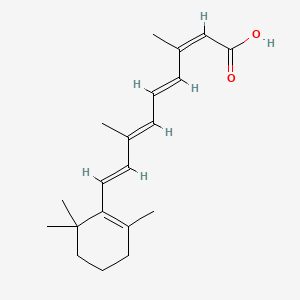
| Formula | C20H28O2 |
|---|---|
| Molecular weight | 300.44 g/mol |
| IUPAC name | (2Z,4E,6E,8E)-3,7-dimethyl-9-(2,6,6-trimethylcyclohexen-1-yl)nona-2,4,6,8-tetraenoic acid |
| CAS | 4759-48-2 |
| PubChem CID | 5282379 |
| InChIKey | SHGAZHPCJJPHSC-XFYACQKRSA-N |
| logP | 5.6 (XLogP 6.3) |
| Polar surface area | 37.3 Ų |
| H-bond acceptors / donors | 1 / 1 |
| Drug-likeness (QED) | 0.53 |
| Lipinski violations | 1 |
SMILES
CC1=C(/C=C/C(C)=C/C=C/C(C)=C\C(=O)O)C(C)(C)CCC1Biology & Pharmacokinetics
Pharmacokinetics
| BBB penetrant | Yes (logBB -0.49) |
|---|
Enzyme interactions
| Enzyme | Role | Detail |
|---|---|---|
| CYP1A2 | Substrate | — |
| CYP2B6 | Inhibitor | — |
| CYP2B6 | Substrate | — |
| CYP2C19 | Inhibitor | — |
| CYP2C19 | Substrate | — |
| CYP2C8 | Inhibitor | — |
| CYP2C9 | Substrate | — |
| CYP2D6 | Substrate | — |
| CYP3A4 | Substrate | — |
Transporters
BCRP (Inhibitor)BSEP (Inhibitor)BSEP (Inhibitor)MRP1 (Inhibitor)MRP2 (Inhibitor)MRP3 (Inhibitor)OATP1B1 (Inhibitor)OATP1B3 (Inhibitor)P-gp (Inhibitor)P-gp (Substrate)
Drug–drug interactions (98, DDInter)
| Interacting drug | Severity | Management |
|---|---|---|
| Acitretin | major | |
| Aminolevulinic acid | major | |
| Bexarotene | major | |
| Demeclocycline | major | |
| Doxycycline | major | |
| Eravacycline | major | |
| Leflunomide | major | |
| Lomitapide | major | |
| Minocycline | major | |
| Mipomersen | major | |
| Omadacycline | major | |
| Oxytetracycline | major | |
| Pexidartinib | major | |
| Sarecycline | major | |
| Teriflunomide | major | |
| Tetracycline | major | |
| Tretinoin | major | |
| Vitamin A | major | |
| Abametapir (topical) | moderate | |
| Abiraterone | moderate | |
| Adapalene (topical) | moderate | |
| Alpelisib | moderate | |
| Aminolevulinic acid (topical) | moderate | |
| Anisindione | moderate | |
| Apalutamide | moderate | |
| Asparaginase Erwinia chrysanthemi | moderate | |
| Asparaginase Escherichia coli | moderate | |
| Azelaic acid (topical) | moderate | |
| Bedaquiline | moderate | |
| Benzoyl peroxide (topical) | moderate | |
| Betamethasone | moderate | |
| Brentuximab vedotin | moderate | |
| Budesonide | moderate | |
| Calaspargase pegol | moderate | |
| Cannabidiol | moderate | |
| Carbamazepine | moderate | |
| Cenobamate | moderate | |
| Clofarabine | moderate | |
| Dabrafenib | moderate | |
| Deflazacort | moderate |
Showing 40 of 98.
Registered Products (10)
| Brand | Form / strength | Pack | Agent | Citizen (JOD) |
|---|---|---|---|---|
| Isosupra Lidose Hard Gelatin Capsule | Capsule 8 mg | 30 cap | Salam Drug Store | 6.200 |
| Curacne | Capsule 10 mg | 30 cap | Abu Sheikha Drug Store | 7.740 |
| Ruatine | Capsule 10 mg | 30 cap | United Pharmaceutical | 9.350 |
| Isosupra Lidose Hard Gelatin Capsule | Capsule 16 mg | 30 cap | Salam Drug Store | 9.550 |
| Roaccutane Capsule | Capsule 10 mg | 30 cap | Shawi & Rushedat Drug Store | 11.150 |
| Curacne | Tablet 20 mg | 30 tab | Abu Sheikha Drug Store | 11.940 |
| Xeractan | Capsule 20 mg | 30 cap | Hikma Pharmaceuticals Co.Ltd/Jordan | 13.820 |
| Ruatine | Tablet 20 mg | 30 tab | UNITED PHARM.MFG.CO.LTD(UPM)/JORDAN | 14.430 |
| Roaccutane Capsules | Capsule 20 mg | 30 cap | Shawi & Rushedat Drug Store | 15.750 |
| Ruatine | Capsule 40 mg | 30 cap | UNITED PHARM.MFG.CO.LTD(UPM)/JORDAN | 23.660 |