Methadone
JFDA label: Methadone Mixture DTF
- Addiction, abuse, and misuse:
- Life-threatening respiratory depression:
- Life-threatening QT prolongation:
- Accidental ingestion (oral formulations):
- Neonatal opioid withdrawal syndrome:
- Conditions for distribution and use of methadone products for the treatment of opioid addiction:
- Cytochrome P450 interaction:
- Risks from concomitant use with benzodiazepines or other CNS depressants:
Mechanism of Action
Binds to opiate receptors in the CNS, causing inhibition of ascending pain pathways, altering the perception of and response to pain; produces generalized CNS depression. Methadone has also been shown to have N-methyl-D-aspartate (NMDA) receptor antagonism.
Indications
Approved
- Detoxification
- Injection
- Oral (Dolophine only)
- Pain management
Contraindications
Source: Lexicomp
- Additional contraindications (not in US labeling): Diarrhea associated with pseudomembranous colitis or caused by poisoning until toxic material has been eliminated from the GI tract Absolute
- GI obstruction, including paralytic ileus (known or suspected) Documentation of allergenic cross-reactivity for opioids is limited. However, because of similarities in chemical structure and/or pharmacologic actions, the possibility of cross-sensitivity cannot be ruled out with certainty Absolute
- Hypersensitivity (eg, anaphylaxis) to methadone or any component of the formulation Absolute
- acute alcoholism Absolute
- acute or severe bronchial asthma (in the absence of resuscitative equipment or in an unmonitored setting) Absolute
- breastfeeding, pregnancy and during labor/delivery Absolute
- concurrent use or use within 14 days of a monoamine oxidase inhibitor (Methadose product labeling) Methadose and Metadol only: Concurrent use or use within 14 days of an MAOI. Metadol only: Mild, intermittent, or short duration pain that can be managed with other pain medications Absolute
- convulsive disorders Absolute
- cor pulmonale Absolute
- delirium tremens Absolute
- diseases/conditions affecting bowel transit (known or suspected) Absolute
- head injury Absolute
- hypercarbia Absolute
- management of acute pain Absolute
- obstructive airway Absolute
- patients naive to opioids Absolute
- severe CNS depression, increased cerebrospinal or intracranial pressure Absolute
- significant respiratory depression (in the absence of resuscitative equipment or in unmonitored settings) Absolute
- status asthmaticus Absolute
- suspected surgical abdomen (eg, acute appendicitis or pancreatitis) Absolute
Adverse Reactions
Cardiac disorders (20)
Not Known Bigeminy · bradycardia · cardiac arrhythmia · cardiac failure · cardiomyopathy · ECG changes · edema · extrasystoles · flushing · hypotension · inversion T wave on ECG · palpitations · phlebitis · prolonged Q-T interval on ECG · shock · syncope · tachycardia · torsades de pointes · ventricular fibrillation · ventricular tachycardia
Nervous system disorders (12)
Not Known Agitation · confusion · disorientation · dizziness · drug dependence (physical dependence) · dysphoria · euphoria · hallucination · headache · insomnia · sedation · seizure
Renal and urinary disorders (7)
Not Known Asthenospermia · decreased ejaculate volume · male genital disease (reduced seminal vesicle secretions) · prostatic disease (reduced prostate secretions) · spermatozoa disorder (morphologic abnormalities) · urinary hesitancy · urinary retention
Blood and lymphatic system disorders (1)
Not Known Thrombocytopenia (reversible, reported in patients with chronic hepatitis)
Metabolism and nutrition disorders (9)
Not Known Adrenocortical insufficiency · altered hormone level (androgen deficiency; chronic opioid use) · amenorrhea · antidiuretic effect · decreased libido · decreased plasma testosterone · hypokalemia · hypomagnesemia · weight gain
Gastrointestinal disorders (8)
Not Known Abdominal pain · anorexia · biliary tract spasm · constipation · glossitis · nausea · vomiting · xerostomia
Skin and subcutaneous tissue disorders (5)
Not Known Diaphoresis · hemorrhagic urticaria (rare) · pruritus · skin rash · urticaria
Musculoskeletal and connective tissue disorders (4)
Not Known Amyotrophy · bone fracture · osteoporosis · weakness
Eye disorders (1)
Not Known Visual disturbance
General disorders and administration site conditions (3)
Not Known Erythema at injection site (intramuscular/subcutaneous) · local pain (intramuscular/subcutaneous) · local swelling (intramuscular/subcutaneous)
Respiratory, thoracic and mediastinal disorders (2)
Not Known Pulmonary edema · respiratory depression
Dosing
Source: Lexicomp
Warnings & Precautions
Source: Lexicomp
CNS depression
May cause CNS depression, which may impair physical or mental abilities; patients must be cautioned about performing tasks that require mental alertness (eg, operating machinery, driving).
Constipation
May cause constipation, which may be problematic in patients with unstable angina and patients post-myocardial infarction. Consider preventive measures (eg, stool softener, increased fiber) to reduce the potential for constipation.
Hypotension
May cause severe hypotension (including orthostatic hypotension and syncope); use with caution in patients with hypovolemia, cardiovascular disease (including acute MI), or drugs which may exaggerate hypotensive effects (including phenothiazines or general anesthetics). Monitor for symptoms of hypotension following initiation or dose titration. Avoid use in patients with circulatory shock.
QT prolongation
QT interval prolongation and serious arrhythmias (torsades de pointes) have occurred during treatment. Most cases involve patients being treated for pain with large, multiple daily doses of methadone, although cases have been reported in patients receiving doses commonly used for maintenance treatment of opioid addiction. Closely monitor patients with risk factors for development of QT interval (eg, cardiac hypertrophy, concomitant diuretic use, hypokalemia, hypomagnesemia), a history of cardiac conduction abnormalities, and those taking medications affecting cardiac conduction for changes in cardiac rhythm during initiation and titration of methadone. QT interval prolongation and torsades de pointes may be more commonly associated with, but not limited to, higher dose treatment >200 mg/day. QT prolongation has been reported in patients with no prior cardiac history who have received high doses of methadone. Only initiate therapy in patients for whom anticipated benefit outweighs the risk of QT prolongation and development of dysrhythmias. Other agents should be used in patients with a baseline QTc interval ≥500 msec (Chou 2014).
Respiratory depression
Respiratory depression, including fatal cases, has been reported during initiation and conversion of patients to methadone, and even when the drug has been used as recommended and not misused or abused. Proper dosing and titration are essential and methadone should only be prescribed by healthcare professionals who are knowledgeable in the use of methadone for detoxification and maintenance treatment of opioid addiction. Monitor for respiratory depression, especially during initiation of methadone or following a dose increase. The peak respiratory depressant effect of methadone occurs later, and persists longer than the peak analgesic effect, especially during the initial dosing period. Carbon dioxide retention from opioid-induced respiratory depression can exacerbate the sedating effects of opioids.
Serotonin syndrome
May occur with concomitant use of serotonergic agents (eg, SSRIs, SNRIs, triptans, TCAs), lithium, St. John's wort, agents that impair metabolism of serotonin (eg, MAO inhibitors), or agents that impair metabolism of tramadol (eg, CYP2D6 and 3A4 inhibitors). Monitor patients for serotonin syndrome such as mental status changes (eg, agitation, hallucinations, coma); autonomic instability (eg, tachycardia, labile blood pressure, hyperthermia); neuromuscular changes (eg, hyperreflexia, incoordination); and/or GI symptoms (eg, nausea, vomiting, diarrhea). Disease-related concerns:
Abdominal conditions
May obscure diagnosis or clinical course of patients with acute abdominal conditions. Avoid use in patients with obstruction.
Adrenocortical insufficiency
Use with caution in patients with adrenal insufficiency, including Addison disease. Long-term opioid use may cause secondary hypogonadism, which may lead to sexual dysfunction, infertility, mood disorders, and osteoporosis (Brennan 2013).
Biliary tract impairment
Use with caution in patients with biliary tract dysfunction, including acute pancreatitis; may cause constriction of sphincter of Oddi.
CNS depression/coma
Avoid use in patients with impaired consciousness or coma, because these patients are susceptible to intracranial effects of CO2 retention.
Delirium tremens
Use with caution in patients with delirium tremens.
Head trauma
Use with extreme caution in patients with head injury, intracranial lesions, or elevated intracranial pressure (ICP); exaggerated elevation of ICP may occur.
Hepatic impairment
Use with caution in patients with hepatic impairment.
Mental health conditions
Use opioids with caution for chronic pain in patients with mental health conditions (eg, depression, suicidal tendencies, anxiety disorders, post-traumatic stress disorder) due to increased risk for opioid use disorder and overdose; more frequent monitoring is recommended (Dowell [CDC 2016]). Methadone is ineffective for the relief of anxiety.
Obesity
Use with caution in patients who are morbidly obese.
Opioid addiction
When used for detoxification and maintenance of opioid addiction, methadone should be administered in accordance with the treatment standards cited in 42 CFR Section 8, including limitations on unsupervised administration. When used for the treatment of opioid addiction in detoxification or maintenance programs, methadone should be dispensed only by opioid treatment programs (and agencies, or practitioners or institutions by formal agreement with the program sponsor) certified by the substance abuse and mental health services administration and approved by the designated state authority. Certified treatment programs shall dispense and use methadone in oral form only and according to the treatment requirements stipulated in the Federal Opioid Treatment Standards. Failure to abide by the requirements in these regulations may result in criminal prosecution, seizure of drug supply, revocation of program approval, and injunction precluding program operation. Regulatory exceptions to the general requirements for certification to provide opioid agonist treatment include inpatient treatment of other conditions and emergency period (not >3 days) while definitive substance abuse treatment is being sought.
Prostatic hyperplasia/urinary stricture
Use with caution in patients with prostatic hyperplasia and/or urinary stricture.
Psychosis
Use with caution in patients with toxic psychosis.
Renal impairment
Use with caution in patients with renal impairment.
Respiratory disease
Use with caution and monitor for respiratory depression in patients with significant chronic obstructive pulmonary disease or cor pulmonale, and those with a substantially decreased respiratory reserve, hypoxia, hypercapnia, or preexisting respiratory depression, particularly when initiating and titrating therapy; critical respiratory depression may occur, even at therapeutic dosages. Consider the use of alternative nonopioid analgesics in these patients.
Seizure disorders
Use with caution in patients with seizure disorders; may cause or exacerbate seizures.
Sleep-disordered breathing
Use opioids with caution for chronic pain and titrate dosage cautiously in patients with risk factors for sleep-disordered breathing, including HF and obesity. Avoid opioids in patients with moderate to severe sleep-disordered breathing (Dowell [CDC 2016]).
Thyroid dysfunction
Use with caution in patients with thyroid dysfunction. Concurrent drug therapy issues:
Benzodiazepines or other CNS depressants
Concomitant use of opioids with benzodiazepines or other CNS depressants, including alcohol, is a risk factor for respiratory depression and death. Reserve concomitant prescribing of methadone and benzodiazepines or other CNS depressants for use in patients for whom alternatives to benzodiazepines or other CNS depressants are inadequate. Limit dosages and durations to the minimum required and follow patients for signs and symptoms of respiratory depression and sedation. If the patient is visibly sedated, evaluate the cause of sedation and consider delaying or omitting daily methadone dosing.
Cytochrome P450 interaction
The concomitant use of methadone with all cytochrome P450 (CYP450) 3A4, 2B6, 2C19, 2C9, or 2D6 inhibitors may result in an increase in methadone plasma concentrations, which could cause potentially fatal respiratory depression. In addition, discontinuation of concomitantly used CYP450 3A4, 2B6, 2C19, or 2C9 inducers may also result in an increase in methadone plasma concentration. Follow patients closely for respiratory depression and sedation, and consider dosage reduction with any changes of concomitant medications that can result in an increase in methadone levels.
Drug-drug interactions
Potentially significant interactions may exist, requiring dose or frequency adjustment, additional monitoring, and/or selection of alternative therapy. Consult drug interactions database for more detailed information. Special populations:
Cachectic or debilitated patients
Use with caution in cachectic or debilitated patients; there is a greater potential for critical respiratory depression, even at therapeutic dosages. Consider the use of alternative nonopioid analgesics in these patients.
Elderly
Use with caution in elderly patients; may be more sensitive to adverse effects. Decrease initial dose and monitor closely when initiating and titrating. Use opioids for chronic pain with caution in this age group; monitor closely due to an increased potential for risks, including certain risks such as falls/fracture, cognitive impairment, and constipation. Clearance may also be reduced in older adults (with or without renal impairment) resulting in a narrow therapeutic window and increasing the risk for respiratory depression or overdose (Dowell [CDC 2016]). Consider the use of alternative nonopioid analgesics in these patients.
Neonates
Neonatal withdrawal syndrome: [US Boxed Warning]: Neonatal opioid withdrawal syndrome is an expected and treatable outcome of use of methadone during pregnancy. Neonatal opioid withdrawal syndrome may be life-threatening if not recognized and treated in the neonate. The balance between the risks of neonatal opioid withdrawal syndrome and the benefits of maternal methadone use may differ based on the risks associated with the mother's underlying condition, pain, or addiction. Advise the patient of the risk of neonatal opioid withdrawal syndrome so that appropriate planning for management of the neonate can occur. Signs and symptoms include irritability, hyperactivity and abnormal sleep pattern, high-pitched cry, tremor, vomiting, diarrhea, and failure to gain weight. Onset, duration, and severity depend on the drug used, duration of use, maternal dose, and rate of drug elimination by the newborn. Dosage form specific issues:
Benzyl alcohol and derivatives
Some dosage forms may contain sodium benzoate/benzoic acid; benzoic acid (benzoate) is a metabolite of benzyl alcohol; large amounts of benzyl alcohol (≥99 mg/kg/day) have been associated with a potentially fatal toxicity ("gasping syndrome") in neonates; the "gasping syndrome" consists of metabolic acidosis, respiratory distress, gasping respirations, CNS dysfunction (including convulsions, intracranial hemorrhage), hypotension, and cardiovascular collapse (AAP ["Inactive" 1997]; CDC, 1982); some data suggests that benzoate displaces bilirubin from protein binding sites (Ahlfors 2001); avoid or use dosage forms containing benzyl alcohol derivative with caution in neonates. See manufacturer's labeling. Other warnings/precautions:
Abuse/misuse/diversion
Methadone exposes patients and other users to the risks of addiction, abuse, and misuse, which can lead to overdose and death. Assess each patient's risk prior to prescribing; monitor all patients regularly for development of these behaviors and conditions. Use with caution in patients with a history of drug abuse or acute alcoholism; potential for drug dependency exists. Other factors associated with increased risk include younger age, concomitant depression (major), and psychotropic medication use.
Accidental ingestion
Oral formulations: [US Boxed Warning]: Accidental ingestion of even one dose, especially in children, can result in a fatal overdose of methadone.
Addiction involving opioid use
When switching patients from methadone to buprenorphine, patients should preferably be on low doses of oral methadone (• Appropriate use: Chronic pain (outside of end-of-life or palliative care, active cancer treatment, sickle cell disease, or medication-assisted treatment for opioid use disorder) in outpatient setting in adults: Opioids should not be used as first-line therapy for chronic pain management (pain >3-month duration or beyond time of normal tissue healing) due to limited short-term benefits, undetermined long-term benefits, and association with serious risks (eg, overdose, MI, auto accidents, risk of developing opioid use disorder). Preferred management includes nonpharmacologic therapy and nonopioid therapy (eg. NSAIDs, acetaminophen, certain anticonvulsants and antidepressants). If opioid therapy is initiated, it should be combined with nonpharmacologic and nonopioid therapy, as appropriate. Prior to initiation, known risks of opioid therapy should be discussed and realistic treatment goals for pain/function should be established, including consideration for discontinuation if benefits do not outweigh risks. Therapy should be continued only if clinically meaningful improvement in pain/function outweighs risks. Therapy should be initiated at the lowest effective dosage using immediate-release opioids (instead of extended-release/long-acting opioids). Risk associated with use increases with higher opioid dosages. Risks and benefits should be re-evaluated when inc
Incomplete cross-tolerance
Use caution in converting patients from other opioids to methadone. Follow appropriate conversion schedules. Patients tolerant to other mu opioid agonists may not be tolerant to methadone and at risk for severe respiratory depression when converted to methadone.
Optimal regimen
An opioid-containing analgesic regimen should be tailored to each patient's needs and based upon the type of pain being treated (acute versus chronic), the route of administration, degree of tolerance for opioids (naive versus chronic user), age, weight, and medical condition. The optimal analgesic dose varies widely among patients; doses should be titrated to pain relief/prevention.
Surgery
Opioids decrease bowel motility; monitor for decrease bowel motility in postop patients receiving opioids. Use with caution in the perioperative setting; individualize treatment when transitioning from parenteral to oral analgesics.
Withdrawal
Concurrent use of mixed agonist/antagonist analgesics (eg, pentazocine, nalbuphine, butorphanol) or partial agonist (eg, buprenorphine) analgesics may precipitate withdrawal symptoms and/or reduced analgesic efficacy in patients following prolonged therapy with mu opioid agonists. Taper dose gradually when discontinuing.
Pregnancy & Lactation
Pregnancy
Adverse events have been observed in animal reproduction studies. Methadone crosses the placenta and can be detected in cord blood, amniotic fluid, and newborn urine. Methadone is considered the standard of care when treating opioid addiction in pregnant women. Women receiving methadone for the treatment of addiction should be maintained on their daily dose of methadone in addition to receiving the same pain management options during labor and delivery as opioid-naive women; maintenance doses of methadone will not provide adequate pain relief. Opioid agonist-antagonists should be avoided for the treatment of labor pain in women maintained on methadone due to the risk of precipitating acute withdrawal (ACOG 2012; Dow 2012). Data is available related to fetal/neonatal outcomes following maternal use of methadone during pregnancy. Information collected by the Teratogen Information System is complicated by maternal use of illicit drugs, nutrition, infection, and psychosocial circumstan
Lactation
Methadone is excreted in breast milk; the dose to a nursing infant has been calculated to be 2% to 3% of the maternal dose (following oral doses of 10 to 80 mg/day). Peak methadone levels appear in breast milk 4 to 5 hours after an oral dose. Methadone has been detected in the plasma of some breastfed infants whose mothers are taking methadone. Sedation and respiratory depression have been reported in nursing infants. The manufacturer recommends that women monitor their nursing infants for sedat
Monitoring
| Clinical pearl | Pain relief, respiratory and mental status, blood pressure; signs of misuse, abuse, and addiction; signs or symptoms of hypogonadism or hypoadrenalism (Brennan 2013). Also evaluate constipation, nausea, pruritus, and sedation (Chou 2014). Consider monitoring blood glucose for doses at or exceeding 40 mg/day (Flory 2016). Obtain baseline ECG (evaluate QTc interval) prior to therapy in patients with risk factors for QTc interval prolongation, a prior ECG with a QTc >450 msec, or a history suggesting prior ventricular arrhythmia. If an ECG was obtained within the previous 3 months and it showed a QTc interval Alternate recommendations: Chronic pain (long-term therapy outside of end-of-life or palliative care, active cancer treatment, sickle cell disease, or medication-assisted treatment for opioid use disorder): Evaluate benefits/risks of opioid therapy within 1 to 4 weeks of treatment initiation and with dose increases. Re-evaluate benefits/risks every 3 months during therapy or more frequently in patients at increased risk of overdose or opioid use disorder. Urine drug testing is recommended prior to initiation and re-checking should be considered at least yearly (includes controlled prescription medications and illicit drugs of abuse). State prescription drug monitoring program (PDMP) data should be reviewed by clinicians prior to initiation and periodically during therapy (frequency ranging from every prescription to every 3 months) (Dowell [CDC 2016]). |
|---|
Chemistry & Properties
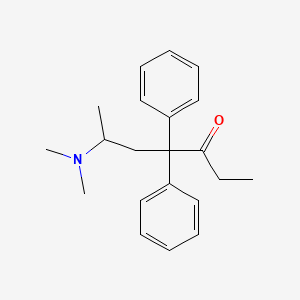
| Formula | C21H27NO |
|---|---|
| Molecular weight | 309.45 g/mol |
| IUPAC name | 6-(dimethylamino)-4,4-diphenylheptan-3-one |
| CAS | 76-99-3 |
| PubChem CID | 4095 |
| InChIKey | USSIQXCVUWKGNF-UHFFFAOYSA-N |
| logP | 4.29 (XLogP 3.9) |
| Polar surface area | 20.31 Ų |
| H-bond acceptors / donors | 2 / 0 |
| Drug-likeness (QED) | 0.76 |
| Lipinski violations | 0 |
SMILES
CCC(=O)C(CC(C)N(C)C)(c1ccccc1)c1ccccc1Biology & Pharmacokinetics
Pharmacokinetics
| BBB penetrant | Yes (logBB 0.9) |
|---|
Enzyme interactions
| Enzyme | Role | Detail |
|---|---|---|
| CYP1A2 | Substrate | — |
| CYP2B6 | Inhibitor | Ki 10.0 µM |
| CYP2B6 | Substrate | — |
| CYP2C19 | Substrate | — |
| CYP2C9 | Substrate | — |
| CYP3A4 | Inhibitor | — |
| CYP3A4 | Substrate | — |
Receptor binding (top 5)
| Target | Action | Affinity |
|---|---|---|
| OPIATE Mu (OPRM1) | Binding | pKi 8.7 |
| μ receptor (OPRM1) | Agonist | pIC50 8.4 |
| OPIATE Kappa 3 | Binding | pKi 7.8 |
| OPIATE Delta (OPRD1) | Binding | pKi 6.0 |
| OPIATE Kappa (OPRK1) | Binding | pKi 6.0 |
Transporters
BCRP (Inhibitor)BSEP (Inhibitor)MDR1 (Inhibitor)MRP1 (Inhibitor)OATP1B1 (Inhibitor)OATP1B3 (Inhibitor)OCT1 (Inhibitor)P-gp (Inhibitor)MDR1 (Substrate)P-gp (Substrate)
Drug–drug interactions (100+, DDInter)
| Interacting drug | Severity | Management |
|---|---|---|
| Abarelix | major | |
| Abiraterone | major | |
| Alimemazine | major | |
| Alvimopan | major | |
| Aminoglutethimide | major | |
| Anagrelide | major | |
| Apalutamide | major | |
| Arsenic trioxide | major | |
| Astemizole | major | |
| Bicalutamide | major | |
| Bosutinib | major | |
| Bupropion | major | |
| Cabozantinib | major | |
| Ceritinib | major | |
| Chloroquine | major | |
| Chlorphenesin | major | |
| Cilostazol | major | |
| Cisapride | major | |
| Clarithromycin | major | |
| Codeine | major | |
| Crizotinib | major | |
| Dabrafenib | major | |
| Dasatinib | major | |
| Daunorubicin | major | |
| Daunorubicin (liposomal) | major | |
| Degarelix | major | |
| Dexamethasone | major | |
| Dolasetron | major | |
| Doxepin | major | |
| Doxepin (topical) | major | |
| Doxorubicin | major | |
| Doxorubicin (liposomal) | major | |
| Elagolix | major | |
| Encorafenib | major | |
| Entrectinib | major | |
| Enzalutamide | major | |
| Epirubicin | major | |
| Eribulin | major | |
| Erythromycin | major | |
| Fingolimod | major |
Showing 40 of 100+.
Registered Products (1)
| Brand | Form / strength | Pack | Agent | Citizen (JOD) |
|---|---|---|---|---|
| Methadone Mixture DTF | Solution 0.1 % | 500 ml | AL Razi Drug Store | 9.770 |