Phenobarbital
🧬 Cross-allergy: Aromatic anticonvulsants
JFDA label: Phenotal Tablet
Mechanism of Action
Long-acting barbiturate with sedative, hypnotic, and anticonvulsant properties. Barbiturates depress the sensory cortex, decrease motor activity, alter cerebellar function, and produce drowsiness, sedation, and hypnosis. In high doses, barbiturates exhibit anticonvulsant activity; barbiturates produce dose-dependent respiratory depression.
Indications
Approved
- Sedation
- Seizures
Off-label
- Alcohol withdrawal
- Sedative/hypnotic withdrawal
Contraindications
Source: Lexicomp
- Hypersensitivity to phenobarbital, barbiturates or any component of the formulation Absolute
- dyspnea or airway obstruction Absolute
- intra-arterial administration, subcutaneous administration (not recommended) Absolute
- marked hepatic impairment Absolute
- nephritic patients (large doses) Absolute
- nephritic patients (large doses) Additional contraindications: IV only: Intra-arterial or subcutaneous administration Absolute
- porphyria (manifest and latent) Absolute
- use in patients with a history of sedative/hypnotic addiction Absolute
Adverse Reactions
Cardiac disorders (4)
Not Known Bradycardia · hypotension · syncope · thrombophlebitis (IV)
Nervous system disorders (16)
Not Known Agitation · anxiety · ataxia · central nervous system depression · central nervous system stimulation · confusion · dizziness · drowsiness · hallucination · hangover effect · headache · impaired judgement · insomnia · lethargy · nervousness · nightmares
Renal and urinary disorders (1)
Not Known Oliguria
Blood and lymphatic system disorders (3)
Not Known Agranulocytosis · megaloblastic anemia · thrombocytopenia
Gastrointestinal disorders (3)
Not Known Constipation · nausea · vomiting
Skin and subcutaneous tissue disorders (3)
Not Known Exfoliative dermatitis · skin rash · Stevens-Johnson syndrome
Musculoskeletal and connective tissue disorders (2)
Not Known Hyperkinesia · laryngospasm
General disorders and administration site conditions (1)
Not Known Pain at injection site
Respiratory, thoracic and mediastinal disorders (3)
Not Known Apnea (especially with rapid IV use) · hypoventilation · respiratory depression
Dosing
Source: Lexicomp
Warnings & Precautions
Source: Lexicomp
CNS depression
May cause CNS depression, which may impair physical or mental abilities; patients must be cautioned about performing tasks which require mental alertness (eg, operating machinery or driving).
Hypersensitivity
Exfoliative dermatitis and Stevens-Johnson syndrome, possibly fatal, may occur; discontinue if dermatological reactions occur.
Paradoxical stimulatory response
May cause paradoxical responses, including agitation and hyperactivity, particularly in patients with acute or chronic pain and pediatric patients.
Respiratory depression
May cause respiratory depression particularly when administered intravenously; use with caution patients with respiratory disease, including status asthmaticus. Disease-related concerns:
Anemia
Use with caution in patients with severe anemia.
Cardiac disease
Use with caution in patients with cardiac disease and in hemodynamically unstable patients (hypotension or shock).
Depression
Use with caution in patients with depression or suicidal tendencies.
Diabetes
Use with caution in patients with diabetes.
Drug abuse
Use with caution in patients with a history of drug abuse; potential for drug dependency exists. Tolerance, psychological and physical dependence may occur with prolonged use.
Hepatic impairment
Use with caution in patients with hepatic impairment. Avoid use in patients showing the premonitory signs of hepatic coma.
Hyperthyroidism
Use with caution in patients with hyperthyroidism.
Hypoadrenalism
Use with caution in patients with hypoadrenalism.
Renal impairment
Use with caution in patients with renal impairment. Concurrent drug therapy issues:
Drug-drug interactions
Potentially significant interactions may exist, requiring dose or frequency adjustment, additional monitoring, and/or selection of alternative therapy. Consult drug interactions database for more detailed information. Special populations:
Debilitated patients
Use with caution in patients who are debilitated.
Fever
Use with caution in patients with a fever.
Pediatric
Phenobarbital has been associated with cognitive deficits in children receiving therapy for complicated febrile seizures. Dosage form specific issues:
Benzyl alcohol and derivatives
Some dosage forms may contain benzyl alcohol; large amounts of benzyl alcohol (≥99 mg/kg/day) have been associated with a potentially fatal toxicity (“gasping syndrome”) in neonates; the “gasping syndrome” consists of metabolic acidosis, respiratory distress, gasping respirations, CNS dysfunction (including convulsions, intracranial hemorrhage), hypotension and cardiovascular collapse (AAP 1997; CDC 1982); some data suggests that benzoate displaces bilirubin from protein binding sites (Ahlfors 2001); avoid or use dosage forms containing benzyl alcohol with caution in neonates See manufacturer’s labeling.
Injection
Do not administer intra-arterially or subcutaneously. Avoid perivascular extravasation. Too rapid administration may cause severe respiratory depression, apnea, laryngospasm, hypertension or vasodilation with fall in blood pressure. Phenobarbital IV may require ≥15 minutes before reaching peak concentrations in the brain; injecting phenobarbital until the convulsions stop may lead to severe barbiturate induced depression. Intramuscular (IM) injection should be confined to a total volume of 5 mL and made in a large muscle in order to avoid possible tissue irritation. Discontinue injection in any patient who complains of limb pain.
Propylene glycol
Some dosage forms may contain propylene glycol; large amounts are potentially toxic and have been associated hyperosmolality, lactic acidosis, seizures and respiratory depression; use caution (AAP 1997; Zar 2007). Other warnings/precautions:
Acute pain
Use with caution in patients with acute or chronic pain; paradoxical excitement could be induced or important symptoms could be masked.
Withdrawal
Anticonvulsants should not be discontinued abruptly because of the possibility of increasing seizure frequency; therapy should be withdrawn gradually to minimize the potential of increased seizure frequency, unless safety concerns require a more rapid withdrawal.
Pregnancy & Lactation
Pregnancy
Caution
Use lowest effective dose. Folic acid 5 mg/day. Neonatal vitamin K. Gradual dose reduction should not be attempted during pregnancy if well-controlled
Lactation
Phenobarbital is excreted in breast milk. A delayed interest in breast-feeding may occur in infants exposed in utero. Infantile spasms and other withdrawal symptoms have been reported following the abrupt discontinuation of breast-feeding (Knott 1987). The manufacturer recommends that caution be exercised when administering phenobarbital to nursing women.
LactMed: monitor the infant.
Monitoring
| Clinical pearl | Phenobarbital serum concentrations (as clinically indicated); CNS status; liver enzymes (periodic); CBC with differential (periodic); renal function (periodic); seizure activity; signs and symptoms of suicidality (eg, anxiety, depression, behavior changes) IV use: Respiratory rate, heart rate, blood pressure, IV site (stop injection if patient complains of pain in the limb) |
|---|
Chemistry & Properties
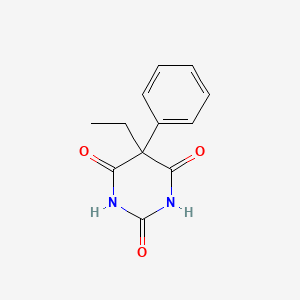
| Formula | C12H12N2O3 |
|---|---|
| Molecular weight | 232.24 g/mol |
| IUPAC name | 5-ethyl-5-phenyl-1,3-diazinane-2,4,6-trione |
| CAS | 50-06-6 |
| PubChem CID | 4763 |
| InChIKey | DDBREPKUVSBGFI-UHFFFAOYSA-N |
| logP | 0.7 (XLogP 1.5) |
| Polar surface area | 75.27 Ų |
| H-bond acceptors / donors | 3 / 2 |
| Drug-likeness (QED) | 0.74 |
| Lipinski violations | 0 |
SMILES
CCC1(c2ccccc2)C(=O)NC(=O)NC1=OBiology & Pharmacokinetics
Pharmacokinetics
| BBB penetrant | Yes (logBB -0.12) |
|---|
Enzyme interactions
| Enzyme | Role | Detail |
|---|---|---|
| CYP2B6 | Substrate | — |
| CYP2C19 | Substrate | — |
| CYP2C9 | Substrate | — |
Transporters
BCRP (Inhibitor)BCRP (Inhibitor)BSEP (Inhibitor)MDR1 (Inhibitor)MRP1 (Inhibitor)MRP2 (Inhibitor)OATP1B1 (Inhibitor)OATP1B1 (Inhibitor)OATP1B3 (Inhibitor)OATP1B3 (Inhibitor)OATP2B1 (Inhibitor)OCT1 (Inhibitor)OCT3 (Inhibitor)P-gp (Inhibitor)BCRP (Substrate)MDR1 (Substrate)MRP2 (Substrate)P-gp (Substrate)
Drug–drug interactions (100+, DDInter)
| Interacting drug | Severity | Management |
|---|---|---|
| Abemaciclib | major | |
| Abiraterone | major | |
| Acalabrutinib | major | |
| Alpelisib | major | |
| Apixaban | major | |
| Apremilast | major | |
| Artemether | major | |
| Axitinib | major | |
| Bortezomib | major | |
| Bosutinib | major | |
| Brigatinib | major | |
| Cabozantinib | major | |
| Ceritinib | major | |
| Cobicistat | major | |
| Cobimetinib | major | |
| Codeine | major | |
| Copanlisib | major | |
| Crizotinib | major | |
| Darolutamide | major | |
| Dasatinib | major | |
| Deflazacort | major | |
| Dicoumarol | major | |
| Eliglustat | major | |
| Encorafenib | major | |
| Entrectinib | major | |
| Ethanol | major | |
| Ethinylestradiol | major | |
| Everolimus | major | |
| Fedratinib | major | |
| Fostamatinib | major | |
| Glasdegib | major | |
| Hemin | major | |
| Hydrocodone | major | |
| Ibrutinib | major | |
| Idelalisib | major | |
| Imatinib | major | |
| Irinotecan | major | |
| Irinotecan (liposomal) | major | |
| Ivacaftor | major | |
| Ivosidenib | major |
Showing 40 of 100+.
Registered Products (5)
| Brand | Form / strength | Pack | Agent | Citizen (JOD) |
|---|---|---|---|---|
| Phenotal Tablet | Tablet 60 mg | 100 tab | Al Saleem Drug Store | 2.910 |
| Phenobarbitone B.P Tab. | Tablet 15 mg | 1000 tab | The Arab Pharmaceutical Manufacturing PSC/Salt | 20.400 |
| Phenobarbitone B.P Tab. | Tablet 30 mg | 1000 tab | The Arab Pharmaceutical Manufacturing PSC/Salt | 25.200 |
| Phenobarbitone | Tablet 60 mg | 1000 tab | The Arab Pharmaceutical Manufacturing PSC/Salt | 27.600 |
| Neobital | Ampoule 200 mg/ml | 10 ampoule | AL Rahma Drug Store | — |