Prednisolone
JFDA label: Prednisolone Tablets
Mechanism of Action
Agonist of Glucocorticoid receptor — Glucocorticoid receptor agonist
| Target | Action | Gene / class |
|---|---|---|
| Glucocorticoid receptor efficacy | AGONIST | NR3C1 |
Indications
Approved
- Addison Disease — primary adrenal insufficiency
- Adrenal Hyperplasia, Congenital — classic congenital adrenal hyperplasia due to 21-hydroxylase deficiency
- Anemia, Aplastic — Aplastic anemia
- Anemia, Hemolytic — hemolytic anemia
- Arthritis, Gouty — gout
- Arthritis, Juvenile — juvenile idiopathic arthritis
- Arthritis, Psoriatic — psoriatic arthritis
- Arthritis, Rheumatoid — rheumatoid arthritis
- Asthma — asthma
- Bursitis — frozen shoulder
- Chorioretinitis — Chorioretinitis
- Choroiditis — choroiditis
- Colitis, Ulcerative — ulcerative colitis
- Conjunctivitis, Allergic — allergic conjunctivitis
- Crohn Disease — Crohn's disease
- Dermatitis Herpetiformis — dermatitis herpetiformis
- Dermatitis, Atopic — atopic eczema
- Dermatitis, Contact — contact dermatitis
- Dermatitis, Exfoliative — exfoliative dermatitis
- Dermatitis, Seborrheic — seborrheic dermatitis
- Dermatomyositis — dermatomyositis
- Erythema Multiforme — erythema multiforme
- Eye Diseases — eye inflammation
- Hemorrhoids — hemorrhoid
- Herpes Zoster Ophthalmicus — ophthalmic herpes zoster
- Hypercalcemia — Hypercalcemia
- Iridocyclitis — Iridocyclitis
- Iritis — iritis
- Keratitis — keratitis
- Leukemia — leukemia
- Lupus Erythematosus, Systemic — systemic lupus erythematosus
- Lymphoma — lymphoma
- Multiple Sclerosis — multiple sclerosis
- Mycosis Fungoides — mycosis fungoides
- Myocarditis — myocarditis
- Nasal Obstruction — Nasal congestion
- Nephrotic Syndrome — nephrotic syndrome
- Ophthalmia, Sympathetic — sympathetic ophthalmia
- Optic Neuritis — optic neuritis
- Osteoarthritis — osteoarthritis
- Peptic Ulcer — Peptic ulcer
- Pneumonia — pneumonia
- Psoriasis — psoriasis
- Pulmonary Eosinophilia — eosinophilic pneumonia
- Rhinitis, Allergic, Seasonal — allergic rhinitis
- Sarcoidosis — sarcoidosis
- Serum Sickness — type III hypersensitivity reaction disease
- Spondylitis, Ankylosing — ankylosing spondylitis
- Synovitis — synovitis
- Tennis Elbow — epicondylitis
- Tenosynovitis — tenosynovitis
- Thrombocytopenia — Thrombocytopenia
- Thyroiditis, Subacute — subacute thyroiditis
- Trichinellosis — trichinosis
- Tuberculosis, Meningeal — meningeal tuberculosis
- Tuberculosis, Pulmonary — pulmonary tuberculosis
- Uveitis, Posterior — posterior uveitis
Off-label
- Abortion, Habitual
- Adrenal Insufficiency
- Alveolitis, Extrinsic Allergic
- Anemia, Hemolytic, Autoimmune
- Anti-Neutrophil Cytoplasmic Antibody-Associated Vasculitis
- Aspergillosis, Allergic Bronchopulmonary
- Biliary Atresia
- Breast Neoplasms
- Bronchiolitis Obliterans Syndrome
- Carcinoma, Hepatocellular
- Cardiomyopathies
- Cataract
- Celiac Disease
- Churg-Strauss Syndrome
- Colitis
- Croup
- Diabetes Mellitus, Type 2
- Eczema
- Endocardial Cushion Defects
- Eye Infections
- Giant Cell Arteritis
- Glaucoma
- Glaucoma, Open-Angle
- Glomerulonephritis
- Glomerulonephritis, IGA
- Glomerulonephritis, Membranous
- Glomerulosclerosis, Focal Segmental
- Graft vs Host Disease
- Granulomatosis with Polyangiitis
- Graves Disease
- HIV Infections
- Headache
- Hearing Loss, Sensorineural
- Hemangioma
- Hepatitis, Alcoholic
- Hodgkin Disease
- Hypereosinophilic Syndrome
- Hyperlipoproteinemia Type I
- Hypersensitivity
- Hyperthyroidism
- Idiopathic Pulmonary Fibrosis
- Immunoblastic Lymphadenopathy
- Infections
- Infertility
- Inflammation
- Kidney Diseases
- Leprosy
- Leukemia, Biphenotypic, Acute
- Leukemia, Lymphoid
- Lichen Planus
- Liver Diseases, Alcoholic
- Lupus Nephritis
- Lymphoma, Follicular
- Lymphoma, Large B-Cell, Diffuse
- Lymphoma, Large-Cell, Anaplastic
- Lymphoma, Non-Hodgkin
- Lymphoma, T-Cell, Peripheral
- Melanoma
- Microscopic Polyangiitis
- Mucocutaneous Lymph Node Syndrome
- Multiple Myeloma
- Multiple Sclerosis, Chronic Progressive
- Muscular Dystrophy, Duchenne
- Neoplasms, Plasma Cell
- Ocular Hypertension
- Orbital Pseudotumor
- Osteoarthritis, Knee
- Pemphigoid, Benign Mucous Membrane
- Pemphigus
- Pericarditis
- Pituitary ACTH Hypersecretion
- Polymyalgia Rheumatica
- Precursor Cell Lymphoblastic Leukemia-Lymphoma
- Prostatic Neoplasms
- Prostatic Neoplasms, Castration-Resistant
- Pulmonary Disease, Chronic Obstructive
- Pulpitis
- Purpura, Thrombocytopenic, Idiopathic
- Purpura, Thrombotic Thrombocytopenic
- Red-Cell Aplasia, Pure
- Renal Insufficiency, Chronic
- Sarcoma
- Schizophrenia
- Scleroderma, Systemic
- Severe Acute Respiratory Syndrome
- Sinusitis
- Sjogren's Syndrome
- Spasms, Infantile
- Stomatitis, Aphthous
- Stroke
- Takayasu Arteritis
- Uveitis
Contraindications
Source: openFDA
- Systemic fungal infections Absolute
Adverse Reactions
Vascular disorders (1)
Common Hypertension
Endocrine disorders (2)
Very Common Adrenal suppression (long-term) · Cushingoid features (moon face, buffalo hump)
Metabolism and nutrition disorders (3)
Very Common Hyperglycaemia · Weight gain
Common Hypokalaemia
Gastrointestinal disorders (1)
Uncommon Peptic ulcer / GI bleeding
Skin and subcutaneous tissue disorders (1)
Very Common Skin thinning / bruising
Musculoskeletal and connective tissue disorders (2)
Common Osteoporosis (long-term)
Rare Avascular necrosis of femoral head
Psychiatric disorders (1)
Common Psychiatric effects (mood lability, mania, psychosis)
Eye disorders (1)
Common Cataracts (posterior subcapsular)
Infections and infestations (1)
Common Opportunistic infections
Dosing
Source: openFDA
Warnings & Precautions
Source: openFDA
Warnings & Precautions
In patients on corticosteroid therapy subjected to unusual stress increased dosage of rapidly acting corticosteroids before, during, and after the stressful situation is indicated. Immunosuppression and Increased Risk of Infection Corticosteroids, including prednisolone, suppress the immune system and increase the risk of infection with any pathogen, including viral, bacterial, fungal, protozoan, or helminthic pathogens. Corticosteroids can: Reduce resistance to new infections Exacerbate existing infections Increase the risk of disseminated infections Increase the risk of reactivation or exacerbation of latent infections Mask some signs of infection Corticosteroid-associated infections can be mild but can be severe and at times fatal. The rate of infectious complications increases with increasing corticosteroid dosages. Monitor for the development of infection and consider prednisolone withdrawal or dosage reduction as needed. Do not administer prednisolone by an intraarticular, intrabursal, intratendinous, or intralesional route in the presence of acute local infection. Tuberculosis If prednisolone is used to treat a condition in patients with latent tuberculosis or tuberculin reactivity, reactivation of tuberculosis may occur. Closely monitor such patients for reactivation. During prolonged prednisolone therapy, patients with latent tuberculosis or tuberculin reactivity should receive chemoprophylaxis. Varicella Zoster and Measles Viral Infections Varicella and measles can have a serious or even fatal course in non-immune patients taking corticosteroids, including prednisolone. In corticosteroid-treated patients who have not had these diseases or are nonimmune, particular care should be taken to avoid exposure to varicella and measles: If a prednisolone-treated patient is exposed to varicella, prophylaxis with varicella zoster immune globulin may be indicated. If varicella develops, treatment with antiviral agents may be considered. If a prednisolone-treated patient is exposed to measles, prophylaxis with immunoglobulin may be indicated. Hepatitis B Virus Reactivation Hepatitis B virus reactivation can occur in patients who are hepatitis B carriers treated with immunosuppressive dosages of corticosteroids, including prednisolone. Reactivation can also occur infrequently in corticosteroid-treated patients who appear to have resolved hepatitis B infection. Screen patients for hepatitis B infection before initiating immunosuppressive (e.g., prolonged) treat
Pregnancy & Lactation
Pregnancy
Caution
Benefits in controlling auto-immune disease usually outweigh small oral cleft risk. Hydrocortisone preferred for physiological replacement (prednisolone does not cross placenta well). Betamethasone/dexamethasone used for fetal lung maturation (they cross placenta)
Lactation
Although it is often recommended to avoid breastfeeding for 4 hours after a dose this maneuver is not necessary because prednisolone milk levels are very low.
Chemistry & Properties
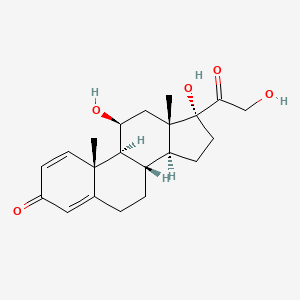
| Formula | C21H28O5 |
|---|---|
| Molecular weight | 360.45 g/mol |
| IUPAC name | (8S,9S,10R,11S,13S,14S,17R)-11,17-dihydroxy-17-(2-hydroxyacetyl)-10,13-dimethyl-7,8,9,11,12,14,15,16-octahydro-6H-cyclopenta[a]phenanthren-3-one |
| CAS | 50-24-8 |
| PubChem CID | 5755 |
| InChIKey | OIGNJSKKLXVSLS-VWUMJDOOSA-N |
| logP | 1.56 (XLogP 1.6) |
| Polar surface area | 94.83 Ų |
| H-bond acceptors / donors | 5 / 3 |
| Drug-likeness (QED) | 0.69 |
| Lipinski violations | 0 |
SMILES
C[C@]12C=CC(=O)C=C1CC[C@@H]1[C@@H]2[C@@H](O)C[C@@]2(C)[C@H]1CC[C@]2(O)C(=O)COBiology & Pharmacokinetics
Pharmacokinetics
| BBB penetrant | Yes (logBB -0.18) |
|---|
Enzyme interactions
| Enzyme | Role | Detail |
|---|---|---|
| CYP2C8 | Inhibitor | — |
| CYP3A4 | Substrate | — |
Receptor binding (top 4)
| Target | Action | Affinity |
|---|---|---|
| Glucocorticoid receptor (NR3C1) | Agonist | pKi 8.6 |
| Mineralocorticoid receptor (NR3C2) | Agonist | pIC50 8.0 |
| Glucocorticoid receptor (NR3C1) | Agonist | pIC50 7.8 |
| Mineralocorticoid receptor (NR3C2) | Agonist | pKi 7.4 |
Transporters
BCRP (Inhibitor)BCRP (Inhibitor)BSEP (Inhibitor)BSEP (Inhibitor)MRP1 (Inhibitor)MRP2 (Inhibitor)MRP3 (Inhibitor)MRP4 (Inhibitor)NTCP (Inhibitor)OATP1A2 (Inhibitor)OATP1B1 (Inhibitor)OATP1B1 (Inhibitor)OATP1B3 (Inhibitor)OATP1B3 (Inhibitor)OATP2B1 (Inhibitor)OCT1 (Inhibitor)P-gp (Inhibitor)MDR1 (Substrate)MRP2 (Substrate)OAT3 (Substrate)P-gp (Substrate)
Drug–drug interactions (100+, DDInter)
| Interacting drug | Severity | Management |
|---|---|---|
| Adalimumab | major | |
| Bacillus calmette-guerin substrain tice live antigen | major | |
| Baricitinib | major | |
| Bempedoic acid | major | |
| Brexucabtagene autoleucel | major | |
| Bupropion | major | |
| Certolizumab pegol | major | |
| Cinoxacin | major | |
| Ciprofloxacin | major | |
| Cladribine | major | |
| Deferasirox | major | |
| Delafloxacin | major | |
| Desirudin | major | |
| Desmopressin | major | |
| Dinutuximab | major | |
| Enoxacin | major | |
| Etanercept | major | |
| Fingolimod | major | |
| Gatifloxacin | major | |
| Gemifloxacin | major | |
| Golimumab | major | |
| Grepafloxacin | major | |
| Infliximab | major | |
| Iohexol | major | |
| Iopamidol | major | |
| Leflunomide | major | |
| Levofloxacin | major | |
| Lomefloxacin | major | |
| Measles virus vaccine live attenuated | major | |
| Mifepristone | major | |
| Moxifloxacin | major | |
| Mumps virus strain B level jeryl lynn live antigen | major | |
| Nalidixic acid | major | |
| Natalizumab | major | |
| Norfloxacin | major | |
| Ofloxacin | major | |
| Ozanimod | major | |
| Rotavirus vaccine | major | |
| Rubella virus vaccine | major | |
| Siponimod | major |
Showing 40 of 100+.
Registered Products (20)
| Brand | Form / strength | Pack | Agent | Citizen (JOD) |
|---|---|---|---|---|
| Apicort eye drops | Ophthalmic Solution 1.2 mg/ml | 5 ml pack varies | Amman Pharmaceutical Indusries | 0.870 |
| Nucort Forte | Solution 1 % | 5 ml pack varies | Amman Pharmaceutical Indusries | 0.980 |
| Apicort eye drops | Ophthalmic Solution 1.2 mg/ml | 10 ml pack varies | Amman Pharmaceutical Indusries | 1.650 |
| Neopred-P eye ear drops | Ophthalmic Solution 10000 IU, 5 mg, 5 mg | 10 ml | Amman Pharmaceutical Industries Co | 1.800 |
| Nucort Forte | Solution 1 % | 10 ml pack varies | Amman Pharmaceutical Indusries | 1.850 |
| Pred Mild Ophthalmic Suspension | Ophthalmic Solution 0.12 % | 5 ml pack varies | Arab Company for Medical & Agricultural Products | 1.870 |
| Prednisolone Tablets | Tablet 5 mg | 100 tab pack varies | The Arab Pharmaceutical Manufacturing PSC/Salt | 2.100 |
| Pred forte | Solution 1 % | 5 ml pack varies | Arab Company for Medical & Agricultural Products | 2.120 |
| Pred Mild | Solution 0.12 % | 10 ml pack varies | Arab Company for Medical & Agricultural Products | 2.580 |
| Pred forte E/D | Ophthalmic Solution 1 % | 10 ml pack varies | Arab Company for Medical & Agricultural Products | 2.750 |
| Prednisolon 20 | Tablet 20 mg | 20 tab | AL THARAA FOR PHARMACEUTICALS AND MEDICINE TRADING CO(BEIT LEHEM DRUG STORE)) | 2.880 |
| COROTROPE 5 TABS | Tablet 5 mg | 100 tab | JAWEDA INT. DRUD STORE | 3.290 |
| Prenzo Oral Syrup | Syrup 15 mg/5 ml | 100 ml pack varies | JORDAN SWEDEN MEDICAL&STERILE.CO(JOSWE)/JORDAN | 4.390 |
| Minims Prednisolone Na 0.5% e/d | Ophthalmic Solution 0.5 % | 0.5 ml | Petra Drug Store | 4.620 |
| Nucort Syrup | Syrup 15 mg/5 ml | 120 ml | Amman Pharmaceutical Industries Co | 5.270 |
| Prenzo Oral Syrup | Syrup 15 mg/5 ml | 120 ml pack varies | JORDAN SWEDEN MEDICAL&STERILE.CO(JOSWE)/JORDAN | 5.270 |
| Orexon syrup | Syrup 0.30 % | 120 ml | PHILADELPHIA PHAEMACEUTICALS.COMP/JORDAN | 5.850 |
| Predone Syrup | Syrup 15 mg/5 ml | 120 ml | Hikma Pharmaceuticals Co.Ltd/Jordan | 5.850 |
| Prednisolon 50 | Tablet 50 mg | 20 tab | AL THARAA FOR PHARMACEUTICALS AND MEDICINE TRADING CO(BEIT LEHEM DRUG STORE)) | 8.080 |
| Prednisolone Tablets | Tablet 5 mg | 1000 tab pack varies | The Arab Pharmaceutical Manufacturing PSC/Salt | 18.900 |