Sotalol
JFDA label: Tesotol
- Life threatening proarrhythmia:
- Renal impairment:
- Product interchange:
Mechanism of Action
Beta-blocker which contains both beta-adrenoreceptor-blocking (Vaughan Williams Class II) and cardiac action potential duration prolongation (Vaughan Williams Class III) properties Class II effects: Increased sinus cycle length, slowed heart rate, decreased AV nodal conduction, and increased AV nodal refractoriness Sotalol has both beta1- and beta2-receptor blocking activity. The beta-blocking effect of sotalol is a noncardioselective (half maximal at about 80 mg/day and maximal at doses of 320 to 640 mg/day). Significant beta-blockade occurs at oral doses as low as 25 mg/day. Class III effects: Prolongation of the atrial and ventricular monophasic action potentials, and effective refractory prolongation of atrial muscle, ventricular muscle, and atrioventricular accessory pathways in
Indications
Approved
- Betapace/Betapace AF, Sorine, Sotylize
- Betapace/Betapace AF, Sotylize
- Injection
Off-label
- Atrial fibrillation in patients with hypertrophic cardiomyopathy (HCM) (alternative antiarrhythmic)
- Fetal tachycardia
- Monomorphic ventricular tachycardia (hemodynamically stable)
- Supraventricular tachycardia
Contraindications
Source: Lexicomp
- CrCl Documentation of allergenic cross-reactivity for beta-adrenergic blockers is limited. However, because of similarities in chemical structure and/or pharmacologic actions, the possibility of cross-sensitivity cannot be ruled out with certainty Absolute
- Hypersensitivity to sotalol or any component of the formulation Absolute
- bronchial asthma or related bronchospastic conditions Absolute
- sinus bradycardia ( Additional contraindications: Betapace/Betapace AF: When used for atrial fibrillation/flutter, either baseline QTc interval >450 msec or CrCl Sotylize, sotalol injection: Baseline QTc interval >450 msec (or JT >330 msec if QRS >100 msec [sotalol injection]) Absolute
Adverse Reactions
Cardiac disorders (9)
Very Common Bradycardia · chest pain · palpitations
Common cardiac failure · ECG abnormality · Edema · hypotension · proarrhythmia, insomnia, anxiety, depression, paresthesia, sensation of cold, impaired consciousness, mood changes · syncope
Nervous system disorders (3)
Very Common dizziness · Fatigue · headache
Blood and lymphatic system disorders (1)
Common Hemorrhage, influenza
Metabolism and nutrition disorders (1)
Common Weight changes
Gastrointestinal disorders (3)
Common abdominal pain, genitourinary complaint · diarrhea · Nausea and vomiting
Skin and subcutaneous tissue disorders (3)
Common diaphoresis · Hyperhidrosis · skin rash
Musculoskeletal and connective tissue disorders (5)
Very Common Weakness
Common back pain · Limb pain · musculoskeletal chest pain · musculoskeletal pain
General disorders and administration site conditions (1)
Common Local pain
Respiratory, thoracic and mediastinal disorders (5)
Very Common Dyspnea
Common asthma, laboratory test abnormality, AICD discharge ( · pulmonary disease · tracheobronchitis · Upper respiratory complaint
Dosing
Source: Lexicomp
Warnings & Precautions
Source: Lexicomp
Anaphylactic reactions
Use caution with history of severe anaphylaxis to allergens; patients taking beta-blockers may become more sensitive to repeated challenges. Treatment of anaphylaxis (eg, epinephrine) in patients taking beta-blockers may be ineffective or promote undesirable effects.
Bradycardia/hypotension
May cause bradycardia (including heart block) and hypotension. Dose adjustments of agents that slow AV nodal conduction may be necessary when sotalol is initiated.
Proarrhythmic effects
Sotalol can cause life-threatening ventricular tachycardia associated with QT interval prolongation (ie, torsades de pointes). Do not initiate if baseline QTc interval is >450 msec (Betapace/Betapace AF, Sotylize, or sotalol injection). If QTc interval prolongs to 500 msec or exceeds 500 msec during therapy, reduce the dose, prolong the interval between doses, prolong the duration of the infusion (sotalol injection), or discontinue use (Betapace/Betapace AF, Sotylize, sotalol injection). Adjust the dosing interval based on creatinine clearance (CrCl). QTc prolongation is directly related to the concentration of sotalol; reduced CrCl, female gender, reduced heart rate, and large doses increase the risk of QTc prolongation and subsequent torsades de pointes. Patients initiated or reinitiated on sotalol or sotalol AF and patients who are converted from IV to oral administration should be placed for a minimum of 3 days (on their maintenance dose) in a facility that can provide cardiac resuscitation and continuous electrocardiographic (ECG) monitoring. Some experts will initiate oral therapy on an outpatient basis if the patient is in sinus rhythm provided the QT interval and serum potassium are normal and the patient is not receiving any other QT-interval prolonging medications but require inpatient hospitalization if the patient is in atrial fibrillation (AHA/ACC/HRS [January 2014]). Calculation of CrCl must occur prior to administration of the first dose. Dosage should be adjus
Bronchospastic disease
In general, patients with bronchospastic disease should not receive beta-blockers; if used at all, should be used cautiously with close monitoring. Sotalol is contraindicated in patients with bronchial asthma or related bronchospastic conditions.
Conduction abnormality
Consider preexisting conditions such as sick sinus syndrome before initiating.
Diabetes
Use with caution in patients with diabetes mellitus; may potentiate hypoglycemia and/or mask signs and symptoms.
Electrolyte imbalances
Correct electrolyte imbalances before initiating (especially hypokalemia and hypomagnesemia) because these conditions increase the risk of torsades de pointes.
Heart failure (HF)
New onset or worsening heart failure may occur during initiation or titration. Use with caution in patients with compensated heart failure; monitor for a worsening of the condition and discontinue if symptoms of heart failure occur. Use is contraindicated in patients with uncontrolled (or decompensated) heart failure.
Myasthenia gravis
Use with caution in patients with myasthenia gravis; may worsen disease.
Myocardial infarction
Use with caution within the first 2 weeks post-MI, especially in patients with markedly impaired ventricular function (experience limited).
Peripheral vascular disease (PVD) and Raynaud disease
Can precipitate or aggravate symptoms of arterial insufficiency in patients with PVD and Raynaud disease. Use with caution and monitor for progression of arterial obstruction.
Pheochromocytoma (untreated)
Adequate alpha-blockade is required prior to use of any beta-blocker.
Psychiatric disease
Use with caution in patients with a history of psychiatric illness; may cause or exacerbate CNS depression.
Renal impairment
Adjust dosing interval based on CrCl to decrease risk of proarrhythmia; QT interval prolongation is directly related to sotalol concentration. CrCl must be calculated with dose initiation and dose increases. The use of sotalol is contraindicated in patients with CrCl • Thyroid disease: May mask signs of hyperthyroidism (eg, tachycardia). If thyrotoxicosis is suspected, carefully manage and monitor; abrupt withdrawal may exacerbate symptoms of hyperthyroidism or precipitate thyroid storm. Concurrent drug therapy issues:
Drug-drug interactions
Potentially significant interactions may exist, requiring dose or frequency adjustment, additional monitoring, and/or selection of alternative therapy. Consult drug interactions database for more detailed information. Special populations:
Elderly
Bradycardia may be observed more frequently in elderly patients (>65 years of age); dosage reductions may be necessary. Dosage form specific issues:
Product interchange
Oral: [US Boxed Warning]: Sotalol is indicated for both the treatment of documented life-threatening ventricular arrhythmias (marketed as Betapace/Betapace AF, Sorine, and Sotylize) and for the maintenance of normal sinus rhythm in patients with symptomatic atrial fibrillation/flutter who are currently in sinus rhythm (marketed as Betapace/Betapace AF and Sotylize). Sorine should not be substituted for sotalol AF. Other warnings/precautions:
Abrupt withdrawal
Beta-blocker therapy should not be withdrawn abruptly (particularly in patients with CAD), but gradually tapered to avoid acute tachycardia, hypertension, and/or ischemia. Severe exacerbation of angina, ventricular arrhythmias, and myocardial infarction (MI) have been reported following abrupt withdrawal of beta-blocker therapy. Temporary but prompt resumption of beta-blocker therapy may be indicated with worsening of angina or acute coronary insufficiency. When QTc prolongation occurs, consider weighing the risk of abrupt withdrawal of sotalol with the risk of QTc prolongation. Use of an alternative beta-blocker may be indicated if worsening angina or acute coronary insufficiency occurs when sotalol is withdrawn abruptly due to QTc prolongation.
Major surgery
Chronic beta-blocker therapy should not be routinely withdrawn prior to major surgery.
Pregnancy & Lactation
Pregnancy
Adverse events were not observed in the initial animal reproduction studies. Sotalol crosses the placenta and is found in amniotic fluid. Adverse events, such as fetal/neonatal bradycardia, hypoglycemia, and reduced birth weight have been observed following in utero exposure to beta-blockers as a class. Adequate facilities for monitoring infants at birth are generally recommended. Sotalol crosses the placenta in concentrations similar to the maternal serum and it is generally preferred for the treatment of fetal atrial flutter (Namouz-Haddad 2013). The clearance of sotalol is increased during the third trimester of pregnancy, but other pharmacokinetic parameters do not significantly differ from nonpregnant values (O’Hare 1983). Use of sotalol may be considered for some cardiac arrhythmias when use of a beta-blocker is needed during pregnancy (ESC [Regitz-Zagrosek 2011]).
Lactation
Sotalol is excreted in breast milk in concentrations higher than those found in the maternal serum (O’Hare 1980). Although adverse events in nursing infants have not been observed in case reports, close monitoring for bradycardia, hypotension, respiratory distress, and hypoglycemia is advised (Hackett 1990). Due to the potential for serious adverse reactions in the nursing infant, the manufacturer recommends a decision be made whether to discontinue nursing or to discontinue the drug, taking int
Monitoring
| Clinical pearl | Serum creatinine (creatinine clearance), magnesium, potassium; heart rate, blood pressure; ECG (eg, QTc interval, PR interval). If baseline QTc >450 msec (or JT interval >330 msec if QRS over 100 msec [sotalol injection]), sotalol (Betapace/Betapace AF, Sotylize) is contraindicated. Betapace/Betapace AF, Sotylize: During initiation and titration period, monitor QTc interval 2 to 4 hours after each dose. If QTc interval is ≥500 msec, reduce dose, prolong the dosing interval, or discontinue sotalol. If the QTc interval is For IV use, measure QTc interval after completion of each infusion. Consult individual institutional policies and procedures. |
|---|
Chemistry & Properties
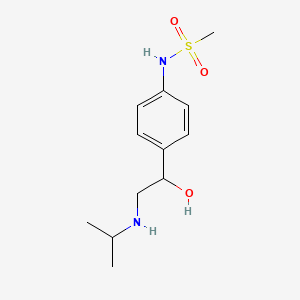
| Formula | C12H20N2O3S |
|---|---|
| Molecular weight | 272.37 g/mol |
| IUPAC name | N-[4-[1-hydroxy-2-(propan-2-ylamino)ethyl]phenyl]methanesulfonamide |
| CAS | 3930-20-9 |
| PubChem CID | 5253 |
| InChIKey | ZBMZVLHSJCTVON-UHFFFAOYSA-N |
| logP | 1.09 (XLogP 0.2) |
| Polar surface area | 78.43 Ų |
| H-bond acceptors / donors | 4 / 3 |
| Drug-likeness (QED) | 0.72 |
| Lipinski violations | 0 |
SMILES
CC(C)NCC(O)c1ccc(NS(C)(=O)=O)cc1Biology & Pharmacokinetics
Pharmacokinetics
| BBB penetrant | Yes (logBB -0.28) |
|---|
Enzyme interactions
| Enzyme | Role | Detail |
|---|---|---|
| CYP2C19 | Substrate | — |
| CYP2D6 | Substrate | — |
| CYP3A4 | Substrate | — |
Transporters
BCRP (Inhibitor)BCRP (Inhibitor)BSEP (Inhibitor)BSEP (Inhibitor)MRP1 (Inhibitor)MRP2 (Inhibitor)MRP3 (Inhibitor)MRP4 (Inhibitor)OATP1B1 (Inhibitor)OATP1B1 (Inhibitor)OATP1B3 (Inhibitor)OATP1B3 (Inhibitor)OATP2B1 (Inhibitor)OCT1 (Inhibitor)P-gp (Inhibitor)BCRP (Substrate)MRP2 (Substrate)OATP1A2 (Substrate)P-gp (Substrate)
Drug–drug interactions (100+, DDInter)
| Interacting drug | Severity | Management |
|---|---|---|
| Abarelix | major | |
| Abiraterone | major | |
| Alimemazine | major | |
| Aminophylline | major | |
| Anagrelide | major | |
| Apalutamide | major | |
| Arsenic trioxide | major | |
| Astemizole | major | |
| Bicalutamide | major | |
| Bosutinib | major | |
| Cabozantinib | major | |
| Ceritinib | major | |
| Chloroquine | major | |
| Cilostazol | major | |
| Cisapride | major | |
| Clarithromycin | major | |
| Crizotinib | major | |
| Dasatinib | major | |
| Daunorubicin | major | |
| Daunorubicin (liposomal) | major | |
| Degarelix | major | |
| Dolasetron | major | |
| Doxepin | major | |
| Doxepin (topical) | major | |
| Doxorubicin | major | |
| Doxorubicin (liposomal) | major | |
| Dyphylline | major | |
| Eliglustat | major | |
| Encorafenib | major | |
| Entrectinib | major | |
| Enzalutamide | major | |
| Epinephrine | major | |
| Epirubicin | major | |
| Eribulin | major | |
| Erythromycin | major | |
| Fingolimod | major | |
| Fluconazole | major | |
| Flutamide | major | |
| Formoterol | major | |
| Gilteritinib | major |
Showing 40 of 100+.
Registered Products (3)
| Brand | Form / strength | Pack | Agent | Citizen (JOD) |
|---|---|---|---|---|
| Tesotol | Tablet 160.0 mg | 60 tab | UNITED PHARM.MFG.CO.LTD(UPM)/JORDAN | 8.510 |
| Tesotol | Tablet 120.0 mg | 60 tab | UNITED PHARM.MFG.CO.LTD(UPM)/JORDAN | 8.510 |
| Tesotol | Tablet 80.0 mg | 100 tab | UNITED PHARM.MFG.CO.LTD(UPM)/JORDAN | 9.450 |