Clozapine
JFDA label: Clozapine Remedica Tab
- Severe neutropenia:
- Orthostatic hypotension, bradycardia, syncope:
- Seizures:
- Myocarditis, cardiomyopathy and mitral valve incompetence:
- Increased mortality in elderly patients with dementia-related psychosis:
Mechanism of Action
Antagonist of 5-hydroxytryptamine receptor 2A — Serotonin 2a (5-HT2a) receptor antagonist; Antagonist of D(2) dopamine receptor — Dopamine D2 receptor antagonist
| Target | Action | Gene / class |
|---|---|---|
| 5-hydroxytryptamine receptor 2A efficacy | ANTAGONIST | HTR2A |
| D(2) dopamine receptor efficacy | ANTAGONIST | DRD2 |
Indications
Approved
- Schizophrenia, treatment resistant
- Suicidal behavior in schizophrenia or schizoaffective disorder
Off-label
- Bipolar disorder (treatment-resistant)
- Psychosis in Parkinson disease
- Psychosis/agitation (treatment-resistant) associated with dementia
Contraindications
Source: Lexicomp · Curated
- Additional contraindications (not in US labeling): Myeloproliferative disorders Absolute
- Alcoholic or toxic psychosis Absolute
- Myeloproliferative disorders or history of clozapine-induced agranulocytosis or severe granulocytopenia Absolute
- Serious hypersensitivity to clozapine or any component of the formulation (eg, photosensitivity, vasculitis, erythema multiforme, or Stevens-Johnson syndrome [SJS]) Absolute
- Uncontrolled epilepsy Absolute
- active hepatic disease associated with nausea, anorexia, or jaundice Absolute
- concomitant use with other agents that suppress bone marrow function Absolute
- history of toxic or idiosyncratic agranulocytosis or severe granulocytopenia (unless due to previous chemotherapy) Absolute
- paralytic ileus Absolute
- patients unable to undergo blood testing Absolute
- progressive hepatic disease or hepatic failure Absolute
- severe CNS depression or comatose states Absolute
- severe cardiac disease (eg, myocarditis) Absolute
- severe renal impairment Absolute
Adverse Reactions
Cardiac disorders (6)
Very Common hypertension · hypotension · Tachycardia · Tachycardia
Common Syncope
Rare Myocarditis
Vascular disorders (1)
Common Orthostatic hypotension
Nervous system disorders (17)
Very Common dizziness · Drowsiness · insomnia · sedation · Somnolence · vertigo
Common agitation · akathisia · akinesia · confusion · disturbed sleep · fatigue · Headache · nightmares · restlessness · seizure · Seizures (dose-dependent)
Renal and urinary disorders (1)
Common Urine abnormality
Blood and lymphatic system disorders (4)
Common eosinophilia · Leukopenia · neutropenia
Uncommon Agranulocytosis
Metabolism and nutrition disorders (2)
Very Common Metabolic syndrome · Weight gain
Gastrointestinal disorders (13)
Very Common Constipation · constipation · dyspepsia · Hypersalivation · nausea · Sialorrhea · vomiting · weight gain
Common abdominal distress · diarrhea · heartburn · Xerostomia
Rare Paralytic ileus
Skin and subcutaneous tissue disorders (2)
Common Diaphoresis · skin rash
Musculoskeletal and connective tissue disorders (3)
Common hypokinesia · muscle rigidity · Tremor
Eye disorders (1)
Common Visual disturbance
General disorders and administration site conditions (1)
Very Common Fever
Dosing
Source: Lexicomp
Warnings & Precautions
Source: Lexicomp
Anticholinergic effects
May cause anticholinergic effects (constipation, xerostomia, blurred vision, urinary retention); use with caution in patients with decreased gastrointestinal motility, urinary retention, BPH, xerostomia, or visual problems. Because of its potential to significantly decrease GI motility, use is associated with increased risk of paralytic ileus, bowel obstruction, fecal impaction, bowel perforation, and in rare cases death. Bowel regimens and monitoring are recommended (De Hert 2011; Nielsen 2012; Palmer 2008). If ileus or subileus occur discontinue clozapine and reintroduce after addressing inadequate dietary and bowel habits (Nielsen 2013). Relative to other neuroleptics, clozapine has a high potency of cholinergic blockade (Richelson 1999).
Cardiovascular events
- [US Boxed Warning]: Orthostatic hypotension, bradycardia, syncope, and cardiac arrest have been reported with clozapine treatment. Risk is highest during the initial titration period especially with rapid dose increases. Symptoms can develop with the first dose and with doses as low as 12.5 mg per day. Initiate treatment with no more than 12.5 mg once daily or twice daily; titrate slowly, and use divided doses. Use with caution in patients at risk for these effects (eg, cerebrovascular disease, cardiovascular disease) or with predisposing conditions for hypotensive episodes (eg, hypovolemia, concurrent antihypertensive medication); reactions can be fatal. Consider dose reduction if hypotension occurs. If patients have had even a brief interval off clozapine (≥2 days), reinitiate treatment at 12.5 mg once daily or twice daily. If the first several doses are tolerated, clozapine may be re-titrated more quickly when the risk of adverse events is low. May also cause tachycardia; tachycardia is not limited to a reflex response to orthostatic hypotension. - [US Boxed Warning]: Fatalities due to myocarditis and cardiomyopathy have been reported. Upon suspicion of these reactions, discontinue clozapine and obtain a cardiac evaluation. Signs and symptoms may include chest pain, tachycardia, palpitations, dyspnea, fever, flu-like symptoms, hypotension, ECG changes, eosinophilia, and/or elevated C-reactive protein. Patients with clozapine-related myocarditis or cardiomyopathy should g
CNS depression
May cause CNS depression, which may impair physical or mental abilities; patients must be cautioned about performing tasks that require mental alertness (eg, operating machinery or driving).
Dyslipidemia
Undesirable changes in lipids have been observed with antipsychotic therapy; incidence varies with product. Periodically monitor total serum cholesterol, triglycerides, LDL, and HDL concentrations.
Eosinophilia
Eosinophilia (ie, an eosinophil count >700/mm3) has been reported to occur (usually within first month) with clozapine treatment. If eosinophilia develops, evaluate for signs or symptoms of systemic reactions (eg, rash or other allergic symptoms), myocarditis, or organ-specific disease. If systemic disease is suspected, discontinue clozapine immediately. If a cause of eosinophilia unrelated to clozapine is identified, treat the underlying cause and continue clozapine. If cause of eosinophilia is related to clozapine, but is in the absence of organ involvement, continue clozapine under careful monitoring. If the total eosinophil count continues to increase over several weeks in the absence of systemic disease, base decision to interrupt treatment and rechallenge (after eosinophil count decreases) on an overall clinical assessment, in consultation with internist or hematologist.
Esophageal dysmotility/aspiration
Antipsychotic use has been associated with esophageal dysmotility and aspiration; use with caution in patients at risk of aspiration pneumonia (eg, Alzheimer disease) (Maddalena 2004). Clozapine-induced sialorrhea may also increase the risk of aspiration pneumonia (Gurrera 2016).
Extrapyramidal symptoms
May cause extrapyramidal symptoms (EPS), including pseudoparkinsonism, acute dystonic reactions, akathisia, and tardive dyskinesia (risk of these reactions is generally much lower relative to typical/conventional antipsychotics; frequencies reported are similar to placebo). Risk of dystonia (and probably other EPS) may be greater with increased doses, use of conventional antipsychotics, males, and younger patients. Factors associated with greater vulnerability to tardive dyskinesia include older in age, female gender combined with postmenopausal status, Parkinson disease, pseudoparkinsonism symptoms, affective disorders (particularly major depressive disorder), concurrent medical diseases such as diabetes, previous brain damage, alcoholism, poor treatment response, and use of high doses of antipsychotics (APA [Lehman 2004]; Soares-Weiser 2007). Consider therapy discontinuation with signs/symptoms of tardive dyskinesia.
Falls
May increase the risk for falls due to somnolence, orthostatic hypotension, and motor or sensory instability. Complete fall risk assessments at baseline and periodically during treatment in patients with diseases or on medications that may also increase fall risk.
Fever
Benign transient temperature elevation (>38°C or 100.4°F) may occur; peaking within the first 3 weeks of treatment. May be associated with an increase or decrease in WBC count. Rule out infection, severe neutropenia, myocarditis, and neuroleptic malignant syndrome (NMS) in patients presenting with fever. While it may be appropriate to withhold clozapine doses temporarily while ruling out serious causes of fever, treatment should not be abruptly discontinued for a benign fever with unknown cause (Nielson 2013).
Hepatotoxicity
Severe, life-threatening and sometimes fatal hepatotoxicity, including hepatic failure, hepatic necrosis, and hepatitis have been reported. Monitor for signs and symptoms of hepatotoxicity including fatigue, malaise, anorexia, nausea, jaundice, bilirubinemia, coagulopathy, and hepatic encephalopathy. Consider permanently discontinuing therapy if hepatitis or transaminase elevations combined with other systemic symptoms occur during clozapine therapy.
Hyperglycemia
Atypical antipsychotics have been associated with development of hyperglycemia; in some cases, may be extreme and associated with ketoacidosis, hyperosmolar coma, or death. In some cases, hyperglycemia resolved after discontinuation of the antipsychotic; however, some patients have required continuation of antidiabetic treatment. All patients should be monitored for symptoms of hyperglycemia (eg, polydipsia, polyuria, polyphagia, weakness). Use with caution in patients with diabetes or other disorders of glucose regulation; monitor for worsening of glucose control during therapy. Patients with risk factors for diabetes (eg, obesity or family history) should have a baseline fasting blood sugar (FBS) and periodically during treatment. Discontinue immediately in cases of diabetic ketoacidosis or hyperosmolar coma; cautiously restart with monitoring after sustained control of diabetes and removal of potential diabetogenic medications or treatment of diabetogenic comorbidities (Nielsen 2013).
Neuroleptic malignant syndrome
Use may be associated with NMS; monitor for mental status changes, fever, muscle rigidity and/or autonomic instability. NMS can recur. Following recovery from NMS, reintroduction of drug therapy should be carefully considered; if an antipsychotic agent is resumed, monitor closely for NMS.
Neutropenia
Clozapine treatment has caused severe neutropenia, defined as an absolute neutrophil count (ANC) less than 500/mm3. Severe neutropenia can lead to serious infection and death. Prior to initiating treatment, a baseline ANC must be ≥1,500/mm3 for the general population and must be ≥1,000/mm3 for patients with documented Benign Ethnic Neutropenia. During treatment, patients must have regular ANC monitoring. Advise patients to immediately report symptoms consistent with severe neutropenia or infection (eg, fever, weakness, lethargy, sore throat). Risk is greatest within the first 18 weeks of therapy. The mechanism of clozapine-induced neutropenia is unknown and is not dose-dependent. Because of the risk of severe neutropenia, clozapine is available only through a restricted program under a Risk Evaluation Mitigation Strategy (REMS) called the Clozapine REMS Program.
QT prolongation
Clozapine is associated with QT prolongation and ventricular arrhythmias including torsade de pointes; cardiac arrest and sudden death may occur. Use caution in patients with conditions that may increase the risk of QT prolongation, including history of QT prolongation, long QT syndrome, family history of long QT syndrome or sudden cardiac death, significant cardiac arrhythmia, recent myocardial infarction, uncompensated heart failure, treatment with other medications that cause QT prolongation, treatment with medications that inhibit the metabolism of clozapine, hypokalemia, and hypomagnesemia. Consider obtaining a baseline ECG and serum chemistry panel. Correct electrolyte abnormalities prior to initiating therapy. Discontinue clozapine if QTc interval >500 msec.
Seizures
Seizures have been associated with clozapine use in a dose-dependent manner. Initiate treatment with no more than 12.5 mg, titrate gradually using divided dosing. Use with caution in patients at risk of seizures, including those with a history of seizures, head trauma, brain damage, alcoholism, or concurrent therapy with medications which may lower seizure threshold. Elderly patients may be at increased risk of seizures due to an increased prevalence of predisposing factors (Gareri 2008).
Sialorrhea
Sialorrhea and drooling may occur with clozapine use; symptoms may be more profound during sleep and may be dose-related. As a result of excessive saliva, patients may initially experience choking sensations that cause nighttime awakening, hoarseness or dysphonia of the voice, and a chronic cough. Skin irritation and infections, aspiration pneumonia, chronic sleep disturbances with daytime fatigue and somnolence, painful swelling of the salivary glands, and symptomatic aerophagia with resultant gas bloating, pain, and flatus may also develop. Titrate clozapine slowly to minimize the chances of inducing sialorrhea; consider dose reduction with or without therapeutic augmentation, or therapeutic substitution, if symptoms develop. Nonpharmacological strategies such as propping head up on several pillows while sleeping, sleeping on the side, placing a towel over pillow to prevent soaking, or chewing sugar free gum may be considered in milder cases (Praharaj 2006). Limited evidence exists for pharmacologic interventions; use extreme caution with drugs that have anticholinergic effects to avoid additive adverse effects with clozapine including constipation or cognitive impairment (APA [Lehman 2004]; Praharaj 2006).
Suicidal ideation
The possibility of a suicide attempt is inherent in psychotic illness or bipolar disorder; use with caution in high-risk patients during initiation of therapy. Prescriptions should be written for the smallest quantity consistent with good patient care.
Temperature regulation
Impaired core body temperature regulation may occur; caution with strenuous exercise, heat exposure, dehydration, and concomitant medication possessing anticholinergic effects (Kerwin 2004; Safferman 1991).
Thromboembolism
Cases of deep vein thrombosis and pulmonary embolism (some fatal) have been associated with clozapine. Avoidance of risk factors such as weight gain and sedentary lifestyle may minimize the risk (Paciullo 2008). Balance the benefits and risks of continuing clozapine if thromboembolism occurs; discontinue if there is a recurrence of thromboembolism despite prophylactic treatment (Nielsen 2013).
Weight gain
Significant weight gain has been observed with antipsychotic therapy; incidence varies with product. Monitor waist circumference and BMI. Disease-related concerns:
Acute infectious/inflammatory processes
Elevation of serum clozapine levels have been reported in the setting of acute infection or inflammatory process. Reactions ranging from mild sedation to symptoms requiring an ICU level of care have been reported. Significant increases of serum levels do not always correlate with clinical signs and symptoms of clozapine toxicity. Signs and symptoms such as hypotension, sialorrhea, and sedation that cannot be explained by other medications or conditions may necessitate a temporary dose reduction or discontinuation, depending on the severity (Clark 2017; Leung 2014).
Benign ethnic neutropenia
Patients with benign ethnic neutropenia (BEN), a condition observed in certain ethnic groups whose average ANC values are lower than standard laboratory ranges for neutrophils, have different ANC monitoring parameters due to their lower baseline ANC levels. BEN is most commonly observed in individuals of African descent, some Middle Eastern ethic group, in other non-Caucasian ethnic groups with darker skin, and in men. BEN patients are not at increased risk for developing clozapine-induced neutropenia. Consider hematology consultation prior to initiation.
Cardiovascular disease
Use with caution in patients with cardiovascular disease; gradually increase dose.
Dementia
Elderly patients with dementia-related psychosis treated with antipsychotics are at an increased risk of death compared to placebo. Most deaths appeared to be either cardiovascular (eg, heart failure, sudden death) or infectious (eg, pneumonia) in nature. Use with caution in patients with Lewy body dementia or Parkinson disease dementia due to greater risk of adverse effects, increased sensitivity to extrapyramidal effects, and association with irreversible cognitive decompensation or death (APA [Reus 2016]). Clozapine is not approved for the treatment of dementia-related psychosis.
Glaucoma
Use with caution in patients with narrow-angle glaucoma; condition may be exacerbated by cholinergic blockade. Screening is recommended.
Hepatic impairment
Use with caution in patients with hepatic disease or impairment; monitor hepatic function regularly. Dosage reduction may be necessary in patients with significant hepatic impairment.
Renal impairment
Use with caution in patients with renal impairment. Dosage reduction may be necessary in patients with significant renal impairment. Concurrent drug therapy issues:
Drug-drug interactions
Potentially significant interactions may exist, requiring dose or frequency adjustment, additional monitoring, and/or selection of alternative therapy. Consult drug interactions database for more detailed information. Special populations:
CYP2D6 poor metabolizers
Clozapine concentrations may be increased in CYP2D6 poor metabolizers. Dose reduction may be necessary.
Elderly
The elderly are more susceptible to adverse effects (including agranulocytosis, cardiovascular, anticholinergic, and tardive dyskinesia).
Smokers
Clozapine levels may be lower in patients who smoke. Smokers may require twice the daily dose as nonsmokers in order to obtain an equivalent clozapine concentration (Tsuda 2014). Smoking cessation may cause toxicity in a patient stabilized on clozapine. Monitor change in smoking patterns. Consider baseline serum clozapine levels and/or empiric dosage adjustments (30% to 40% reduction) in patients expected to have a prolonged hospital stay with forced smoking cessation. Case reports suggest symptoms from increasing clozapine concentrations may develop 2 to 4 weeks after smoking cessation (Lowe 2010). Dosage form specific issues:
Brand/generic
Use caution when converting from brand to generic formulation; poor tolerability, including relapse, has been reported usually soon after product switch (1 to 3 months); monitor closely during this time (Bobo 2010).
Phenylalanine
FazaClo oral disintegrating tablets contain phenylalanine. Other warnings/precautions:
Discontinuation of therapy
The manufacturer recommends reducing the dose gradually over a period of 1 to 2 weeks if termination of therapy is not related to neutropenia. When discontinuing antipsychotic therapy, the APA, CPA, and WFSBP guidelines recommend gradually tapering antipsychotics to avoid physical withdrawal symptoms, including anorexia, anxiety, diaphoresis, diarrhea, dizziness, dyskinesia, headache, myalgia, nausea, paresthesia, restlessness, tremulousness, and vomiting (APA [Lehman 2004]; CPA [Addington 2005]; Lambert 2007; WFSBP [Hasan 2012]). The risk of withdrawal symptoms is highest following abrupt discontinuation of highly anticholinergic or dopaminergic antipsychotics (Cerovecki 2013). Additional factors such as duration of antipsychotic exposure, the indication for use, medication half-life, and risk for relapse should be considered. In schizophrenia, there is no reliable indicator to differentiate the minority who will not from the majority who will relapse with drug discontinuation. However, studies in which the medication of well-stabilized patients were discontinued indicate that 75% of patients relapse within 6 to 24 months. Indefinite maintenance antipsychotic medication is generally recommended, and especially for patients who have had multiple prior episodes or two episodes within 5 years (APA [Lehman 2004]).
Pregnancy & Lactation
Pregnancy
Caution
Continue in treatment-resistant schizophrenia; risk of relapse outweighs drug risk. ANC monitoring continues. Neonatal monitoring at delivery
Lactation
Clozapine was found to accumulate in breast milk in concentrations higher than the maternal plasma (Barnas, 1994). Breast-feeding is not recommended by the manufacturer. Clozapine may theoretically cause agranulocytosis in the nursing infant and should not routinely be used in women who are breast-feeding (NICE 2007).
Monitoring
| Efficacy | Psychiatric symptom control (PANSS/BPRS); ANC per REMS schedule; metabolic monitoring |
|---|---|
| Toxicity | ANC (must not fall < 1000/mm³); weight, glucose, lipids; ECG (myocarditis in first 4 weeks); nocturnal enuresis; seizures |
| Clinical pearl | Clozapine is the only antipsychotic proven effective in treatment-resistant schizophrenia. Mandatory ANC monitoring cannot be bypassed — supply depends on results. |
| Counseling | Never miss blood tests. Report chest pain or palpitations in the first month (myocarditis). Constipation can progress to life-threatening paralytic ileus — maintain adequate fibre and fluids. |
Chemistry & Properties
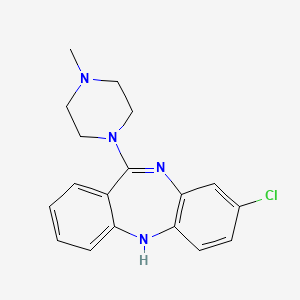
| Formula | C18H19ClN4 |
|---|---|
| Molecular weight | 326.83 g/mol |
| IUPAC name | 3-chloro-6-(4-methylpiperazin-1-yl)-11H-benzo[b][1,4]benzodiazepine |
| CAS | 5786-21-0 |
| PubChem CID | 135398737 |
| InChIKey | QZUDBNBUXVUHMW-UHFFFAOYSA-N |
| logP | 3.72 (XLogP 3.1) |
| Polar surface area | 30.87 Ų |
| H-bond acceptors / donors | 4 / 1 |
| Drug-likeness (QED) | 0.80 |
| Lipinski violations | 0 |
SMILES
CN1CCN(C2=Nc3cc(Cl)ccc3Nc3ccccc32)CC1Biology & Pharmacokinetics
Pharmacokinetics
| BBB penetrant | Yes |
|---|
Enzyme interactions
| Enzyme | Role | Detail |
|---|---|---|
| CYP1A2 | Substrate | — |
| CYP2C19 | Inhibitor | IC₅₀ 45.299999999999955 µM |
| CYP2C19 | Substrate | — |
| CYP2C9 | Inhibitor | IC₅₀ 21.20000000000001 µM |
| CYP2C9 | Substrate | — |
| CYP2D6 | Inhibitor | IC₅₀ 18.000000000000014 µM |
| CYP2D6 | Substrate | — |
| CYP3A4 | Inhibitor | IC₅₀ 46.30000000000002 µM |
| CYP3A4 | Substrate | — |
Receptor binding (top 30)
| Target | Action | Affinity |
|---|---|---|
| 5-HT7S | Binding | pKi 8.8 |
| 5-HT2 | Binding | pKi 8.8 |
| adrenergic Alpha1A (ADRA1A) | Binding | pKi 8.8 |
| Muscarinic M1 | Binding | pKi 8.7 |
| HISTAMINE H1 (HRH1) | Binding | pKi 8.7 |
| 5-HT7L | Binding | pKi 8.6 |
| H1 | Binding | pKi 8.6 |
| alpha1-Adrenocepter | Binding | pKi 8.4 |
| Cholinergic, muscarinic M1 (CHRM1) | Binding | pKi 8.4 |
| Muscarinic | Binding | pKi 8.3 |
| alpha1 | Binding | pKi 8.2 |
| 5-HT2B (HTR2B) | Binding | pKi 8.2 |
| 5-HT2A (HTR2A) | Binding | pKi 8.2 |
| adrenergic Alpha1B (ADRA1B) | Binding | pKi 8.2 |
| adrenergic Alpha1 | Binding | pKi 8.1 |
Transporters
BCRP (Inhibitor)BCRP (Inhibitor)BSEP (Inhibitor)BSEP (Inhibitor)MDR1 (Inhibitor)MRP1 (Inhibitor)MRP2 (Inhibitor)MRP3 (Inhibitor)MRP4 (Inhibitor)OATP1B1 (Inhibitor)OATP1B1 (Inhibitor)OATP1B3 (Inhibitor)OCT1 (Inhibitor)OCTN2 (Inhibitor)P-gp (Inhibitor)MDR1 (Substrate)OATP1A2 (Substrate)P-gp (Substrate)
Drug–drug interactions (100+, DDInter)
| Interacting drug | Severity | Management |
|---|---|---|
| Abarelix | major | |
| Abemaciclib | major | |
| Abiraterone | major | |
| Acalabrutinib | major | |
| Adalimumab | major | |
| Aflibercept | major | |
| Albendazole | major | |
| Aldesleukin | major | |
| Alemtuzumab | major | |
| Alimemazine | major | |
| Altretamine | major | |
| Anagrelide | major | |
| Apalutamide | major | |
| Arsenic trioxide | major | |
| Asparaginase Escherichia coli | major | |
| Astemizole | major | |
| Azacitidine | major | |
| Azathioprine | major | |
| Baricitinib | major | |
| Belatacept | major | |
| Belimumab | major | |
| Belinostat | major | |
| Bendamustine | major | |
| Bexarotene | major | |
| Bicalutamide | major | |
| Bleomycin | major | |
| Blinatumomab | major | |
| Bortezomib | major | |
| Bosutinib | major | |
| Brentuximab vedotin | major | |
| Bupropion | major | |
| Busulfan | major | |
| Cabazitaxel | major | |
| Cabozantinib | major | |
| Capecitabine | major | |
| Carboplatin | major | |
| Carfilzomib | major | |
| Carmustine | major | |
| Ceritinib | major | |
| Certolizumab pegol | major |
Showing 40 of 100+.
Registered Products (3)
| Brand | Form / strength | Pack | Agent | Citizen (JOD) |
|---|---|---|---|---|
| Clozapine Remedica Tab | Tablet 100 mg | 50 tab | JAWEDA INT. DRUD STORE | — |
| Leponex Tab | Tablet 100 mg | 50 tab | ORIENT DRUG STORE CO | — |
| Leponex Tab | Tablet 25 mg | 50 tab | ORIENT DRUG STORE CO | — |